



China's oldest multigrid city layout unearthed









ZHENGZHOU-Chinese archaeologists announced Wednesday that they have discovered the country's earliest multigrid city layout at a large relics site that dates back 3,500 to 3,800 years.
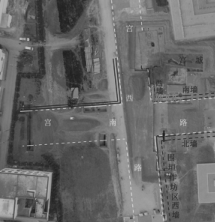
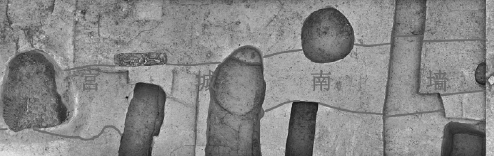
The ruins of parallel roads and walls were found at the Erlitou relics site, which served as the capital city for the middle and late periods of the Xia Dynasty (around 2070-1600 BC), China's earliest known dynasty, in Yanshi city, Central China's Henan province.
"The newly discovered crisscross roads and walls divide the ancient capital of Erlitou into many square and regular grids, with the palace area located at the center of the multigrid layout," says Zhao Haitao, with the Institute of Archaeology of the Chinese Academy of Social Sciences, who heads the excavation team.
"This is the earliest multigrid layout of an ancient capital city ever discovered in China," Zhao adds.
Each individual grid area perhaps belonged to one family, indicating that the Erlitou cultural relic site most likely had an urban layout with subdivisions and walls, as well as an integration of residences and tombs in each grid.
Previously, archaeologists have found buildings and tombs of different grades in many areas. As no central roads and walls were unearthed, it was impossible to get the overall layout.
The excavations indicate that grids near the palace area were mostly residences and burial sites of aristocrats, while no high-grade relic has been found in other areas of the site.
"These findings provide important materials for studying the overall layout, social stratification and hierarchy of the Erlitou capital city, as well as for exploring the planning, etiquette and ruling systems of the Xia Dynasty," Zhao says.
He adds that the integration layout of the residential and burial sites was an urban planning model that was inherited by the subsequent Shang Dynasty (around 1600-1046 BC).
The team is expanding the scope of work to further study the layout and explore its significance, according to Zhao.
Discovered in 1959 by late historian Xu Xusheng, Erlitou is of great reference value for studying the origins of Chinese civilization, the rise of kingdoms, the regulation of ancient capitals and other major issues related to the development of Chinese civilization, according to Chinese archaeologists.
Tens of thousands of items have been unearthed at the Erlitou site. Last year, the Erlitou Relic Museum and a neighboring relic park were completed and opened to visitors for free. The museum houses more than 2,000 relic items, including bronzeware, pottery and jadeware.
Xinhua


Today's Top News
- UN approved first global technical regulation on automated driving systems, co-led by China
- China, US to hold further talks on reciprocal tariff cuts
- China's LineShine tops supercomputer ranking
- China's power capacity tops 4 billion kilowatts
- China's coral reef blue hole a biodiversity hotspot: report
- Zero-tariff lifts Kenya up the value chain





