Asia-Pacific
Pakistani PM's visit to boost ties with China
By Ma Liyao and Qin Jize (China Daily)
Updated: 2011-05-21 07:50
 |
Large Medium Small |
Related video: Exclusive interview with Pakistani Prime Minister
BEIJING - Visiting Pakistani Prime Minister Yusuf Raza Gilani met with President Hu Jintao on Friday at the end of his four-day visit, calling the trip "excellent" and complimenting ties with Beijing.
During the talks, Hu said Gilani's visit would give a strong boost to the good neighborly friendship, and he called for the faster implementation of key cooperative projects in the infrastructure construction, energy and agriculture sectors.
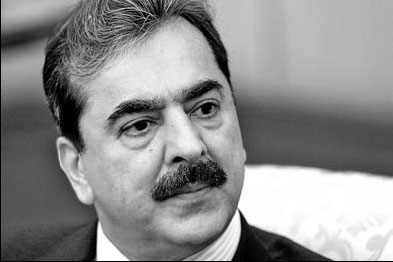 Pakistani Prime Minister Yusuf Raza Gilani said on Friday that during his visit a lot of agreements have been signed in the defense, energy, agriculture, science and technology sectors. [Photo/China Daily] |
"The visit is more than satisfied," he said. "We have signed a lot of agreements in the energy sector, in the agriculture sector, in the science and technology sector."
Pakistan last week opened a nuclear power plant built with China's assistance at Chashma, in central Punjab province, and said Beijing had been contracted to construct two more reactors to ease energy shortages.
Gilani on Thursday urged Chinese business leaders to invest in the nuclear power sector. Pakistan's energy production only meets 80 percent of the country's needs, resulting in crippling power shortages.
"Joint ventures, with equity participation of Chinese corporations and financial institutions, can transform Pakistan's economic landscape and would certainly prove to be a win-win scenario," the visiting prime minister said.
He also told China Daily on Friday that economic development plays a key role in the country's fight against terrorism.
There should be more education, more health facilities, more infrastructure and more opportunities for jobs and businesses so that people can prosper instead of turning to militants for help, he said.
Gilani left Beijing for Pakistan on Friday, wrapping up his first official visit to China as prime minister.
Hu Shisheng, a South Asia studies expert at the China Institutes of Contemporary International Relations (CICIR), said peace and stability in Pakistan have far-reaching significance for China.
"The biggest challenges to the regional stability and development are poverty and unemployment. The two countries need to work together on pushing forward the development process with economic cooperation to win regional stability and peace," he said.
It is the most effective way to end terrorism, he added.
Bilateral trade volume between China and Pakistan reached $8.6 billion in 2010, a rise of 27.7 percent compared with the previous year.
But the number is still small considering the huge population of the two countries. China and Pakistan hope to see bilateral trade reach $15 billion by 2015.
There is a huge potential for trade growth because of the bilateral economic ties and warm political relationship between the two countries, said Fu Xiaoqiang, a researcher at CICIR.
"China is now enhancing its direct investment in Pakistan to balance the trade structure, and the two countries will cooperate more on major infrastructure construction projects," Fu said.
AFP contributed to this story.
| 分享按钮 |