Middle East
US commander eyes long commitment in Iraq
(AP)
Updated: 2007-04-27 06:02
 |
Large Medium Small |
WASHINGTON - The US military commander in Iraq says the war effort may well get harder before it gets easier and American casualties are likely to continue to climb.
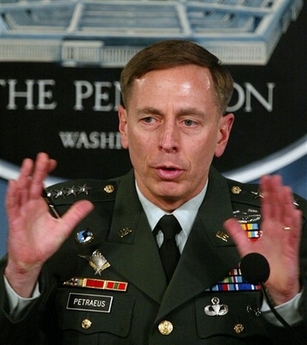 Gen. David Petraeus, the top US commander in Iraq, gestures during a news conference at the Pentagon, Thursday, April 26, 2007. [AP]  |
And he said that while some sectarian killings have dropped by two-thirds in recent months, the overall level of violence in Iraq has remained largely the same.
Petraeus also gave new details on what he called "exceedingly unhelpful activities" by Iran, including links to a terrorist cell that planned and carried out the abduction and murder of five US soldiers in Karbala in January.
He said US troops found a 22-page document on a computer during a raid last month that outlined details of that Jan. 20 sneak attack on the provincial headquarters in Karbala. Brothers Qais al-Khazaali and Laith al-Khazaali were detained in connection with the attack.
Petraeus said the Khazaali network "is directly connected to the Iranian Quds Force, received money, training, arms, ammunition and at some points in time even advice and assistance and direction."
However, he said there is no direct evidence yet that Iranians were involved specifically in the Karbala incident.
In an hourlong, wide-ranging discussion of conditions in Iraq, Petraeus called the war "the most complex and challenging I have ever seen."
And he painted a somber picture of the coming months, even as members of Congress decried the war as a failed mission and promised to continue a push to set benchmarks for progress and a timetable to begin pulling US troops out.
"I think there is the very real possibility that there's going to be more combat action and that, therefore, there could be more casualties," Petraeus said. "When you're expanding your forces' presence, when you are going into areas that have been very lightly populated with coalition forces in the past, that there is going to be more action."
The four-star general, picked by President Bush to oversee the recent buildup of American forces, also cited some progress in the two months since the troop increase began. He said sectarian killings have declined — aided by construction of walls around some neighborhoods — while a number of markets are reviving, amusement parks are busy and some Iraqis are returning to their homes.
"I am well aware that the sense of gradual progress and achievement we feel on the ground in many areas in Iraq is often eclipsed by the sensational attacks that overshadow our daily accomplishments," Petraeus said, conceding there is "vastly more work to be done across the board."
While he would not predict troops levels into the fall or comment directly on the legislation Congress passed Thursday, his comments made clear that his war plan did not include a significant reduction of US forces anytime soon.
"This effort may get harder before it gets easier," said Petraeus, calling the situation "exceedingly complex and very tough."
Asked how many troops he thought would have to remain in Iraq — and for how long — to finish the job, Petraeus said, "I wouldn't try to truly anticipate what level might be some years down the road." However, he noted historical precedents to long US peacekeeping missions.
"It is an endeavor that clearly is going to require enormous commitment and commitment over time," he said, adding that he didn't want to predict how many troops might be involved or when.
Acknowledging the divide between Congress and the administration, Petraeus said the Washington clock on the war is moving rapidly, reflecting public frustration and impatience. But the Baghdad clock is moving slower — prompting Pentagon and administration officials to press the Iraqi government to pick up speed on political reconciliation and other improvements.
He said he gave a memo to Gen. Peter Pace, chairman of the Joint Chiefs of Staff, on Wednesday, outlining how the US should measure progress in Iraq in the coming months. Commanders have said they will give Defense Secretary Robert Gates an assessment on the military buildup in early September.
Petraeus said the draft proposes evaluating four areas: security, economics, politics and governance, and the rule of law. The specifics, he said, include progress by the Iraqi security forces, how well the Iraqi government is spending its budget on capital improvements and construction, whether banks are reopening, progress on key legislation, and development of the justice system and detention facilities.
Despite the disappointing pace, Petraeus said he believes Iraqi Prime Minister Nouri al-Maliki and other leaders "are committed to achieving more in this area in the months ahead." He said the fledgling government faces difficult hurdles as it struggles to pull together Sunni, Shiite and Kurdish leaders into a national unity effort.
On a positive note, he cited improving conditions in the turbulent Anbar province in western Iraq, noting it had been "assessed as lost six months ago."
| 分享按钮 |