Asia-Pacific
ElBaradei unable to meet NKorea nuke envoy
(AP)
Updated: 2007-03-14 19:23
 |
Large Medium Small |
BEIJING - The chief UN nuclear inspector, in Pyongyang for talks on how North Korea will close its main atomic reactor, was unable to meet with the country's top nuclear negotiator Wednesday, the agency's spokeswoman said.
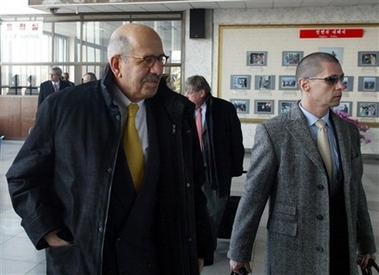 In this photo released by China's official Xinhua news agency, IAEA chief Mohamed ElBaradei, left, arrives at the airport in Pyongyang, North Korea's capital, on Tuesday March 13, 2007. [AP]  |
North Korea pledged during six-nation disarmament talks in Beijing last month to shut down its only operating nuclear reactor by April 14, in return for energy aid and political concessions.
ElBaradei, head of the Vienna-based International Atomic Energy Agency, had been slated to meet with North Korean Vice Foreign Minister Kim Kye Gwan, IAEA spokeswoman Melissa Fleming said in a telephone interview from Pyongyang.
They said "he was busy preparing for the six-party talks," Fleming said. She would not release any other details but said ElBaradei met with another vice foreign minister of the same rank, Kim Hyong Jun, instead.
It was not immediately clear if the change in schedule was a setback to denuclearization efforts, but Fleming said everything else was "going as scheduled" so far.
In late 2002, North Korea expelled IAEA inspectors after US officials accused the country of running a secret uranium enrichment program in violation of a 1994 disarmament deal.
North Korea later restarted its main reactor at Yongbyon and is believed to have produced enough plutonium in recent years for as many as a dozen nuclear bombs - including the one it detonated in an underground test blast on Oct. 9.
The country is to eventually receive total assistance worth 1 million tons of heavy fuel oil for abandoning all its nuclear programs. US officials have stressed that must include the alleged uranium enrichment program, which North Korea has never publicly acknowledged.
On Tuesday, Chinese Foreign Ministry spokesman Qin Gang said China would head a group on the denuclearization of the Korean peninsula, while South Korea would lead the economic and energy cooperation group and Russia would take charge of the group on peace and security in Northeast Asia. A session on economic and energy cooperation will be held at the South Korean Embassy in Beijing on Thursday, the South's Foreign Ministry said Tuesday.
The working group sessions are to be followed by a full session Monday of the six-nation North Korea nuclear talks.
The US also has pledged by Thursday to resolve financial restrictions against a Macau bank where North Korea held accounts. North Korea boycotted the nuclear talks for more than a year after the bank was blacklisted over alleged complicity with the country in counterfeiting and money laundering.
Meanwhile, the North on Tuesday criticized the UN Development Program for suspending its work in the country over US allegations that aid funds were diverted to illicit purposes, including the nuclear program.
The North Korean Foreign Ministry called the claims "sheer lies" aimed at tarnishing its image and said it had yet to receive an official explanation for the pullout, according to a statement carried by the official Korean Central News Agency.
| 分享按钮 |