UN ambassadors discuss Iran sanctions
(AP)Updated: 2007-03-06 09:45
UNITED NATIONS - Ambassadors from the world's major powers met Monday to discuss possible new sanctions against Iran for refusing to suspend uranium enrichment as they prepare to draft a new UN resolution.
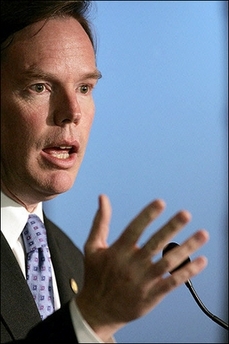 US Undersecretary of State Nicholas Burns, seen here in February 2007. Envoys of six major powers trying to rein in Iran's nuclear ambitions kicked off informal talks Monday to quickly agree "incremental" sanctions against the Islamic Republic over its refusal to freeze sensitive nuclear fuel work. [AFP]  |
US Undersecretary of State Nicholas Burns told reporters after meeting Secretary-General Ban Ki-moon on Monday that the issue has now moved to the UN Security Council and all six countries want to see a new resolution adopted "in the shortest time possible."
"We just now need to agree with all the other members of the council on what those measures, what those sanctions should be," Burns said. "We hope those deliberations can be conducted in the shortest possible time so that the Iranian government will know that it is really quite isolated on this issue."
Iran's refusal to freeze all its enrichment-related activities prompted the Security Council to impose sanctions on Dec. 23, targeting Tehran's nuclear and missile programs and individuals, companies and organizations involved with them. The council gave Tehran 60 days to halt enrichment or face additional nonmilitary measures.
Iran insists its nuclear program is aimed solely at producing nuclear energy - not nuclear weapons - and it has adamantly refused to halt it.
The US, Britain and France would almost certainly favor tough new sanctions, but know they will have to settle for less to ensure that Russia and China, which have close ties to Iran, won't use their veto power to block a new resolution.
Britain's UN Ambassador Emyr Jones Parry said recently that the new resolution would be looking at an "incremental" strengthening of sanctions. The word "incremental" has also been used by other council diplomats.
Some diplomats said the new measures may include travel bans, expanding the list of technology and materials countries are banned from making available to Iran, and creating stiffer economic sanctions including a ban on export guarantees to Iran.
The diplomats spoke on condition of anonymity because the negotiations are private.
The French Foreign Ministry, in a statement Friday, said the current sanctions could be strengthened "for example, by designating new people or new entities hit by restrictive measures ... and through complementary measures." It didn't elaborate on what those measures might be.
Burns gave no hint of possible new sanctions but stressed that the United States "believes very strongly that negotiations are the best way forward."
|
||
|
||
|
|