Asia-Pacific
N.Korea talks resume amid report of US deal
(Reuters)
Updated: 2007-02-08 09:43
 |
Large Medium Small |
EIJING - Six-party talks aimed at dismantling N.Korea's nuclear program start in Beijing on Thursday, with a Japanese newspaper reporting that DPRK has already signed a memorandum with the US.
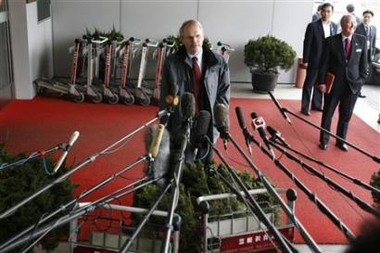 US Assistant Secretary of State and chief negotiator Christopher Hill speaks to journalists upon arriving for the six-party talks in Beijing, February 7, 2007. [Reuters]  |
But Japan's Asahi Shimbun newspaper said North Korea and the United States signed a memorandum in Berlin last month in which Pyongyang agreed to move toward shutting down its nuclear reactor in exchange for aid.
It called for simultaneous steps to be taken, with Pyongyang moving within weeks to freeze its nuclear reactor at Yongbyon and agreeing to accept inspectors from the International Atomic Energy Agency, the United Nations nuclear watchdog.
In return, the United States expressed support for providing energy and humanitarian aid, although no details were given on the amount of aid and what it might consist of, the Asahi said.
Asked to comment on the report, State Department spokesman Sean McCormack said in Washington: "We had a good set of consultations in Berlin with the North Koreans as well as with our other partners in the six-party talks prior to the commencement of this round."
He declined to comment further.
Negotiators from the two Koreas, the United States, Japan, Russia and host China gather later on Thursday at a secluded compound in western Beijing where they will turn their attention to a 2005 statement offering North Korea economic and security concessions in return for abandoning its nuclear weapons ambitions.
"I want to emphasize that the real success is when we complete the September 05 agreement," chief US negotiator Christopher Hill told reporters in Beijing on Wednesday.
"Not just when we start the 05 agreement, but when we finish it, so we're not going to finish that this week. We'll just maybe take a good first step."
South Korea's envoy Chun Yung-woo said that after much negotiation it was time for results, and he urged compromise.
"North Korea must be prepared to show, in actions, its commitment for denuclearisation and must not make unreasonable demands, and the other five countries must not be ungenerous or hesitant in taking rational corresponding measures," Chun told reporters.
These talks are likely to focus on persuading North Korea to first freeze its Yongbyon nuclear plant.
Hopes that such a deal would be sealed at the previous round in December faded after North Korea focused on its objections to a US financial crackdown.
David Albright, a Washington-based nuclear expert who visited Pyongyang last week, told Reuters that chief North Korean negotiator Kim Kye-gwan was "optimistic" a deal, including a freeze on plutonium production at Yongbyon, was within reach this time.
| 分享按钮 |