France says Iran will face sanctions
(AP)Updated: 2006-12-06 16:36
PARIS - The French foreign minister said Wednesday that Iran will face UN sanctions for refusing to halt its nuclear program but that major world powers remain divided over their extent.
|
|
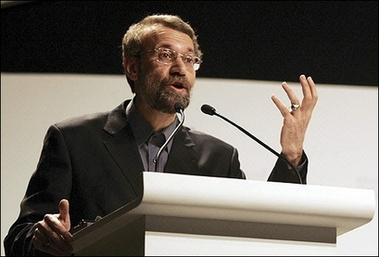

Iran's hard-line president threatened to downgrade relations with the 25-nation European Union if tough sanctions emerged from the talks among diplomats from the permanent Security Council members - the United States, Britain, China, France and Russia - as well as Germany and the EU.
After months of diplomatic wrangling, the United States and France had hoped Tuesday's talks would produce a resolution imposing sanctions on Iran for defying an Aug. 31 UN deadline to halt enrichment. Western powers accuse Iran of seeking nuclear bombs, while Tehran insists it only wants civilian nuclear energy.
Still, a top European diplomat, who spoke on condition of anonymity because of the sensitivity of the talks, said Russia, which has sided with Iran on many points, made some concessions at Tuesday's talks. The Russians agreed to a measure prohibiting financial transfers to "problematic" Iranians linked to nuclear or ballistic missile programs, the diplomat said.
Russia still opposes the broader asset freeze that Britain, France and Germany proposed in a draft UN resolution presented in October, the diplomat said.
The discussions now move to the United Nations in New York. The Americans and Europeans are pushing for a resolution by the end of the year.
"We are coming up to the time (when) the credibility of the UN is at stake," US State Department spokesman Sean McCormack said in Washington before the Paris talks.
Iranian President Mahmoud Ahmadinejad vowed Tuesday to stick by the nuclear program and issued a new threat to downgrade relations with the EU if European negotiators opted for tough sanctions. He gave no details on how ties might be downgraded. The EU is Iran's biggest trading partner.
The Russians also remained resistant to a measure expanding the powers of the International Atomic Energy Agency to monitor Iran's nuclear program, considering that a "provocation" to Iran, the European diplomat said.
The draft resolution would exempt a nuclear power plant being built by the Russians in Iran, but not the nuclear fuel needed for the reactor. Russia wants to remove any mention of the Bushehr reactor.
Washington's patience had appeared to be wearing thin.
When asked Tuesday when he expected Russia and China to begin supporting the resolution, the American participant in the discussions, Undersecretary of State Nicholas Burns, replied: "This afternoon would be a good time."
|
||
|
||
|
|