Saudi Arabia rules out oil weapon in Mideast
(Reuters)
Updated: 2006-08-03 14:10
RIYADH - Saudi Arabia, the world's biggest crude exporter, believes oil
should not be used as a weapon because it is the economic lifeline of Arab
states, its foreign minister said.
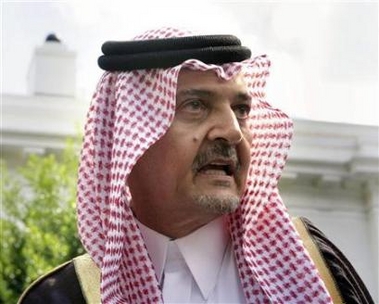
Saudi Foreign Minister
Prince Saud al-Faisal talks to reporters outside of the White House in
Washington July 23, 2006 after a meeting with President Bush. Saudi
Arabia, a key U.S. ally, criticized Washington's stance on the Israeli
military campaign in Lebanon and urged it on Wednesday to press for an
immediate ceasefire. [Reuters] |
Asked whether the oil weapon should be used if the conflict between Israel
and Lebanon escalates, Prince Saud al-Faisal said: "The two issues should not be
mixed because oil is among the economic capabilities that countries... need to
meet their obligations towards their citizens.
"If we ignore this reality and start asking that the foundations of our life
(be used) and enter into reckless adventures, the first to be hurt will be our
citizens and no wise government can accept this," he told a news conference.
His comments were carried on the official Saudi Press Agency late on
Wednesday.
Saudi Arabia and other U.S.-allied Gulf members of the Organization of the
Petroleum Exporting Countries (OPEC) have made clear in the past they do not
intend to repeat the 1973 Arab oil embargo, sanctioned by Saudi Arabia's then
King Faisal to punish the West for backing Israel in the Arab-Israeli war.
Saudi Arabia is the largest producer in OPEC.
Global oil prices hit a record-high of $78.40 a barrel last month on fears
that the Israeli-Lebanese conflict could spread to Middle East oil producers.
Saudi Arabia, a key regional U.S. ally, has criticised Washington for not
pressing for an immediate ceasefire and has warned that Israeli militarism could
trigger a wider conflict in the region.
|
