Asia-Pacific
Global outrage, New York jitters after India bombs
(Reuters)
Updated: 2006-07-12 11:15
 |
Large Medium Small |
World powers condemned the bombs that killed over 160 people in the Indian city of Bombay on Tuesday, and September 11-scarred New York tightened security on its subways.
|
|
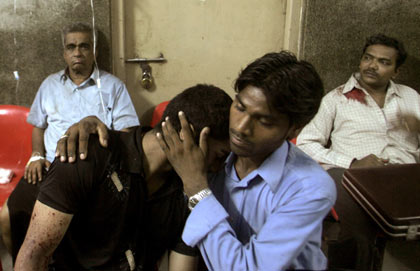
US Secretary of State Condoleezza Rice said the string of explosions on commuter trains and at railway stations during the financial capital's evening rush hour was a "hideous incident."
"We condemn thoroughly this terrible terrorist incident," Rice told reporters in Washington. "We will stand with India in the war on terror. It just shows this kind of hideous incident can happen anywhere in the world against innocent people."
India has in the past blamed bomb attacks in the country on Muslim militants fighting its rule in Kashmir, accusing arch-rival Pakistan of providing them with support. But Islamabad was among the first to voice outrage on Tuesday.
"This despicable act of terrorism has resulted in the loss of a large number of precious lives," Pakistan's Foreign Ministry said, adding that President Pervez Musharraf and Prime Minister Shaukat Aziz had strongly condemned the "terrorist attack."
"Terrorism is a bane of our times and it must be condemned, rejected and countered effectively and comprehensively," the ministry said in a statement.
Britain, which last week marked the first anniversary of the suicide bombings on London's transport system that killed 52 people, branded the Bombay attacks as "brutal and shameful."
"There can never be any justification for terrorism," British Prime Minister Tony Blair said in a statement. "We stand united with India, as the world's largest democracy, through our shared values and our shared determination to defeat terrorism in all its forms."
France also pledged its solidarity with India for the Bombay blasts and a series of grenade attacks earlier in the day by suspected Islamist militants in Indian Kashmir that killed seven people, six of them tourists.
The 25-nation European Union's foreign policy chief, Javier Solana condemned what he called "these despicable acts of terrorism, which have caused death and injuries to scores of innocent people."
Canadian Foreign Minister Peter MacKay said in a statement that the Bombay rail attacks were "another awful reminder of the determination of terrorists who use murder as an instrument to advance their political ends."
In New York, police said they had heightened security on subways as a precaution but stressed that they had received no specific threats to the city.
The additional security measures in the subway system, which carries some 4.5 million people on a typical weekday, included increased patrols and increased random bag searches.
New York has remained on high alert for another attack since the September 11 hijacked plane attacks destroyed the World Trade Center's twin towers in 2001.