Asia-Pacific
Embattled Thai PM returns to full-time duties
(AP)
Updated: 2006-05-23 11:46
 |
Large Medium Small |
Embattled Prime Minister Thaksin Shinawatra resumed his duties full-time Tuesday as opponents planned to muster more street demonstrations and lawsuits to force his ouster.
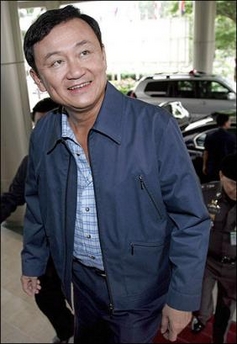 Thai Prime Minister Thaksin Shinawatra smiles as he arrives at Thai Rak Thai party headquarters in Bangkok. Thaksin has quietly resumed some official duties, his deputy said, six weeks after he tearfully stepped aside in the wake of weeks of street protests in Bangkok.[AFP] |
Faced with protesters accusing him of abuse of power and corruption, Thaksin took a 49-day "break" from the political arena, appointing a caretaker prime minister and taking several trips abroad.
"Yes, I am coming to work full-time and will chair every Cabinet meeting," Thaksin told reporters before attending the weekly Cabinet meeting.
His appointment of Chitchai Wannasathit as caretaker prime minister was expected to be revoked later Tuesday.
Nakhon Chompuchart of the Law Society of Thailand said he had earlier filed a lawsuit against Thaksin, asking the Administrative Court to rule on his status and charging that the prime minister had taken an illegal leave of absence. The leader of the opposition Democrat Party Abhisit Vejjajiva said Thaksin's return would create more political and legal turmoil.
The People's Alliance for Democracy, an umbrella group which orchestrated months of street protests, said demonstrations against Thaksin would resume after celebrations in early June marking the 60th anniversary on the throne of revered King Bhumibol Adulyadej.
"Thaksin resuming the position while charges against him are pending shows that he totally ignores the legal system," Nakhon said.
Bancherd Singkaneti, a law professor at Bangkok's Thammasat University, said Thaksin lost his status the day he submitted a letter for his leave of absence because the letter said his break from politics would extend until a new government is formed following an election.
Thailand has had a caretaker government and no Parliament since April 2 general elections were annulled by the Constitutional Court.
The country's Election Commission on Monday proposed a further delay in plans for new elections until October 29, after Muslim officials said the earlier date, October 22, conflicted with the Islamic holy month of Ramadan.
But neither date may hold since the commissioners are under pressure from the country's top courts as well as opposition political parties to step down over claims that they unfairly favor Thaksin's government.
Thaksin abruptly dissolved Parliament in February and called snap elections on April 2, but the opposition boycotted the vote and the result was declared invalid.
Thaksin took "a break from politics" after the polls to quell the protests and appointed Chitchai to take his place.
Last month, King Bhumibol Adulyadej urged the country's top courts to end the political stalemate resulting from the election and the courts invalidated the balloting, won by Thaksin's Thai Rak Thai party.
Concerns have been raised that the prolonged period with a caretaker government and no Parliament is having an adverse impact on the country's economic and social affairs. New investment has slowed because of the political uncertainty.