Cologne: Two millennia as a
cultural crossroads
Visitors to Cologne are greeted by more than 2,000 years of culture,
significant antique treasures, economic power, creativity, ideas, diversity, and
above all the local folk with their cosmopolitan, international and joyful take
on life.
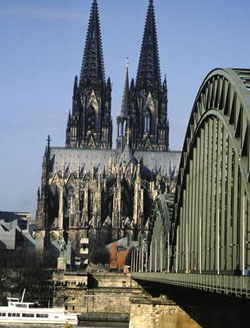
Der Rhein:K?ln has been flooded on several occasions, with
the Rhine breaching the walls of the city
centre.[FIFAworldcup.com]
|
A million
citizens are proud of their city and thoroughly looking forward to welcoming
countless visiting fans to the FIFA World Cup?
International trading and industrial centre
Cologne is one of Europe's most extensive economic and trading zones,
covering an area in excess of 40,000 hectares on the left and right banks of the
Rhine.
Research, development and production facilities abound, and the conurbation
is a focus of international trade.
Cologne maintains a leading presence in automobile production, insurance, the
retail trade, publishing and the media, and hosts Europe's biggest broadcasting
companies. Cologne University is Germany's largest, and together with other
university-level institutions, guides some 90,000 students to internationally
recognised qualifications.
Aerospace research facilities, institutes and agencies are the starting point
for daring expeditions into the stratosphere and, closer to home, safer air
traffic control. Chemical and Biotechnology firms operate at the global cutting
edge of science.
2,000-year history
The latest historical research has indicated that Cologne celebrates its
2,000th birthday this year. The settlement was founded by the Romans, and
Colonia Claudia Ara Agrippinensium received its city charter in 50 AD, becoming
provincial capital of Lower Germania shortly afterwards.
Numerous excavations bear testimony to Cologne's Roman past, including the
Praetorium or Roman gubernatorial palace, and the celebrated Dionysos Mosaic,
upon which the world's most powerful statesman sat to eat at the 1999 G-8
summit.
Cologne was a leading medieval power and remains an archbishopric to this
day. The sacred relics of the three kings at the cathedral make the city one of
the most significant places of pilgrimage in the Christian West.
Architectural highlights
Architecture lovers will find outstanding examples of a wide variety of
styles within the city walls, ranging from classic Romanesque churches to modern
creations by international star architects including Norman Foster, Jean Nouvel,
Oswald Mathias Ungers and Gottfried B?hm.
The undisputed crowning glory is the cathedral, a World Heritage site, a
landmark symbol for the city, and arguably the most famous building in Germany.
Ninety percent of the central district lay in ruins after the Second World War,
but the monumental cathedral spires towered practically undamaged over the
devastation, a symbol for the citizens' hopes and will to live.
The reconstruction which followed pursued two objectives; a desire to
preserve the best of two richly diverse millennia, but also the courage to
innovate.
