|
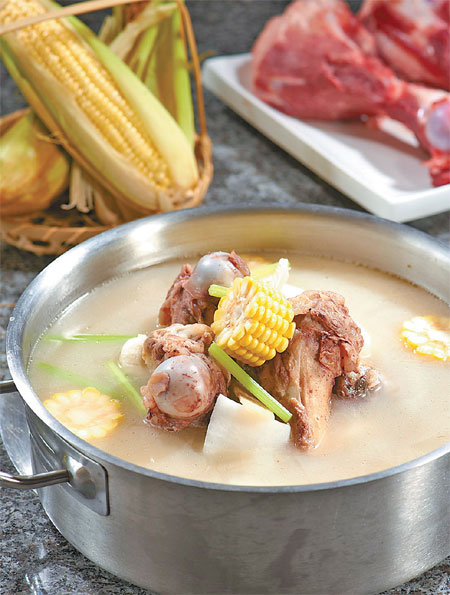
Pork stock bones and corn make a tasty broth base for hotpots. Photos Provided to China Daily |
|
Faigo's private rooms for comfortable dining. |

Winter offers chilly prospects for most restaurants, as they are faced with inclement weather that often keeps their regular patrons at home rather than dining out.
But it is exactly the winter cold that hotpot restaurants are eagerly looking forward to, because unlike others, this is the best time for business. Hotpots have always been the foodie favorite as the temperatures drop.
In northern China, they love to scald slices of lamb or beef and vegetables in stock in a high-funneled copper pot fired up by charcoal. The cooked meats are then dipped in a spicy sesame sauce that will often contain lots of coriander and flowering chives.
In the south of the country, hotpots have evolved into more varied styles, often served in individual pots heated by paraffin, or in stainless-steel pans over induction stoves. There is a vast variety of ingredients and base stocks to choose from and the very affordable prices add to the attraction.
But there are exceptions. As far back as 2004, the Cantonese-style Faigo Hot Pot had already started its innovative approach.
"We are aiming at the high-end customers," says Vincent Ye, group director of food and beverage at the restaurant.
The average cost per head at the restaurant is about 482 yuan ($77), according to feedback on Dianping.com, a popular online restaurant website. The expenditure for the average hotpot restaurant is around 75 yuan per person.
Faigo's stiff prices has not deterred its customers and now with three branches already doing roaring business, it has just launched another outlet at Rockbund, the new upmarket designer-brand neighborhood in Shanghai. Ye says the branch is the "upgraded" Faigo Hot Pot.
"We hardly find any fine dining Chinese restaurant in the area, so we chose to launch one," Ye says.
The restaurant offers a premium selection of ingredients and more than 10 unique hotpot stocks. Ye assures the stocks are made with all natural ingredients, with no preservatives or additives.
"We always suggest that customers have a bowl of soup from the pan first before adding the ingredients so they can savor the original flavors," Ye says. "Then they can also have another bowl after they have added the ingredients. The flavor will change after the soup absorbs the essence of the meat and vegetables."
The latest stock that Faigo Hot Pot has introduced is a broth made from the Chinese soft-shelled turtle, considered one of the most nutritious ingredients during wintertime.
In addition to the seafood delicacies, imported beef from Japan is another signature ingredient. The beef is shaved into wafer-thin slices for easy cooking and is lean and tender.
Another favorite is the selection of fresh meatballs made from fish, shrimp and beef.
For those who enjoy a nice glass or two, the restaurant also has an impressive list of red and white wines to go with your choice of hotpots.
And if you can still eat after finishing the hotpots, there is homemade yogurt and puddings to end a delicious meal.
lixinzhu@chinadaily.com.cn
(China Daily 12/29/2012 page12)