A love of reading takes constant nurturing.
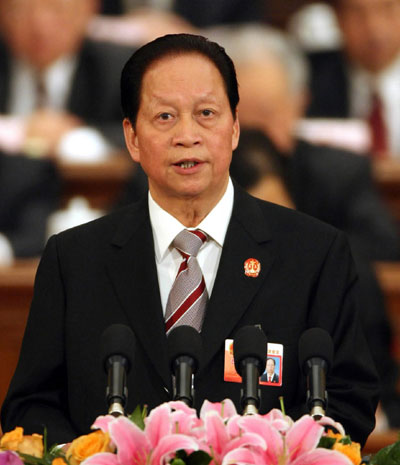
For this reason, the proposal for a national reading day makes sense. This is not a new idea. Zhu Yongxin, member of the Chinese People's Political Consultative Conference, has submitted the proposal every year since 2003.
Zhu, vice-mayor of Suzhou, East China's Jiangsu Province, wants September 28, the birthday of Confucius, to be our national reading day.
Zhu's proposal could be a major step in sounding a national alarm over the declining popularity of reading in China.
While income rises to unforeseen levels, college attendance balloons, and access to information explodes, the interest young Chinese show in reading has declined.
A nationwide survey last year found that less than 50 percent of Chinese read.
The fact that more than half the nation bypasses the joys and resources of reading is a deeply troubling trend.
The decline in reading has consequences that go beyond literature.
We sometimes underestimate how large a role literature has played in the evolution of our national identity. Literature has introduced young and not so young people to events from the past and principles of civil society and governance.
Unlike the passive activities of watching television and DVDs, reading is a highly active enterprise.
Active literacy is an intellectual skill and social habit that depends on a great many educational, cultural and economic factors.
Parental involvement in developing children's love of literature is critical to incorporating reading into their daily routines.
A national reading day might well become a powerful symbol. It could serve as a reminder to the whole country of the power and pleasures of reading. It could help cultivate lifelong readers.
It is time to bring reading into discussions of public policy. Libraries, schools, and public agencies do noble work, but addressing the reading challenge requires the vision of policymakers.
(China Daily 03/15/2007 page9)