Having researched both economics and the development of NGOs (non-government
organizations), CPPCC National Committee member Wang Ming has witnessed
first-hand the rise of civil society organizations in China.
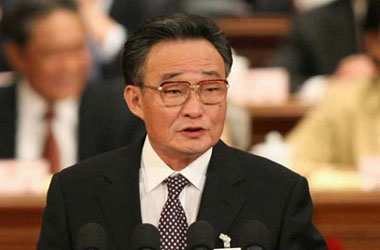
At this year's annual session of the CPPCC, Wang proposed that such
organizations be given more space and freedom to develop. He said they serve as
one of the driving forces in the effort to establish a harmonious society.
"A harmonious society, in my eyes, is a kind of social structure that is led
by the Communist Party of China, coordinated by the government, supported by
businesses and the market, participated in by the public and set up by civil
society organizations," said Wang, who is also an adviser to Tsinghua
University's NGO Research Center.
"It isn't easy to place civil society organizations in such an important role
because neither the public nor the government fully understands them," he said.
Wang urged the public to be more friendly toward and supportive of civil
society organizations.
"The more contact you have with NGOs, the more you will
know about them and support them," he said. 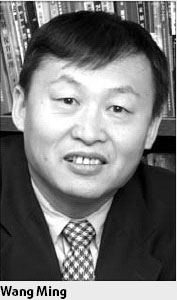
Wang went to Japan in 1992 to research the economic, social and political
development of developing countries. By his own admission, he knew little about
NGOs at the time.
However, after coming into contact with civil society in Japan, Wang was
hooked and has been working with NGOs ever since.
"During my time in Japan, I had no idea that China had its own home-grown
NGOs at that time," he said.
When he came back to Beijing in 1998, he found that although China had
cultivated its own NGOs, little research had been done on their work. They were
more like underground organizations, and little understood or even known by the
public.
Wang soon started writing about and working with China's nascent civil
society.
"After getting to know some of the founders of China's NGOs, such as Liang
Congjie from Friends of Nature and Liao Xiaoyi from Earth Village, I was moved
by their work and went deeper and deeper in my research until finally I was
devoting all of my time to NGOs," he said.
In 1998, Wang was instrumental in helping Tsinghua set up its NGO Research
Center.
However, Wang's work has not been without challenges. China's NGOs face many
difficulties beyond being misunderstood by the public and the government.
The biggest obstacle is a lack of both funds and professionals, Wang said.
The shortage of money has kept many good ideas from being translated into
concrete programs. Some NGOs have even had to veer from their original purpose
because of a lack of funding, he said.
For example, some environmental NGOs have transformed into anti-AIDS groups
because anti-AIDS campaigns have easier access to funding.
And without money, domestic NGOs cannot employ enough professionals.
Sometimes they have to recruit volunteers from university campuses, which leads
to short-term help and high turnover.
There are about 3 million NGOs in China, though only about one out of every
100 is registered. There are more than 11 million other social service
organizations in the country.
(China Daily 03/13/2007 page6)