The authorities are considering further relaxing currency controls to slow
down the expansion of the country's foreign exchange reserves, the chief of the
State Administration of Foreign Exchange (SAFE) said yesterday.
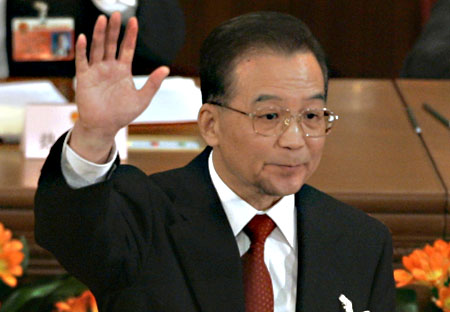
SAFE Director Hu Xiaolian said new measures under consideration include
allowing individuals to convert their renminbi holdings into foreign currency
and invest the money in overseas markets on their own, and allowing Chinese
companies to issue bonds denominated in hard currencies.
She was speaking to reporters on the sidelines of the annual session of the
National People's Congress.
China launched the Qualified Domestic Institutional
Investor Scheme (QDII) in April 2006. 
Under the scheme, selected institutions are allowed to pool individuals'
foreign currency holdings and invest the money in overseas financial markets.
But only a fraction of the $14 billion QDII quota has been used.
Hu said the design of QDII products had to be improved to make them more
attractive.
But analysts say expectations that the renminbi would appreciate further were
also a key reason for the lukewarm domestic response to QDII.
Hu said regulators had heard calls to allow individuals to buy foreign
currency and invest the money overseas by themselves.
"It is an idea worth exploring," she said. "But we need to research the
channels and amounts (for individuals overseas investments using foreign
exchange)."
Hu said regulators would also consider permitting domestic institutions to
issue bonds in foreign currencies.
"It is a very good idea, which we will definitely include within the scope of
our research," she said.
China allowed international development agencies to float yuan-based bonds
last year.
Responding to questions about the size of foreign exchange assets to be
managed by the proposed State Foreign Exchange Investment Company, Hu said:
"Really, it has not been decided."
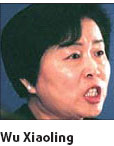 Wu Xiaoling, vice-governor of the central People's Bank of China, said
earlier this month that a new company would be established to manage the
nation's foreign exchange reserves.
Wu Xiaoling, vice-governor of the central People's Bank of China, said
earlier this month that a new company would be established to manage the
nation's foreign exchange reserves.
Former SAFE Director Guo Shuqing said yesterday that the new company would be
integrated in the Central Huijin Investment Co, the investment arm of the
central bank, which has already used part of the foreign exchange reserves to
recapitalize State-owned financial institutions.
However, Guo, now the chairman of China Construction Bank (CCB), refused to
make further comments on the issue. He was also speaking to reporters, but on a
different occasion.
CCB's overseas plan
Guo said his bank had plans to open branches in the
United States, Europe, Australia, the Middle East and Southeast Asia. 
But he said he had found it difficult to open branches in developed countries
because they have many barriers and restrictions for foreign players.
"Their banking industry should be more open," he said.
CCB now has six overseas branches, in the countries of Singapore, Tokyo,
Seoul, Johannesberg, Frankfurt as well as the Hong Kong Administrative region.
(China Daily 03/09/2007 page5)