BIZCHINA> Backgrounder

|
BIZCHINA> Backgrounder
|
|
Shanghai's early lines too 'eccentric'
By Miao Qing (China Daily)
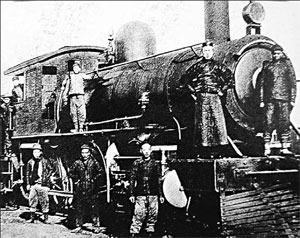
Updated: 2007-04-23 15:30 In a time when trains seem to go everywhere, it's hard to imagine that China's first railway line was destroyed because it was deemed to be too eccentric. As one of the cities that opened as a treaty port in the 19th century,Shanghaiwitnessed the country's first railway, Wusong Railway line, built by the British in 1876. However, in the years to follow, the tracks were destroyed by the ruling Qing Dynasty (1644-1911) government who were not ready for the "modern eccentric machine".
However, the abortive Wusong project signalled the beginning of an era when more railways were built. From 1881 to 1894, nearly 400-kilometers of rail tracks were laid across the country. A nationwide railway network was in formation at the beginning of the 20th century. In 1909, Shanghai's first railway station, located in the north of the downtown area, went into operation. At that time, the station mainly served a 311-kilometer-long railway line between Shanghai and Nanjing. Since locomotives at the time were steam engines powered by coal, the trip lasted up to nine hours. The railway station, which features classic English architecture, remained in use up until 1987 and was renovated into a railway museum in 2004. "Actually, even after the railway became operational, many people still preferred to travel by boat because they could not afford train fares," said Xu Ke, an engineer with the Shanghai Railway Museum. Train trips were not convenient for travellers at first because the lines reached few places. Nowadays, China boasts a railway network with an accumulated length of 70,000 kilometers. Direct train service is available from Shanghai to all major destinations in the country, including Lhasa, the capital city of theTibetAutonomous Region. "The change of locomotives also reflects the development of the Chinese railways," said Xu. "The locomotive was first powered by steam machines. Thirty years ago, it was gas engines, and now it is powered by electricity." (For more biz stories, please visit Industries)
|