BIZCHINA> General

|
BIZCHINA> General
|
|
Brand new ideas
By DING QINGFEN (Business Weekly)
Updated: 2006-04-11 08:48 For brands from both home and abroad to succeed and grow in China's fickle and relentlessly competitive market, innovation is the key. As China's economy expands with incredible speed, local consumers face increasingly more choices, and they are mature enough to discriminate the good from the bad. To win more market share, providing the same products and services as the competition is far from enough. "Companies here need to provide reasons for people to prefer their products," Charlie Wrench, president of Landor Associates, a worldwide branding and designer consultant, tells China Business Weekly during the Third China Branding Roundtable held at the end of March. "They should create innovative experiences for customers, as innovation makes your products lively and interesting, and they must deliver constant promise as well." Wrench's opinion is echoed by David Laird, commercial director with The Economist Group. "Companies must find new, innovative ways of creating and delivering the brands experience," he says. As for Chinese companies alone, they are brilliant at manufacturing and replicating, Wrench says. He adds, however, that he expected, and suggested, that companies shift from making new products to concentrating on developing existing ones. Chinese authorities recently called for an innovation-oriented country, encouraging local companies to shift more attention onto innovation in a bid to sharpen the nation's competitive edge. For Wrench, "innovation should happen at all levels." That is to say, you cannot stand out from the crowd unless you address all factors including how to better understand your customers, how to position and reposition your brands, connect them with your customers, and deliver the brand promise. "Understanding and mapping the reality of your target customer in China is the first step," says Wrench. The purchasing behaviour and consumption pattern of Chinese has changed substantially in recent years. It means companies must be more in step with consumer trends than ever before. Nowadays, young people are the main driving force in consumption. Not only are they always curious about new and fashionable items, they even influence the lifestyle of their parents. PepsiCo -- with "Dare for More Spirit" as its motto -- is one of those cashing in on this trend. By targeting young people and inviting newly-emerged film and music stars such as Fayer Wong and Jay Chou as its product promoters, it has succeeded in winning over the critical group, and even beats its arch-rival Coca Cola in China. Since the outbreak of the SARS epidemic in China in 2003, people's health has become a bigger concern. Amway, a global health care product manufacturer, sensed an opportunity and carefully tailored promotions. Now China is its largest sales market. Thanks to a more powerful local consumption capability, the luxury market is also gaining momentum in China. Many worldwide luxury brands, including LVMH, have entered China in the past three years, and 80 to 90 per cent of LVMH's sales in the country come from local people. "Precision targeting is the fundamental step to get the message across effectively, and you have to reach the right customer with the right offer at the right time," says Eric van der Berg, chief executive officer with Shanghai-based TNT Direct Marketing Services. There are a number of ways to reach your customers including TV, radio, outdoor advertising, websites, LCD panels and text messages. But according to Paul Pi, vice-president of marketing at Adidas Greater China, the country has its own special demands. "Because of China's mind-boggling scale, building brands is not only about volume but also about wrapping your arms around your target consumer in every way possible it is about engaging them on their terms and in unexpected ways." Adidas is known at being highly proficient in the art. After winning the bid to become the 2008 Olympics partner, Adidas has been working hard to bring its creative branding ability into consumers' lives, says Pi.
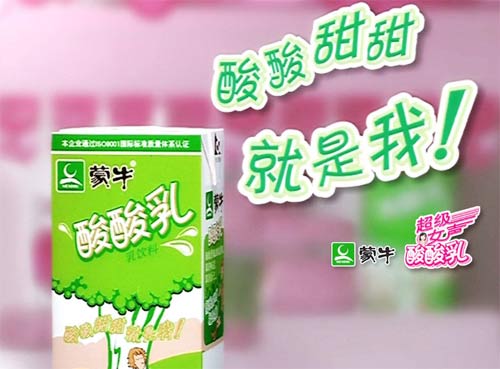
China Mengniu Diary Co Ltd in inner-Mongolia Autonomous Region is also an expert at skilfully making the most of media outlets to promote its branding image. In late 2003, its media promotion through CCTV during launch of China's first man-made aircraft - Shenzhou VI -- positioned itself as a healthy and nutritious brand. Mengniu Sour Yogurt's Super Voice Girl Campaign in the past two years has pushed the company to a new level, setting a branding example to the rest of China. By making good use of text messages, in-store and package placements, and a print and television campaign, the company has greatly increased its brand awareness, thus driving up its distribution network and sales. "Mengniu Sour Yogurt Super Voice Girl is a fantastic example for us local companies to learn in branding innovation," says Joe Wang, senior vice-president and chief marketing officer from Shanghai Jahwa United, which produces personal care products and cosmetics. Once you have successfully differentiated yourself from the competition like Adidas and Mengniu, what you have to do next is "stay ahead," says Wrench. Companies should make continuous efforts on research and development (R&D), says Andy Switky, general manager with IDEO Asia-Pacific Region, a global design company. "R&D is what most local companies lack on the way to innovation," says Wang. "But Jahwa will do more in this respect, and annually it invests five per cent of its sales into R&D." Switky says firms should concentrate on innovation within their existing products. However, most local mobile phone manufacturers, for instance, shun innovating in existing products, and only have interest in investing in producing new items, says Switky. Wang, from Jhawa, believes companies should extend the product and brand lifecycle as long as possible without extending product categories. "You can try to connect your existing products to new customers, rural areas for example, which holds great chances," says Wang. Jhawa is planning to expand its distribution network for Liushen Body Shampoo, a product which sells well in cities, to rural districts. No matter in what way companies innovate to maintain a leading position, "sustainable innovation is the key," says Julian Bond, global managing director with Research International. Although innovation is still lacking in most Chinese companies, the good news is they are aware of its importance and are seeking for ways to innovate, says Janice Siu, director of branding consulting with Landor Associates. China's leading computer manufacturer Lenovo's acquiring of IBM's laptop business in 2004 was an innovative act, and now the company is striving to put forward more innovative ideas for the coming 2008 Olympics, says Janice. There is also an increasing awareness from large and medium-size State-owned companies to be innovative, says Li Ming, branding consultant with Landor Associates China. "This indicates innovation is happening in China, but it will take time." Case study Bubble bursts The Daxing branch office of the Beijing Administration of Industry and Commerce cracked a criminal gang producing "Coca Cola" in a joint operation with police last July. Officials seized 4,000 bottles, 5,000 labels and 36,000 bottle caps. The value of the materials for making the counterfeit cola was almost 600,000 yuan (US$74,626) and the city's public security department is investigating. Fool's gold The Administration of Industry and Commerce of Urumqi city in Northwest China's Xinjiang Uygur Autonomous Region discovered an agency in the city's Shuimo District selling counterfeit Golden Monkey industrial vehicles worth 105,000 yuan (US$13,059) each. The Urumqi Administration of Industry and Commerce submitted the case to the public security department of the city last September. Fakes bagged The Haidian branch office of the Beijing Administration of Industry and Commerce discovered counterfeited products of almost 20 world famous luxury brands including Gucci, LV, Cartier and Mont Blanc in a store in the High-tech Convention and Exhibition Centre on the city's Northern Third Ring Road last October. The value of almost 400 items sold by the store exceeded 100 million yuan (US$12.3 million). One person was arrested and the case was submitted to the city's public security department. Counterfeit clothes The Hongkou branch of the Shanghai Administration of Industry and Commerce discovered 15,000 items of fake E Land clothing in the Wu Chang Road area of the city last October. It was valued at 500,000 yuan (US$62,189). The case was handed over to the city's public security department. Beer probe The Jiaocheng District branch office of Ningde Administration of Industry and Commerce in East China's Fujian Province raided a store selling counterfeit Xue Jin beer, according to reports in the city. Officials found 612 boxes of beer, 100,000 bottle caps and other related materials worth 210,000 yuan (US$26,119). The local public security department is investigating. Snappy labels The Wenzhou Administration of Industry and Commerce in East China's Zhejiang Province discovered 5,700 pieces of fake Crocodile trademarks and 11,400 counterfeit Playboy labels at a store in a shoes market in Wenzhou last July. Officials also found about 150,000 fake labels of the brands, worth 4,050 yuan (US$ 503.7), in the store's warehouse. The case is being investigated. (For more biz stories, please visit Industries)
|