Top Biz News
Network to be extended in countryside
By Wang Ying (China Daily)
Updated: 2006-03-28 05:56
 |
Large Medium Small |
The country's biggest electricity grid company, the State Grid Corp of China, yesterday said it planned to spend up to 20 billion yuan (US$2.5 billion) over the next five years to improve the power transmission network in rural areas.
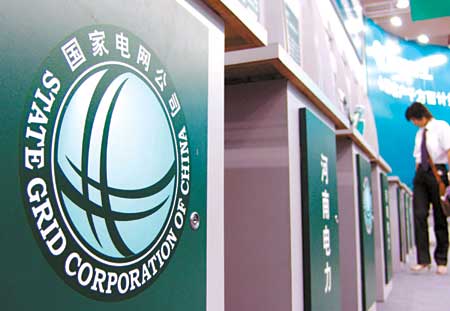 FACTS AND FIGURES: State Grid, whose business covers about 88 per cent of China's territory, aims to invest around 1 trillion (US$123 billion) in total for various projects to enhance the country's electricity networks by the year 2010. The company also plans to spend about 90 million yuan (US$11 million) to train electricians in rural areas. |
"The project is in line with the central government's new countryside scheme and will benefit millions of farmers in poor areas, especially in the west, which suffers from harsh environmental conditions," Liu Zhenya, president of State Grid, said yesterday.
The Chinese Government has rolled out an ambitious plan to build a "new socialist countryside" in order to improve the living standards of China's 745 million rural residents. The topic was discussed during the nation's National People's Congress.
State Grid, whose business covers about 88 per cent of China's territory, aims to invest around 1 trillion (US$123 billion) in total for various projects to enhance the country's electricity networks by the year 2010, Liu said.
Beijing-headquartered State Grid is the bigger of China's two electricity distributors, with the other being Guangzhou-based China South Grid, which supplies electricity to 5 provinces in the south.
The investment may come from the company's own capital, bank loans and state bonds, a company official, who declined to be named, said earlier. But he did not give further details.
State Grid aims to connect every household with the electricity network within its business reach by 2010.
Currently about 1.4 million households, or 6 million people, in rural areas live without electricity supplies.
Within the next five years, the company plans to build electricity transmission lines linking the main power grid with about 1.2 million households, which are concentrated in western areas, such as the Tibet Autonomous Region, the Xinjiang Uygur Autonomous Region and Qinghai Province.
The remaining 200,000 households will be connected to separate power generators fuelled by small hydro projects, wind farms or solar power plants because it may be too difficult and technically unviable to construct power supply lines in those areas.
Liu said the cost of improving the power network in villages would be split 50-50 between State Grid and local governments.
"It is a project beyond money, it is a scheme that will benefit the country in the long run - we, as a State-owned company, should take responsibility," Liu said.
"But it will be an arduous task," the president added.
For Tibet alone, Liu said, the company will have to invest about 8 billion yuan (US$986 million) to provide electricity to 160,000 remote households.
Liu said his company also planned to spend about 90 million yuan (US$11 million) over the next five years training electricians in rural areas so they can carry out maintenance.
(China Daily 03/28/2006 page9)