Chile forging closer economic ties with nation
Bilateral trade surpassed $61 billion in 2024, 8.6 times the level in 2006, with Chilean cherries a key highlight










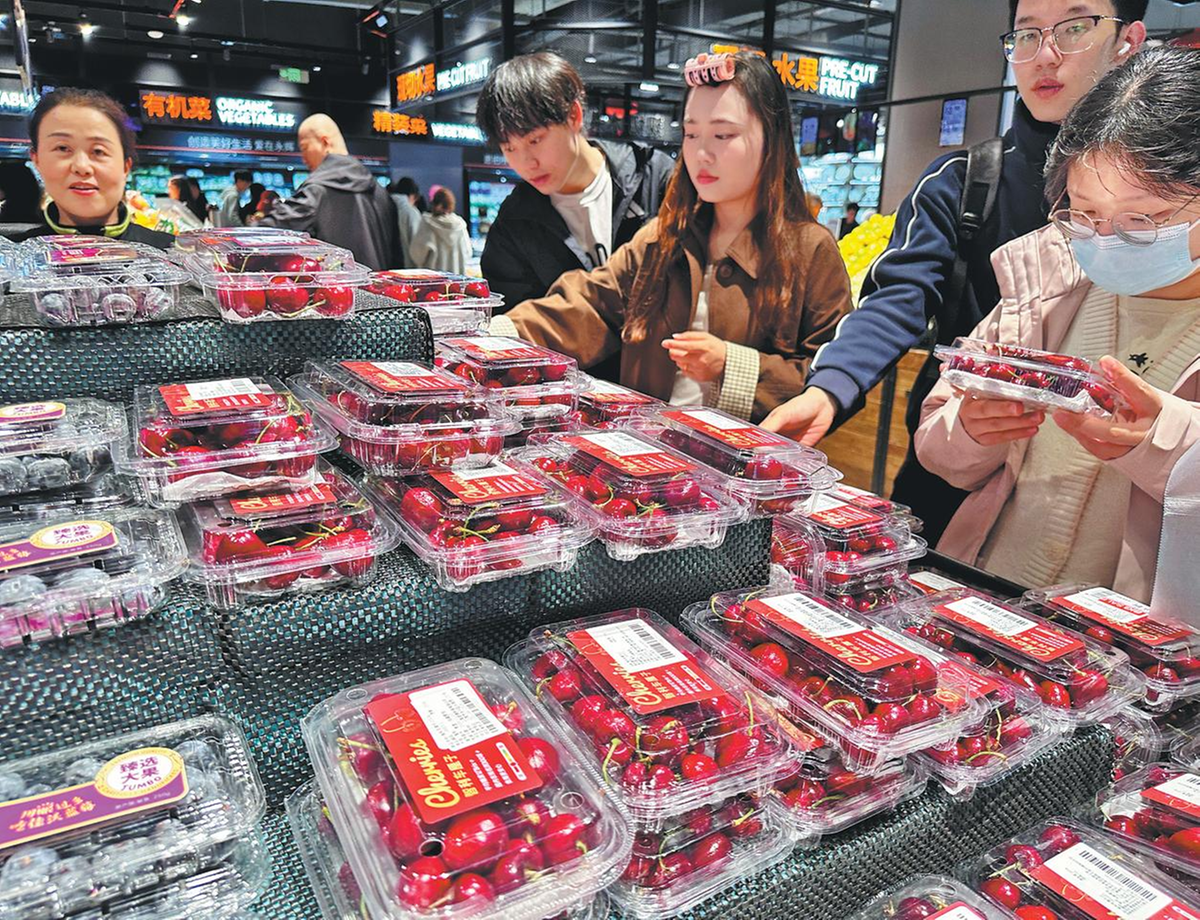
Over the past year, Ivan Marambio, president of Frutas de Chile, has made five trips to China. He spent two weeks in the country in Jan, continuing his frequent visits to maintain close ties with the world's largest importer of Chilean fruit.
"I am trying to keep track of my periodic visits to China," Marambio said, underlining the importance of constant engagement with the growing, fast-evolving market.
China has become a cornerstone for Chile's fruit industry, particularly cherries. "China is our biggest market," Marambio said. "We are sending almost 40 percent of all the fruit Chile exports to China. In the case of cherries, about 90 percent comes here."
The connection between Chile's exporters and Chinese consumers has grown stronger, and now, Frutas de Chile, which represents more than 200 exporting companies, aims to deepen that relationship even further.
"Now, we want to take the relationship with Chinese consumers to the next level," Marambio added. "We are investing in strategies to get closer to the consumers and better understand what they want. But this is not only about investing money — it's about investing in growing consumption. We want to grow our relationship with Chinese consumers in all the ways that we can. We want cherries to become part of everyday life, expanding how and when people enjoy them."
Bilateral trade
This growth has been fueled by robust bilateral economic exchanges. Chilean Ambassador to China Pablo Arriaran highlighted the dramatic expansion of ties between the two nations since the Chile-China Free Trade Agreement came into effect in 2006.
"Bilateral trade reached $61.66 billion in 2024, 8.6 times the level in 2006, representing the highest per-capita trade value between China and any South American country,"Arriaran added.
Chilean cherries, in particular, have become a key highlight in this flourishing trade. During the 2024/25 season, Chile exported nearly $3.3 billion worth of cherries to China. "With their auspicious red color conveying the warmth of the Chilean sun during China's winter, cherries have become a symbol of the close ties between our two countries," Arriaran said.
While the volume of exports has slightly dipped this year, a 12.1 percent decrease compared to the same period last year, Frutas de Chile remains optimistic about the season.
"The market this year is a little bit different," Marambio said. "We had an early harvest, so the season is 7 to 10 days ahead of schedule. We expect a slightly lower volume than last year during January and February, but we trust the work we've done in the offseason and during this season."
As a result of the early harvest, the cherry market in China is seeing some price fluctuations this year. According to data from Beijing Xinfadi wholesale market, wholesale prices for imported cherries have dropped from 36 yuan ($5.2) per 500 grams in 2024 to 26 yuan in January 2026, a clear reflection of supply chain shifts and changing demand patterns. According to Sunhola Gaobeidian wholesale market, due to weather conditions in Chile and an earlier harvest, the supply window for cherries this season has been shortened. Shipments are expected to decline significantly in February, with tighter availability around Spring Festival.
Despite these challenges, Marambio remains focused on the consistent quality of Chilean cherries as the driving factor behind their pricing power.
"The core advantage of our fruit comes from the quality of the fruit that Chile offers to the world," he said. "That is our main strength, and we grow with quality, and our members adapt to how the market behaves."