


The legend that never burned
Epang Palace was neither completed nor destroyed by fire, but instead, meticulously built on a drained lake bed, report Wang Ru and Qin Feng in Xi'an.









"Adopting this approach, people must maintain the sequential order of each section and coordinate the progress of each part. It is essential to ensure that no section is completed before another has started, avoiding any gaps in the workflow. The entire construction management system requires a high level of precision and organization," says He.
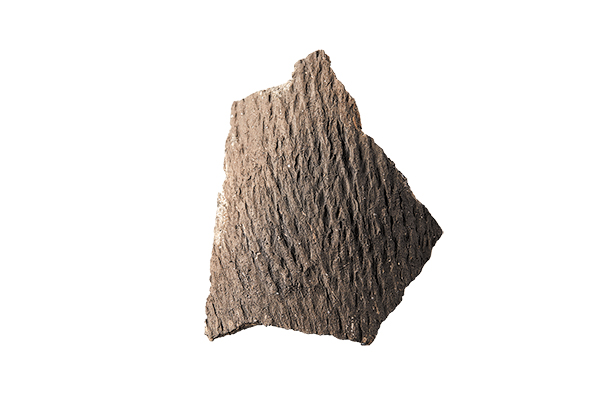
The quality of their work can also be traced from the remaining rammed earth, which Liu says was of very high quality. "The earth was remarkably clean, containing few pottery pieces, which means it must have been carefully selected before use. The rammed earth layers were also uniform in thickness, and they were rammed to be particularly solid and hard," says Liu.
"The highest point of the platform stood over 9 meters above the ground, signifying a huge earthwork at that time. We have found that the construction teams had clear tasks and divisions of labor, working on the platform in segmented sections. It offers a rare glimpse into the management of large construction projects in the Qin era," says Liu.
Historical literature shows that in 212 BC,Emperor Qinshihuang thought that the Xianyang Palace he was using was relatively small in comparison to the size of the populous capital Xianyang. He ordered the construction of another imperial complex in the Shanglin Garden, a royal garden that was used from the Warring States Period (475-221 BC) to the Han Dynasty (206 BC-AD 220). Altogether, he dispatched 700,000 men to construct his mausoleum and the Epang Palace.
Two years later, the legendary emperor died and construction was paused. Then, in 209 BC, the second emperor of the Qin Dynasty restarted building work to fulfill his father's wishes, but he, too, died two years later. With the downfall of the Qin Dynasty in 206 BC, the construction came to an end without completion.
Over decades, generations of archaeologists have confirmed the site to be that of the Epang Palace using multiple types of evidence. Official archaeological efforts on the site started in 1994. From 2002 to 2008, through coring and excavation, archaeologists clarified its scope and the fact that it was neither completed nor set on fire. Since 2015, archaeologists have continued to learn more about the selection of the site and details of the complex's construction.