Food's disappearing community
Book explores people's relationship with meals in today's fast-paced society, as cooking becomes a thing of the past with the rise of delivery platforms, Yang Yang reports.









Many people might not realize that one basic life necessity has lost control: meals. With so many online shopping platforms, people have discovered the freedom to get anything they want quickly and at a reasonable price.
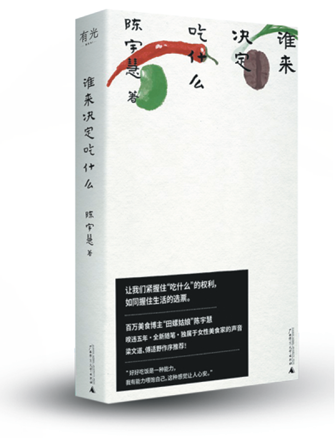
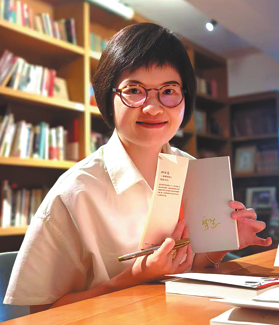
However, 41-year-old Chen Yuhui, known by the online handle Tianluoguniang, points out in the book Shuilai Jueding Chi Shenme (Who Decides What to Eat) that people have lost their autonomy over food, reflecting a deeper concern about disappearing community life in a result-oriented society that prioritizes efficiency.
"Many people don't realize how often their dining choices are made for them," she says.
For instance, one might plan to have dinner with friends, but their boss asks them to work overtime, changing their plans. Or, they might plan to eat at restaurant A, but find a coupon for restaurant B and decide to eat there instead. These are examples of passive choices, Chen says.
Similarly, when ordering food, one might want a particular dish, but if the restaurant offers a discount on a set meal, they might choose that instead.
Another example many people complain about is that tomatoes taste bland compared with those from their childhood memories, because most tomatoes available are hard-skinned varieties "more fitting for long-distance transportation, which results in the loss of the flavor we are familiar with," she says.
"These scenarios illustrate how modern people gradually lose control over their food choices," she says.
She explains that this trend of "passive choices about food" leads to many overlooked issues, including the decline of community life as farmers' markets are replaced by online food delivery platforms, flavor loss in vegetables and meat, and the persistence of stereotypes about food and cuisines, which result in dishes that are excessively salty or spicy. Additionally, this trend contributes to increasingly monotonous lifestyles that revolve primarily around work.
Based on her years of observation, Chen wrote the book Who Decides What to Eat, published in June and now one of the 10 most popular nonfiction Chinese books of 2025 on the review platform Douban.
In the book, Chen uses 18 articles, categorized into three sections, to examine different aspects of food in modern society — "Food is not just food"; "Rebuild relationships through food"; and "Starting with food: Eating can be more important".
In the section "Food is not just food", Chen writes about how scallions in Beijing are different from those in her hometown in Hunan province; how, in her memory, tomatoes taste so different now; how people who favor aesthetics change the flavor of food; and how fast-paced, efficiency-oriented modern life makes it difficult for people to eat fresh food in big cities.
In the second section, she writes about people's relationship with food and relationships built around food and cooking. The third section focuses on what people have ignored and sacrificed in eating.
An online user nicknamed Justin Yan on Douban says in a comment: "The book takes us on a journey from small towns to big cities, from childhood to the present, highlighting how changes in social and living environments, as well as advancements in fresh food cold chain technology, have influenced what we eat every day. This perspective on life is both novel and intriguing."
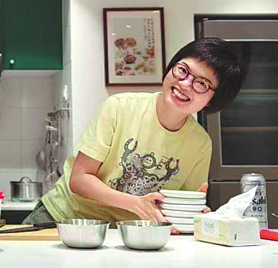
In 2014, Chen, a product manager at a Chinese IT company, felt she was losing control over her life. With a love of cooking, she decided to get up early and make breakfast every day to regain control. She posted photos of her breakfasts and recipes on Sina Weibo and WeChat, attracting many followers.
"When I started posting recipes, online food delivery platforms were not as developed. Many people followed me for my recipes," she says.
In 2016, Chen quit working at the IT company and started operating her social media accounts full-time. Before writing Who Decides What to Eat, she published four recipe books.
However, as new media platforms began changing how people found and used recipes, and society's pace accelerated, she observed that fewer people had the patience to read her carefully written recipes or the time to cook.
"In the past, people found the recipes I posted very interesting, so they wanted to try them, but now, if you have a carrot, you search for a recipe that includes carrots," she adds. "The logic is reversed."
"As online food delivery platforms developed, if people want to eat something, they just order. In other words, people don't need recipes much anymore," she says.
Another issue she has observed is that people have gradually lost their ability to choose the right food.
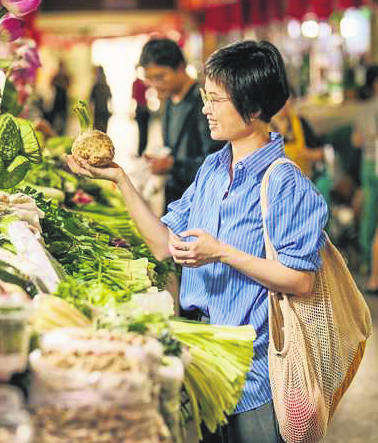
Young people, especially those living in major cities like Beijing and Shanghai, often rely on online delivery platforms to buy ingredients when they want to cook, rather than going to a market.
"When you want to cook fried cabbage, you find an online shopping platform offering three types of cabbage. One is organic, and another is for baby food, both of which are more expensive than the common cabbage," she says.
Chen says that she usually buys the cheapest one, which she finds bitter compared to those in Hunan. It was not until she attempted to write a recipe for cabbage salad and needed to find the sweet variety that she bought all the cabbage varieties available from an online platform.
"The one for baby food is what I eat in my hometown. Buying food online is tricky. If you're not someone who wants to eat that cabbage every day, why would you spend so much time on it?" she says.
"If it's your first time trying cabbage as a child or a person cooking it for the first time, and you pick a cabbage that tastes terrible, you might think that's just how cabbage tastes. If you then develop an aversion to cabbage, your choice is essentially made for you. This situation is unfortunate, and it's worth being written about and shared," she says.
When people see photos of food on online delivery platforms, their ideas about how to cook these ingredients tend to fade. Chen says, "That's because they are completely different from what you see in the market", she says.
"For example, when you see fish in the market, you can tell whether it's fresh or not, and you can pair it with ingredients found nearby. But the fish you see online are 'zombies'," she says.
Chen makes great attempts to inform people online how to choose the right food, but readers want a shopping link.
These changes urge her to consider deeper reasons for food and cooking in modern society.
"People are feeling disconnected from their food. To help bridge this gap, I started a podcast in 2022 and wrote this book in 2024," she says.
"Modern people don't have the patience to accumulate this common sense because they don't want to spend time on it," she says. "This book provides a different perspective on how people relate to food."
People's changing attitudes toward preparing meals reflect a deeper mindset about life, Chen says.
"Buying groceries and cooking involve a certain level of tolerance for mistakes. Whether it's picking the wrong ingredients, arguing with the vendor, adding too much salt, or overcooking the vegetables, you need to be flexible. However, many people seem to have little tolerance for mistakes these days," she says.
Today, people tend to focus on results and efficiency, whether it's cooking or watching a film. This results-driven approach is why many people choose delivery, as they believe it might be better than what they can cook themselves, she says.
Podcast host Fu Shiye says in her preface for the book: "How do we distinguish between 'useful' and 'useless'? Must the 'useless' be discarded? When did speed and efficiency become the sole standard for everything? If people are seen merely as resources to be exploited rather than living individuals, then eating becomes just a function to provide necessary fuel for continuous high-speed operation."
Eating can be more important, Chen says, for food is a small window into understanding the world and life.
"If you love tomatoes but find the available ones bland, do you simply grumble or invest more effort and money into finding flavorful ones, even if it means waiting a long time for delivery? Searching for the right variety and enjoying the process reflects different problem-solving abilities, which is what I mean by food being the smallest unit for understanding the world," she says.







Today's Top News
- Retired judges lend skills to 'silver-haired mediation'
- Are you ready for robots to roam your streets?
- Good start for new five-year plan stressed
- Nation calls for cooperation and free trade
- IMF upgrades China's growth forecast to 4.5%
- US' coercion threatens global governance