Performing in tribute to a legendary master
Peking Opera singer recalls receiving a gift from her idol as she embarks on her first national tour, bringing back a classic piece, Chen Nan reports.









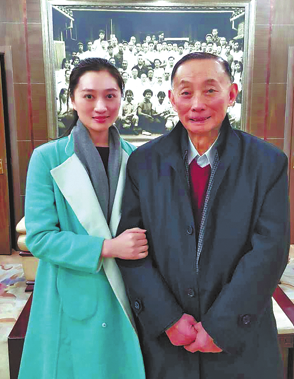
In 2015, Lu Jie received a gift that would shape the next decade of her life: a CD of Peking Opera master Mei Baojiu (1934-2016), son of the legendary Mei Lanfang (1894-1961), performing Taizhen Waizhuan (The Anecdotes of Taizhen).
"I played it in my car every day," Lu recalls. "Sometimes, I'd arrive home and just sit there, unwilling to leave the car until the aria finished. His voice … was like something from heaven."
As Mei Baojiu's last disciple, it was the only CD that he ever gave to Lu, who spent countless hours not only mastering his technique but also understanding his philosophy. In doing so, she inherited the performing style established by his father, master Mei Lanfang.
Peking Opera, or jingju, has a history spanning over 200 years and was recognized by UNESCO as an Intangible Cultural Heritage of Humanity in 2010. A unique fusion of singing, dancing, martial arts, and acrobatics, it captures the soul of Chinese theater, drawing audiences into a world of emotional intensity and physical precision.
Mei Lanfang is particularly revered for his groundbreaking artistry in the nandan (male performers in female roles) tradition. His legacy continues to resonate profoundly within Chinese culture and beyond.
"He (Mei Baojiu) not only carried on the enduring legacy his father created, but also encouraged me to stay open-minded, just as his father had advised him," recalls Lu. "'You must see more, learn more, not only for the dan (leading female character) roles, but all roles,' he once told me."
Mei Baojiu's sudden passing in 2016 was a devastating blow. Ten years after his death, Lu is embarking on her first national tour, beginning on Jan 25 in Beijing and traveling through five cities, with 13 performances throughout 2026.
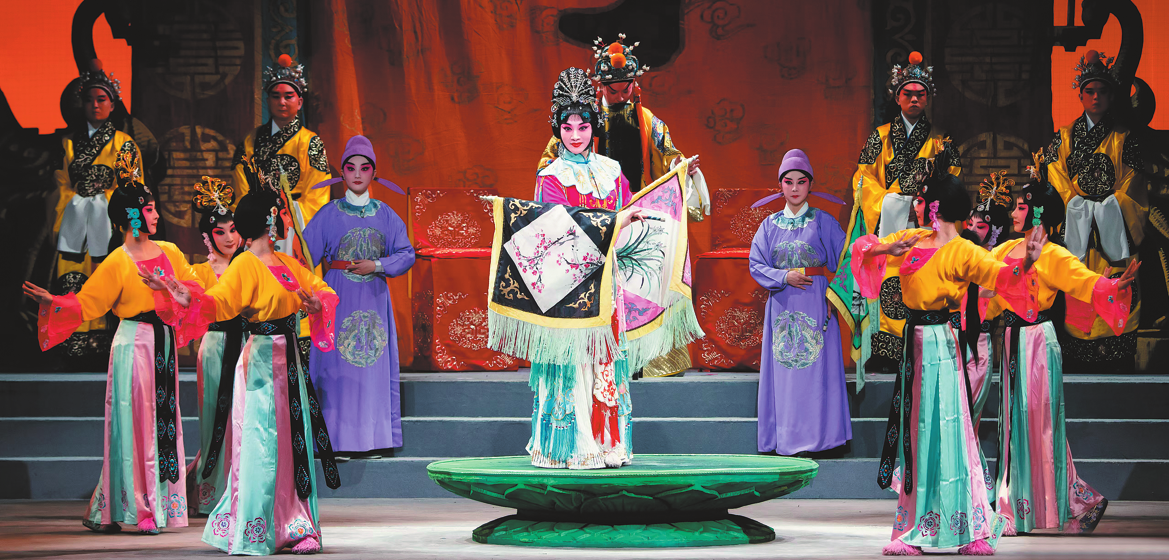
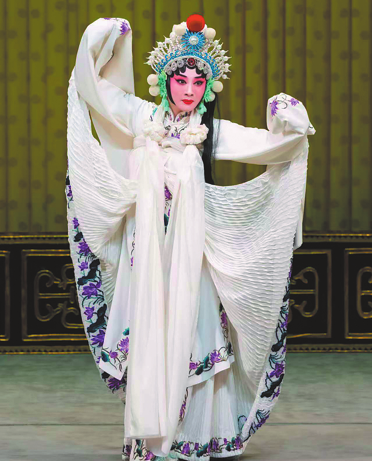
One of the pieces she will perform during this tour is Taizhen Waizhuan, a masterpiece premiered by Mei Lanfang in 1925 and 1926; the first two parts were performed in 1925, and the final two in 1926.
The piece, inspired by Changhen Ge (The Song of Everlasting Sorrow), a narrative poem by Tang Dynasty (618-907) poet Bai Juyi, tells the tragic love story of the legendary royal concubine, Yang Yuhuan, and Tang Emperor Xuanzong.
Mei Lanfang's version captivated audiences with its original songs and choreography, becoming a resounding success. Taizhen, in the title, refers to Yang's Taoist name.
"Taizhen Waizhuan holds special significance for this tour, not only because of the CD I received from my teacher, but because it also marks the 100th anniversary of its premiere," says Lu. "The piece represents the pinnacle of Mei Lanfang's artistry."
"The piece is relentless," Lu says. "From beginning to end, you are inside the character. You sing, you move, you dance. There is no moment to rest."
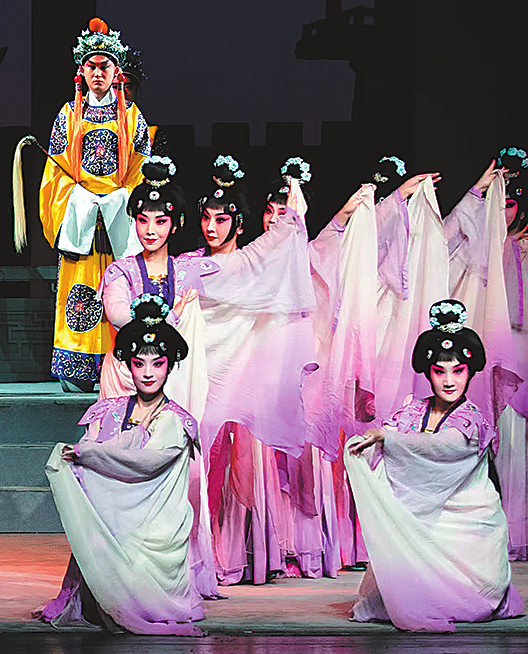
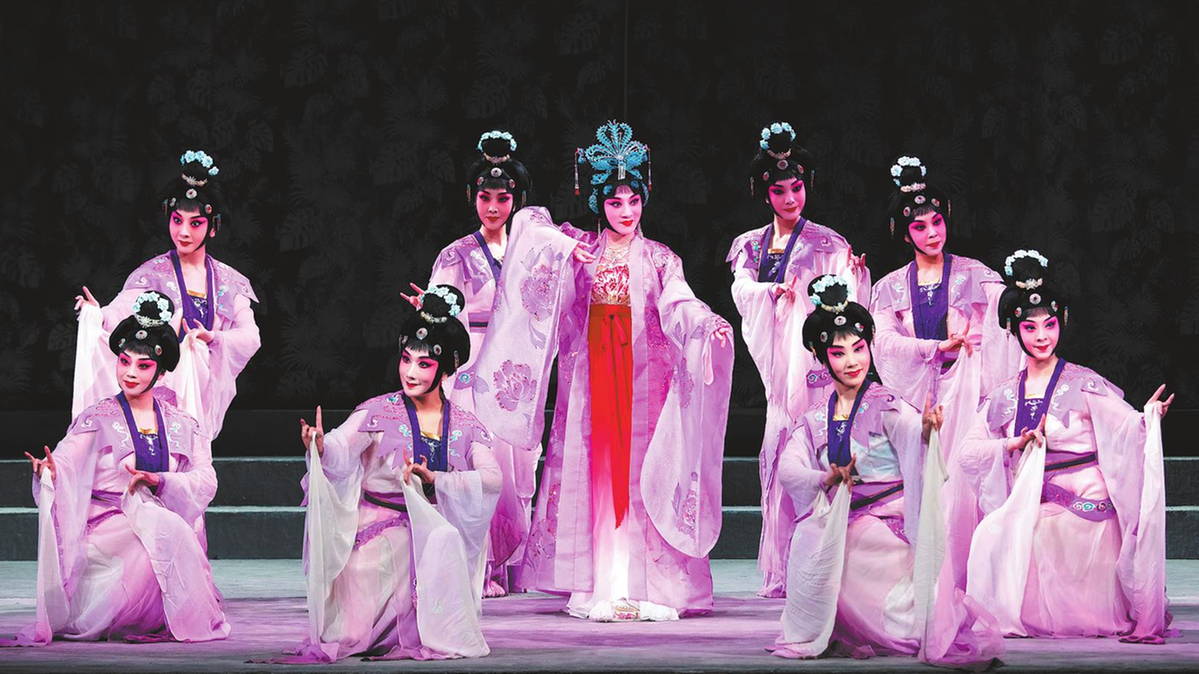
For this tour, she has even reconstructed the movement Nishang Yuyi Wu (Rainbow Skirt and Feathered Robe Dance), bringing Yang's mesmerizing dance to life on stage. The dance is said to have been the legendary concubine's performance to captivate the emperor, and Lu's reinvention infuses the 200-year-old art form with new life while preserving the essence of the Mei style.
"The opera was rarely performed because of the extravagant stage setting and the large number of actors required," says Lu, an actress of Jingju Theater Company of Beijing who will perform alongside actors and actresses from other Peking Opera companies in Tianjin, Shanghai, and Hubei province.
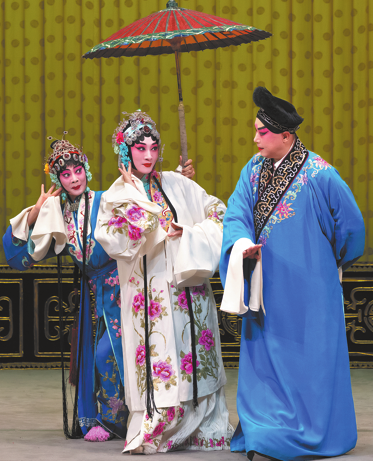
In addition to the opera, the tour will feature five other classic pieces, each reflecting Lu's personal growth and her deepening understanding of Mei-style artistry. These include The Legend of the White Snake and The Female Generals of the Yang Family, both of which highlight martial arts movements.
"These six plays encompass nearly all vocal styles, role types, and expressive possibilities for the dan role," she explains. "They require both refinement and martial arts skills. They're physically challenging, but each performance offers an opportunity for growth."
Born in Henan province, Lu, 38, did not come from a theatrical family, but traditional Chinese opera captivated her at an early age. Her grandfather was a passionate fan of Peking Opera, playing it constantly on the radio. She would mimic every phrase, and neighbors came to watch her. By age 10, she was determined to enter a local Peking Opera school.
After graduating from the National Academy of Chinese Theatre Arts in Beijing in 2014, Lu joined the Jingju Theater Company of Beijing the same year. There, she immersed herself in the demanding Mei style — a combination of grandeur, sweetness, and expressive range that requires both technical mastery and deep emotional commitment.
In 2013, while still a student, Lu met Mei Baojiu. He had come to watch her performance of The Legend of the White Snake. After the curtain call, he stepped onto the stage beside her, beaming and applauding her performance. From then on, she visited him regularly, learning from him not just on stage, but off it as well.
"It's a very bold attempt, as all the programs are challenging," says Shen Shihua, a Kunqu Opera master and professor at the National Academy of Chinese Theatre Arts, who once taught Lu Kunqu Opera. "But young actors cannot stay in the same place forever. They must take bold steps forward. I feel deeply gratified watching my disciple's journey."
Zhu Jia, Party secretary of the Beijing theater company, notes that 2026 marks the 80th anniversary of the founding of the Mei Lanfang Peking Opera Troupe, one integral part of the company. The theater will host a series of commemorative events throughout the year.
"Lu's tour is another way to pay tribute to Mei-style classics and pass on the cultural heritage," he says. "Through the performances of younger actors, this art form will continue to thrive and evolve."




Today's Top News
- Retired judges lend skills to 'silver-haired mediation'
- Are you ready for robots to roam your streets?
- Good start for new five-year plan stressed
- Nation calls for cooperation and free trade
- IMF upgrades China's growth forecast to 4.5%
- US' coercion threatens global governance