


Ancient words reawaken as China's classics go digital









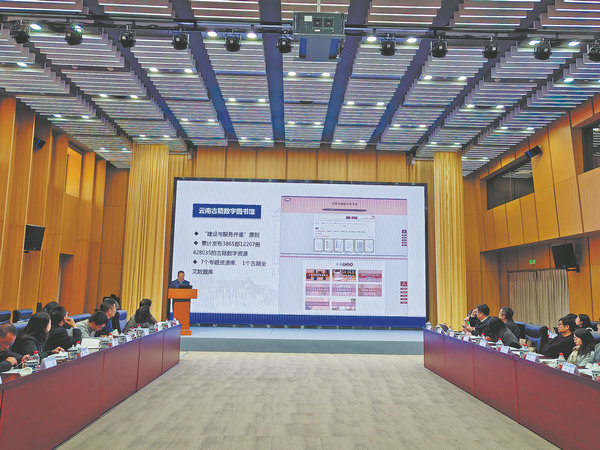
After centuries spent quietly on library shelves, thousands of ancient texts are now just a click away for readers. On Dec 30, a consortium of 10 museums and libraries across China unveiled 3,748 meticulously digitized ancient books — making a large trove of cultural heritage freely accessible to the public.
Led by the National Library of China in Beijing, this release marks the 11th expansion of the national online network known as the Chinese Ancient Books Resources Database, since its launch in 2016. After this release, the database now has 107,000 digitized copies of ancient books.
The release also brings the total number of digital ancient books and related literature available nationwide to 161,000.
"With the release of digital resources, we truly bring the words in ancient books back to life and make the precious texts and special collections hidden in the archives accessible to a wider audience through digitization and knowledge services," says Chen Ying, deputy director of the National Library of China.
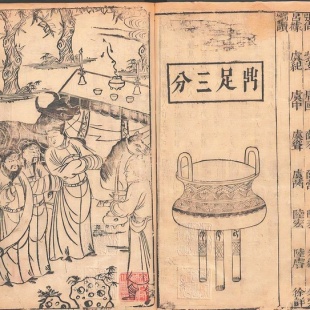
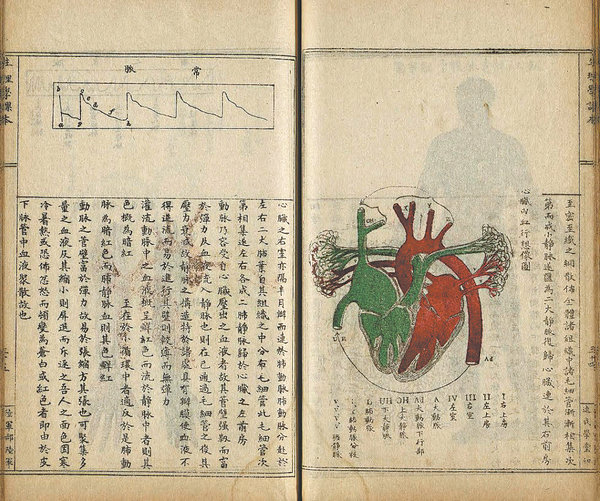
Among the highlights is a batch of digitized books donated by the Harvard-Yenching Library to the National Library of China in February. Most of these works can be traced back to various schools of thought from the Spring and Autumn Period (770-476 BC) to the Han Dynasty (206 BC-AD 220), as well as ancient technical writings and local chronicles.
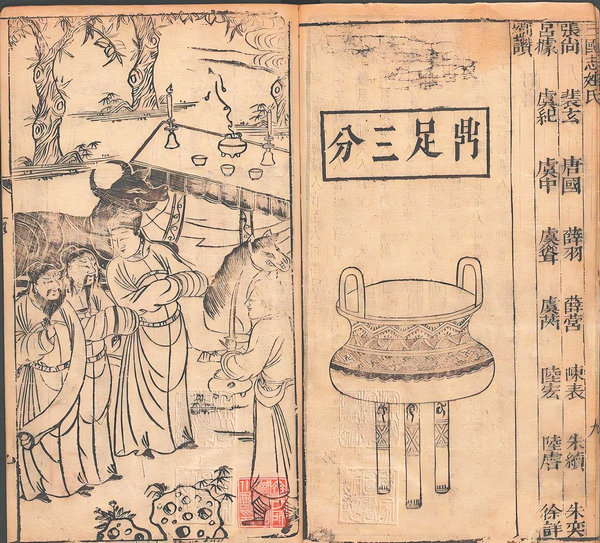
Shen Jin, former director of the Harvard-Yenching Library's rare book office, says some of the digital resources are particularly valuable because no domestic copies exist in China. These include a Ming Dynasty (1368-1644) edition of the ancient Chinese historical novel Romance of the Three Kingdoms and a Qing Dynasty (1644-1911) copy of Xingmeng Pianyan, a 17th-18th century Chinese novel that reimagines stories from Qing Dynasty novelist Pu Songling's masterpiece Liaozhai Zhiyi (Strange Tales from a Chinese Studio).
"As early as 2009, the two libraries reached an agreement to digitize the ancient Chinese books stored in the Harvard-Yenching Library. This time, we have taken a big step forward by donating the ancient classics to China. Such a way of returning digitized ancient Chinese books is also part of our efforts to protect these ancient treasures," says Shen.
"The Harvard-Yenching Library, like its counterparts in China, embraces the belief that scholarship is essentially a public resource. Linguist Liu Bannong once said, 'words serve as symbols for expressing thoughts and emotions, and are public resources for the world'. Therefore, I believe that whether it is a public library in China or a private university in the United States, the documents, books, and other materials collected should be regarded as public resources and made available to researchers and readers alike," he adds.
Another notable component of the release by the National Library of China is the publication of 620 types of digitized stone tablet rubbings spanning more than 1,400 years of history. The original tablets were mostly discovered in temples and ancestral halls of Henan and Shanxi provinces.
"Their discovery is the result of our long-term rescue and preservation efforts. They form a relatively systematic and comprehensive collection of materials, covering a great range of forms, like temple steles, poetry tablets, imperial edict steles, and tombstones. Some of the rubbings possess significant artistic value, offering a vivid reflection of various aspects of local culture," says Liu Bo, deputy director of the Library of Ancient Books of the National Library of China.
Other newly released resources include Ming Dynasty materials about keju, or the imperial civil service examination, from Tianyige Museum in Ningbo, Zhejiang province, and Qing Dynasty folk songbooks of the present-day Chaoshan area (including the cities of Shantou, Chaozhou, Jieyang, and Shanwei) in Guangdong province from Tianjin Library.
Also highlighted is a smart service platform for ancient Chinese books. The platform, developed by the National Library of China and over 180 ancient book collection institutes nationwide, allows automatic punctuation, classical-to-modern Chinese translation, artificial intelligence-assisted question-and-answer, word lookup, and version comparison to help people better understand and use the ancient materials with cutting-edge technologies.
The platform began trial operations in April last year, and was officially released in September. By the end of December, the website had received more than 10 million visits, says Xing Jun, the chief engineer of the library's information and technology department.