Tourism written in the stars
Lijiang offers diamonds in the clear sky for visitors seeking the self-healing powers of astronomy, Li Yingxue reports.









Urban demand for nature
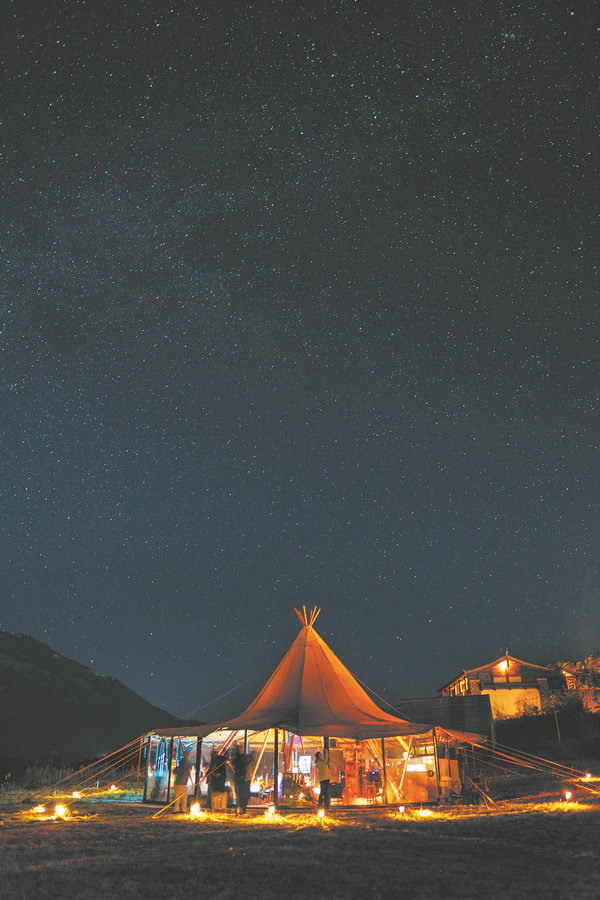
According to Yang Shuhong, director of the Lijiang Municipal Administration of Culture and Tourism, the stargazing season serves a dual purpose: transforming Lijiang's "irreplaceable night sky" into experiential tourism products, while using the stars as a thread to connect snowy mountains, lakes, and ethnic culture, and promote the integration of "stargazing + ecology+ culture + study tours".
"In the past, most people associated Lijiang with its old town or Yunnan-style scenery. Now, we hope people will form a new impression of Lijiang," Yang says. "We want to upgrade cultural tourism from traditional sightseeing to in-depth experiences."
Responding to growing urban demand for pristine nature and spiritual healing, Yang says star tourism offers visitors a way of "escaping the noise and conversing with the universe".
In 2025, the city released the Lijiang Stargazing Map, identifying seven premium stargazing camps. Two themed routes have also been designed, covering scientific research, popular science education, and family-oriented activities, delivering an allday experience of "mountain landscapes by day, starry skies by night," Yang says.
Lijiang has also organized starry-sky concerts, astronomy lectures and public science events around significant celestial phenomena, including the Geminid meteor shower.
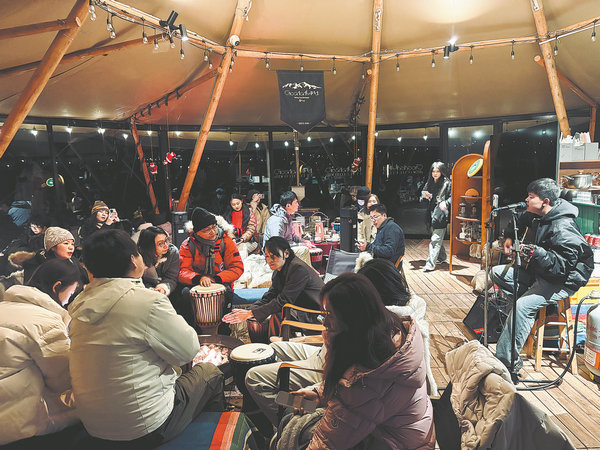
"We integrate the starry sky with local culture," Yang adds. "As a region with a strong presence of ethnic minorities, many local cultures in Lijiang have long engaged in a dialogue with the stars."
By leveraging the stargazing season, the city aims to stimulate the development of related industries such as homestays, camping, and cultural and creative products. "We will continue to build Lijiang into a premier stargazing destination, serving visitors from across China and around the world," Yang says.
Zhao Yixiong, an official with the Lijiang Association for Science and Technology, says surveys conducted in recent years by domestic astronomers and researchers have confirmed Lijiang as highly suitable for stargazing.
He notes that audiences for night sky gazing have expanded steadily from professional astronomers and astrophotography enthusiasts to ordinary visitors who simply enjoy looking up.
As a result, more people are viewing Lijiang's starry skies than ever before. The association continues to invite astronomers and well-known night-sky photographers to Lijiang for science outreach, and has coordinated with the Guangdong Astronomical Society to bring astronomy enthusiasts from Guangdong province to the region.
"Some astronomers have suggested designating a stargazing development zone between Lijiang's snowy mountains and the old town, with unified light control across the area," Zhao says. "All lighting for homestays and guesthouses would follow corresponding design and construction standards."
He adds that the Geminid meteor shower is particularly suitable for visitors, as it can be observed with the naked eye and requires no professional equipment.