A sweeping portrait of China's vast northwest
A newly released book guides readers through the dramatic landscapes and natural resources of Xinjiang, underpinning its splendor and modern development, Fang Aiqing and Mao Weihua report in Urumqi.










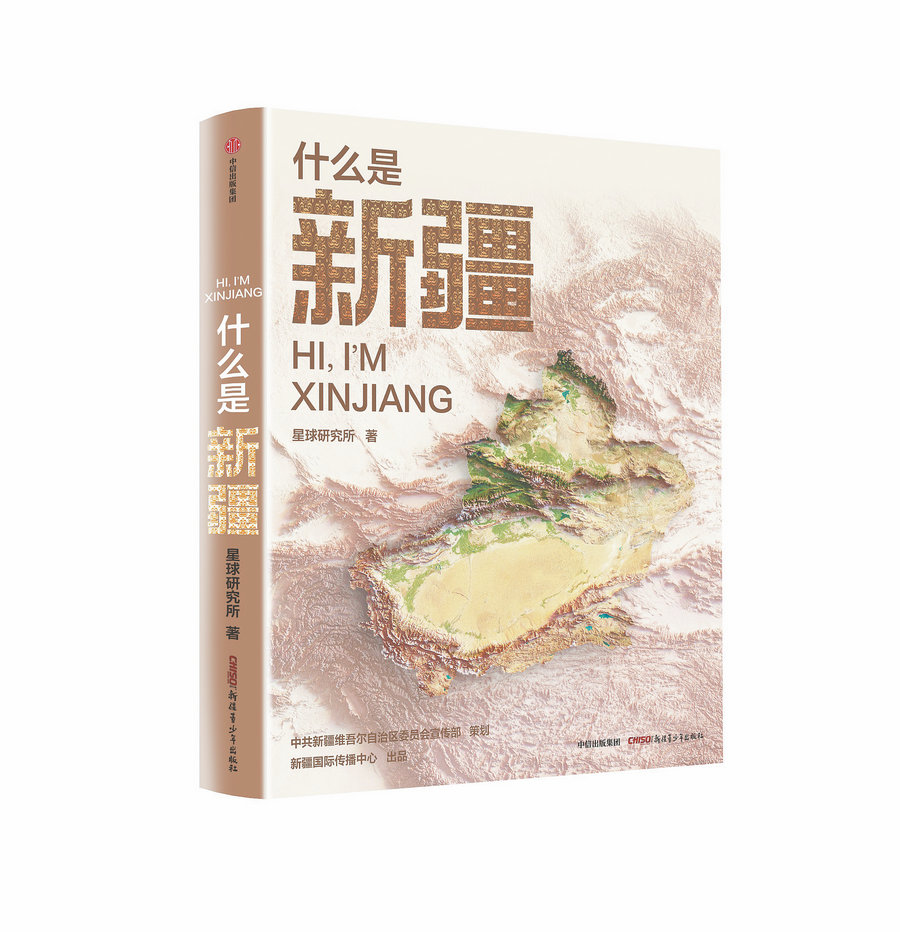
Teeming with life
The core concept of Hi, I'm Xinjiang, according to Hong, rests on a metaphor that compares Xinjiang to an all-embracing ocean — an ocean of life, civilization and future possibilities.
This may seem counterintuitive given that Xinjiang, sitting at the heart of Eurasia, is far from any real sea.
Therefore, to help readers grasp this vision, the book traces the land's origins back 360 million years, to a time when the ancient blocks that would eventually form Xinjiang — and indeed much of what is now China — existed merely as scattered microcontinents and shallow epeiric seas amid prehistoric oceans.
Over hundreds of millions of years, tectonic activity gradually forged Xinjiang into its present state. Three major mountain systems — the Altay, Tianshan and Kunlun ranges — stretch roughly east-west across the region and sandwich the Junggar and Tarim basins in between.
Moisture carried by winds from distant bodies of water, such as the Atlantic Ocean, the Mediterranean Sea, the Indian Ocean and the Arctic Ocean, travels thousands of kilometers to bring precipitation to this landlocked region.