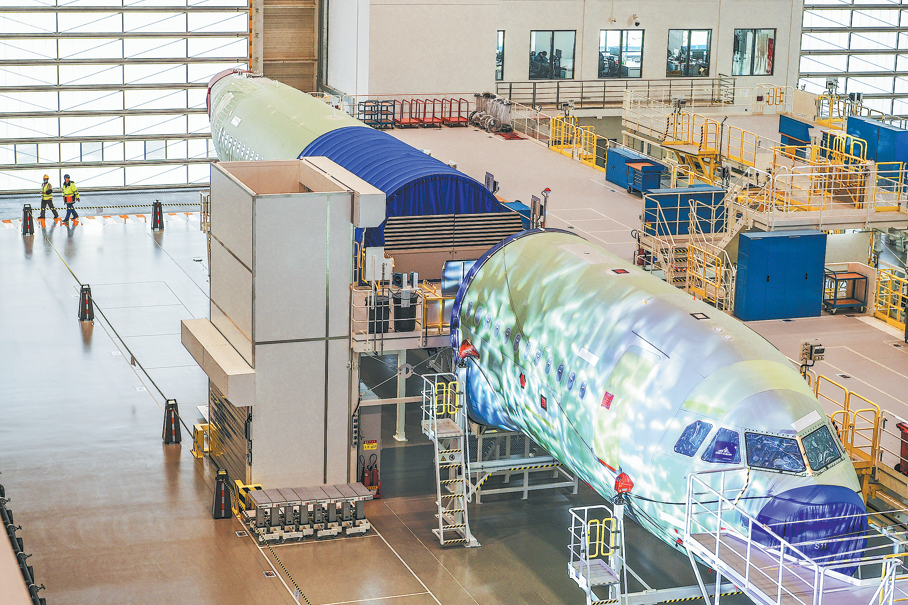
Multinationals leveraging key China expo for growth
CIIE, along with its mini U-Fair, helping firms understand local consumption trends and preferences









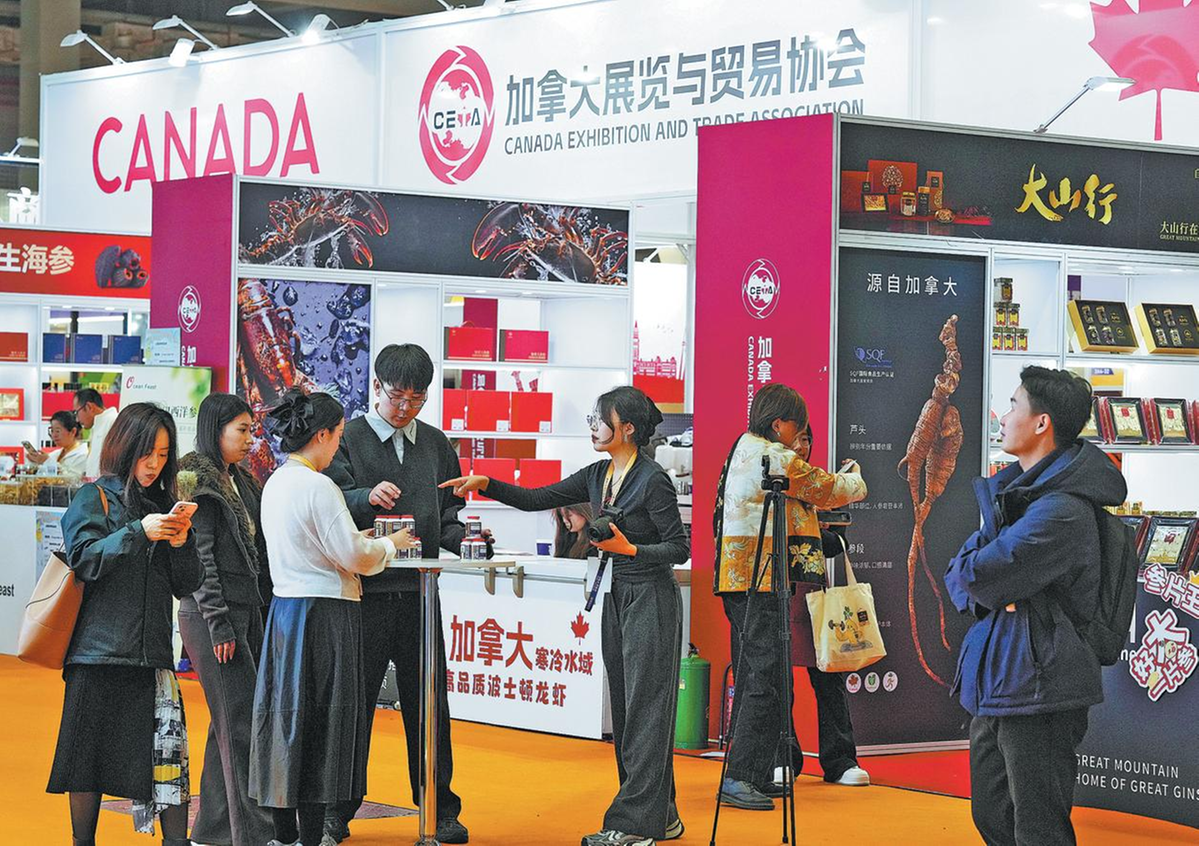
For those who have not experienced the vibrancy at the annually held China International Import Expo this year, the CIIE U-Fair has largely made up for their regrets.
Tang Jindi, 68, is one of them. With her daughter's help, she booked the ticket to the U-Fair via the exhibition's official WeChat mini program a week earlier and, by 10:30 am on opening day, was already carrying three bags of spoils.
"I bought a cashmere scarf from Nepal for only 300 yuan ($42.6), a real bargain given its texture and design. I also stocked up on household supplies like milk powder and honey, which are both from Australia. And, above all, weekend shopping is always great fun," she said with a laugh.
Hu Yajun, 42, bought three pairs of handmade earrings from the Zambia brand Namayo.
"I found out on Xiaohongshu, the social media networking app, that the brand would be at the U-Fair. It is really nice that I take home these accessories with an exotic flair. I consider them a new year gift to myself," she said.
The U-Fair, the first of its kind, was held from Dec 19 to 21 at the same venue of the CIIE, only smaller in size. According to Wu Zhengping, deputy director of the CIIE bureau, products making their debut at this year's CIIE were not only displayed at the U-Fair, but also available for purchases for professional buyers and individual consumers.
"The trading activity seen at this year's CIIE is transformed into a shopping spree at the U-Fair," he said.
The eighth CIIE, which concluded in early November, saw the total value of intended deals hitting a new record of $83.49 billion. The U-Fair, also called as a "mini CIIE", has received about 3,000 purchasers as well as 80,000 professional visitors and consumers, although it only covered 60,000 square meters — one sixth of the CIIE.
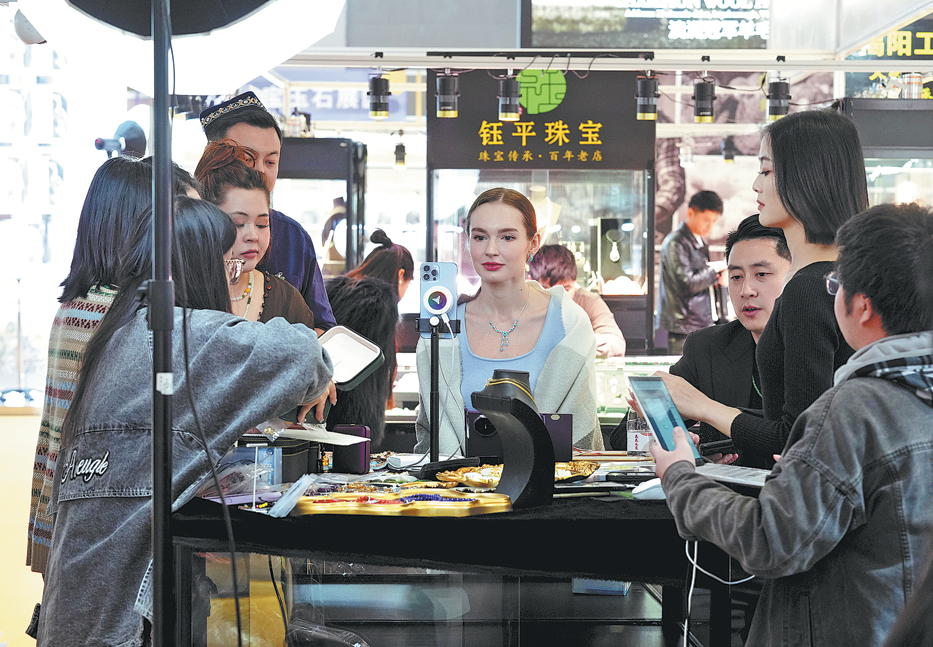
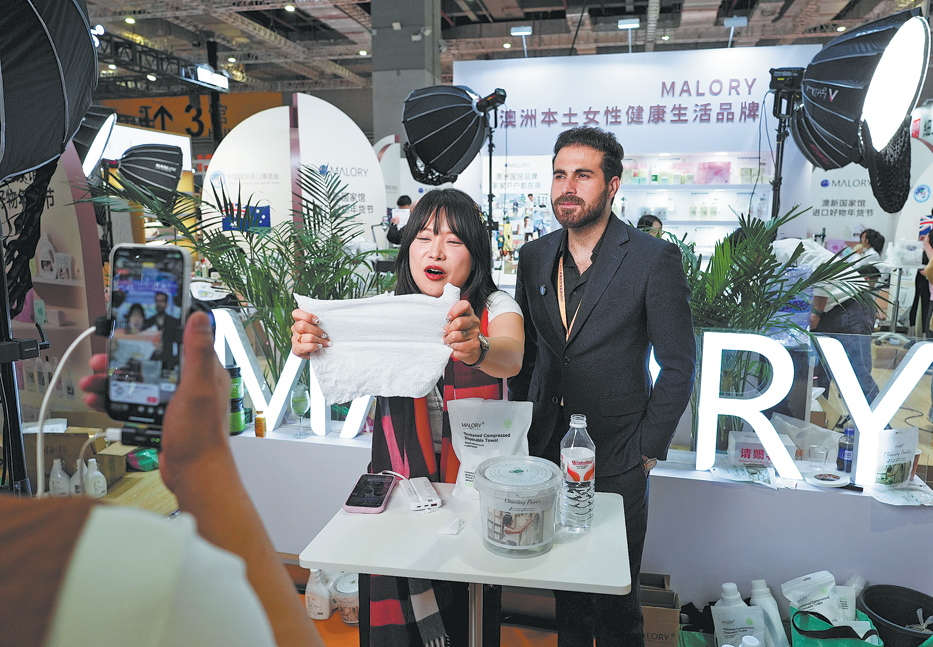
But offerings at the U-Fair were rich enough. It covered key product categories including foods, home appliances, automobiles, beauty products, agricultural products, pet products, jewelry and even over-the-counter drugs.
Multinational industry leaders were present at the U-Fair.
The world's largest beauty conglomerate L'Oreal, which has attended all eight editions of the CIIE, did not miss the U-Fair. It finished its plans for the U-Fair in early November, said Chen Jiaxin, the company's director for corporate and government affairs in China.
"The blockbuster exhibits at this year's CIIE are not only displayed at the U-Fair, but also available to consumers at favorable prices. For purchasers, we have provided special product packages to make their procurement easier. Value-added services are also provided at the U-Fair, for example, teaching consumers makeup skills," he said.
While 2026 will be the Year of the Horse, consulting firm Scandic Sourcing demonstrated Sweden's iconic carved wooden horse Dala Horse at the latest CIIE. In Sweden, the horse bears the same importance as pandas in China, as explained by Per Linden, founder of Scandic Sourcing.
While visitors flooded the association's booth at this year's CIIE, more special products prepared for the Chinese year of the horse are in the pipeline. The first Dala Horse store is also under preparation.
The U-Fair is an ideal channel to extend the CIIE momentum and get a better understanding of the local market, according to Linden.
According to Wu of the CIIE bureau, many exhibits have been successfully turned into products available at the various retail channels by participating in the previous eight editions of the CIIE.
The U-Fair is held to build a wholesome CIIE ecosystem, under which companies can better tap into the Chinese market beyond the six-day exhibition and Chinese consumers' needs for quality products are addressed. Domestic demand can be further stimulated via this "mini CIIE", he said.
According to Gao Kai, China president of the Japanese sportswear firm ASICS, the Chinese sports industry has been showing "unprecedented opportunities" for sportswear companies, which is partly a result of the number of supportive policies that the government has rolled out in recent years to drive the growth of the sports industry.
In the meantime, Chinese consumers are more aware of their health, leading to more diversified and quality-oriented sports consumption. Therefore, ASICS set up the China research and development center in Shanghai in early 2019 to come up with more tailor-made products for local consumers.
By attending the CIIE for six consecutive years, ASICS has gained inspiration from Chinese consumers, which propelled the company's product innovation, said Gao.
"We will step up investment in products, brand building and distribution channels in China. We also wish to grow with the evolving Chinese market by making the best of open platforms such as the CIIE," he said.
Daniel Hui, the newly appointed China vice-president of the 80-year-old South Korean beauty group Amorepacific, is equally enthusiastic about the CIIE. He believes this annual event is one of the company's core platforms where they can get the most up-to-date insight into the Chinese market, ranging from product innovation and improving consumer experiences.
Among the 300 exhibits demonstrated at this year's CIIE, over 20 of them were showcased to Chinese consumers for the first time, and launched at the physical stores and in online shopping channels at the same time.
For Amorepacific, such quick deployment is based on the fruitful results from its participation in all eight editions of the CIIE, as a large number of the products that debuted at the exhibition have quickly become bestsellers in China.
In the third quarter of 2025,Amorepacific saw its sales soar 41 percent year-on-year to top 1 trillion South Korean won ($676 million). Its income generated from the Greater China area grew by 8.5 percent on a yearly basis to 106 billion South Korean won.
The company's robust growth stems not only from the many blockbuster products and optimization of distribution channels in China, but more importantly is a result of the company's long-term dedication to the Chinese market, where the combination of localization and international experiences is the secret ingredient of success for multinational companies, said Hui.
Swedish furniture giant Ikea, also an eight-time CIIE participant, is also actively responding to the changing demographics in the Chinese consumer market.
Products specially designed for the elderly marked one highlight of its booth at this year's CIIE: a towel rack combined with a handrail to make it easier for the elderly to grip, the stove designed with a height suitable for cooking while seated, and a simple-to-operate adjustable sofa.
"We highly value the small everyday moments of Chinese consumers, with which our products can be deeply integrated into the Chinese market," said Cindy Ruan, vice-president for Ikea in China.
"The Chinese society has been changing so rapidly that consumer behaviors are changing accordingly. While anxiety seems to be everywhere, Chinese consumers, especially the younger generation, have realized that quality of life is not out of reach but lies in the small moments of everyday life. Retail brands need to understand and respond to such changes quickly," she said.
Zhu Jing, vice-general manager of Hongqiao Import Commodity Exhibition and Trading Center — a major platform to extend the CIIE's influence — has noticed the changes of Chinese consumers over the past eight years.
"Chinese consumers showed much curiosity over imports when the first CIIE was held in 2018. But they have become more discerning over products' flavor, origin and quality in general. It can be said that they are now 'experts' to some extent," she said.
Therefore, foreign brands need to adapt accordingly. For example, some Brazilian coffee brewers have changed their large packages into smaller ones and some ice-cream companies have lowered the sweetness to suit Chinese consumers' preferences, said Zhu.
According to Li Rong, general manager of market research firm Kantar Worldpanel China, multinational companies are indeed very agile in addressing the changing consumer habits or demographics in China. Their extensive presence in the various discount stores and snack collection stores, which are more widely seen in the lower-tier Chinese cities, is one good example of their further exploration of the Chinese market.
"Foreign brands are quickly addressing the changes in the Chinese market. For example, bulk food accounts for a significant part of the product offers in the snack collection stores. Foreign brands have thus come up with smaller packages in these stores. They are actually following very closely the latest trends in the Chinese market, via which they can seek continued business growth," Li said.
As a matter of fact, foreign brands have done a better job in actively embracing the emerging distribution channels such as discount stores in China over the past few years. They are also making more localization, which is yielding positive results, said Bruno Lannes, advisory partner for consulting firm Bain & Company's Greater China consumer products and retail practices.
In a news conference in early December, Sheng Qiuping, vice-commerce minister, said that the Chinese retail industry should be more driven by quality products and consumer experiences. The launch of first stores and debut products will be new engines of China's consumption against that backdrop.
As the world's second-largest consumer market, China ranks as a major export market for over 80 countries and regions in the world. Its imports rose 1.7 percent year-on-year to reach 1.55 trillion yuan in November, marking the sixth consecutive month of growth. The country saw its total retail sales of consumer goods surge 4.5 percent year-on-year in the first three quarters.
"As China's GDP per capita has exceeded $10,000, its consumption scale will expand accordingly. Supported by macroeconomic policies, China's consumption will continue to optimize in 2026, with new types of consumption showing digital, green and health features leading the growth," said Fu Yifu, a special researcher at Su Merchants Bank.





Today's Top News
- FM's Africa visit reaffirms commitment
- China widens net in battle against graft
- New US dietary guidelines trigger widespread concern
- China eyes space leap with record satellite filings
- Defiant Iran says it's 'ready' as Trump swings tariff stick
- Multiple satellite filings demonstrate transparency, responsibility and ambition