Nepal's capital grapples with a seasonal plague
Experts warn that isolated efforts are futile, and they call for joint action across all sectors









Editor's note: In this weekly feature China Daily gives voice to Asia and its people. The stories presented come mainly from the Asia News Network (ANN), of which China Daily is among its 20 leading titles.
Open burning has become a daily concern for Dinesh Lal Shrestha, a resident of Tarakeshwar Municipality in the northwestern rim of Kathmandu Valley, and his morning-walk companions.
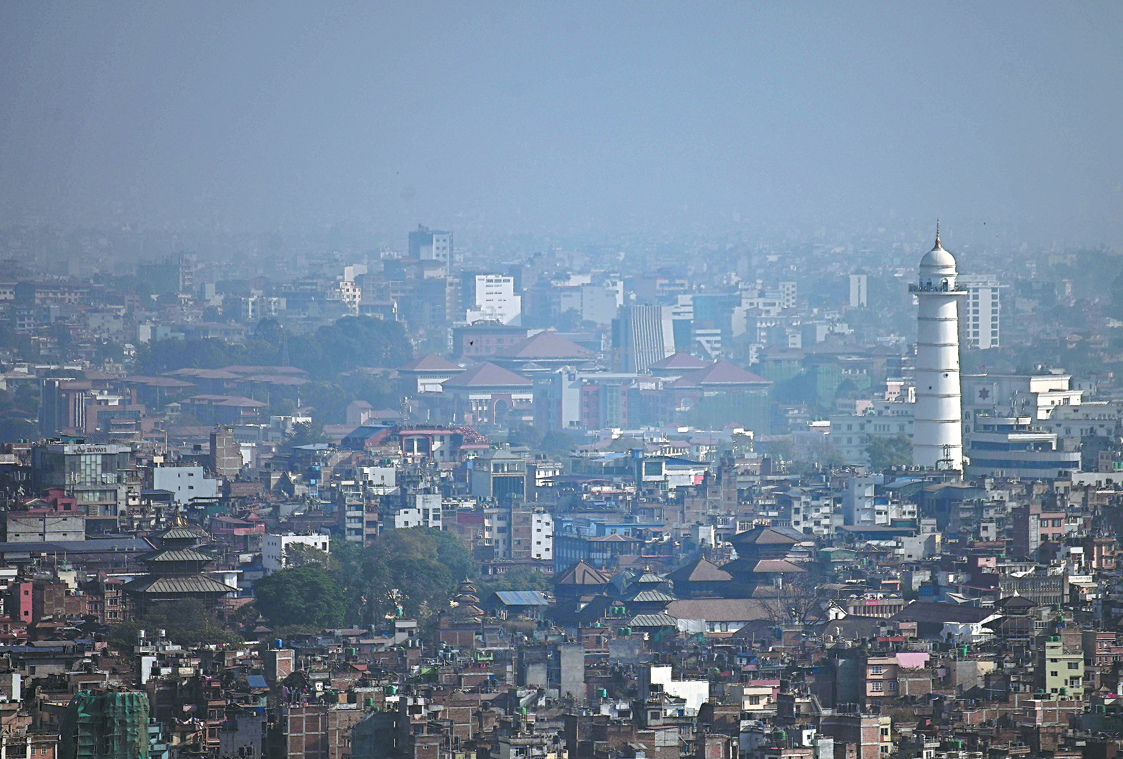
With the start of the dry season, stubble and waste burning in the open, which has become rampant around the Kathmandu Valley, has again become a big factor behind deteriorating air quality.
"One can see thick plumes of smoke at multiple locations within a small area," complained Shrestha, who is from ward 5 of the municipality.
"Along with open burnings, pollution layers can be seen in the skyline in the morning, which means air quality in the Valley is worsening."
"Me and my morning walk companions ask people not to burn, when we see them setting fires," said Shrestha. "But most people ignore our request."
As air quality in the Kathmandu Valley has begun to worsen with the onset of winter, authorities have started taking various mitigation measures including repairs on major roads to reduce dust.
The Kathmandu Metropolitan City issued a public notice in November asking people not to burn waste. The environment department of the city office has also warned that violators could be fined up to 10,000 rupees ($70).
"We will send our police immediately if we are informed about open burning," said Sarita Rai, chief of the department.
"But we all know that our initiative alone is not sufficient to keep the air of the Valley clean. Smoke from open burning in other local bodies also pollutes the air of the entire Kathmandu Valley."
When asked if the city office is coordinating with other local bodies in the Valley to tackle open burning and air pollution, Rai said that each municipality operates independently and manages things within its own jurisdiction.
Elected members of Tarakeshwar Municipality claimed that they are unaware of open burning within the municipality and said burning of stubble to clear the agriculture fields should not be seen as a big issue.
"We have some agricultural lands and farmers in our municipality," said Shambhu Prasad Phuyal, chair of ward 5 of the municipality. "Farmers burn agricultural waste during cultivation, which is common practice. We have issued a notice prohibiting burning of hazardous waste."
The city office also said it would soon resume vehicle emission testing, which has been halted for months.
But experts say patchwork measures preventing open burning in a few local units, or taking actions only in certain areas, will not help curb the rising air pollution. They say coordination among all stakeholder agencies, uniformity in actions, and shared responsibility are a must to tackle the growing air pollution.
"Something is definitely being done to control growing air pollution," said Bhushan Tuladhar, an environmentalist. "But the measures being taken are not sufficient, and we cannot expect results from the actions being taken at present."
Experts say that without coordination among all agencies concerned, there will be no relief from polluted air, especially during the winter and dry season.
Worsening situations
Air quality experts say the rise in air pollution level is just a start, as the harvesting season has just started in the Tarai region, where farmers often burn stubble and other agricultural residue to prepare fields for new crops. Along with this, burning other types of waste also pushes up the air pollution levels.
"As the temperature declines further, people start burning waste materials and lighting outdoor fires, which also contribute to air pollution," said Bhupendra Das, an air quality expert. "Without all stakeholders, including local governments, taking initiatives to prevent open burning and other pollution-control measures, improving air quality is almost impossible."
Experts say that local governments should take strict action to prevent waste burning, raise awareness about the risks of polluted air, prevent the use of low-grade coal in brick kilns, and provide training and equipment to control forest fires.
Hazardous air pollution poses significant health and economic challenges for Nepal. According to the World Bank report, air pollution shortens the average life expectancy of Nepal's residents by more than three years, and leads to almost 26,000 premature deaths each year.
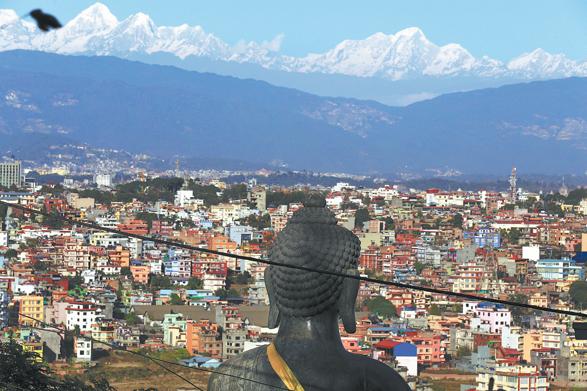
Beyond health impacts, poor air quality leads to reduced labor productivity and negatively impacts tourism (lower visibility of the Himalayas and canceled flights). Overall, poor air quality is estimated to cost the equivalent of more than 6 percent of Nepal's GDP each year.
Air pollution has emerged as the number one risk factor for death and disability in Nepal, surpassing malnutrition and tobacco use, according to the World Bank.
THE KATHMANDU POST, NEPAL