Huangyan coral reefs healthy, says report









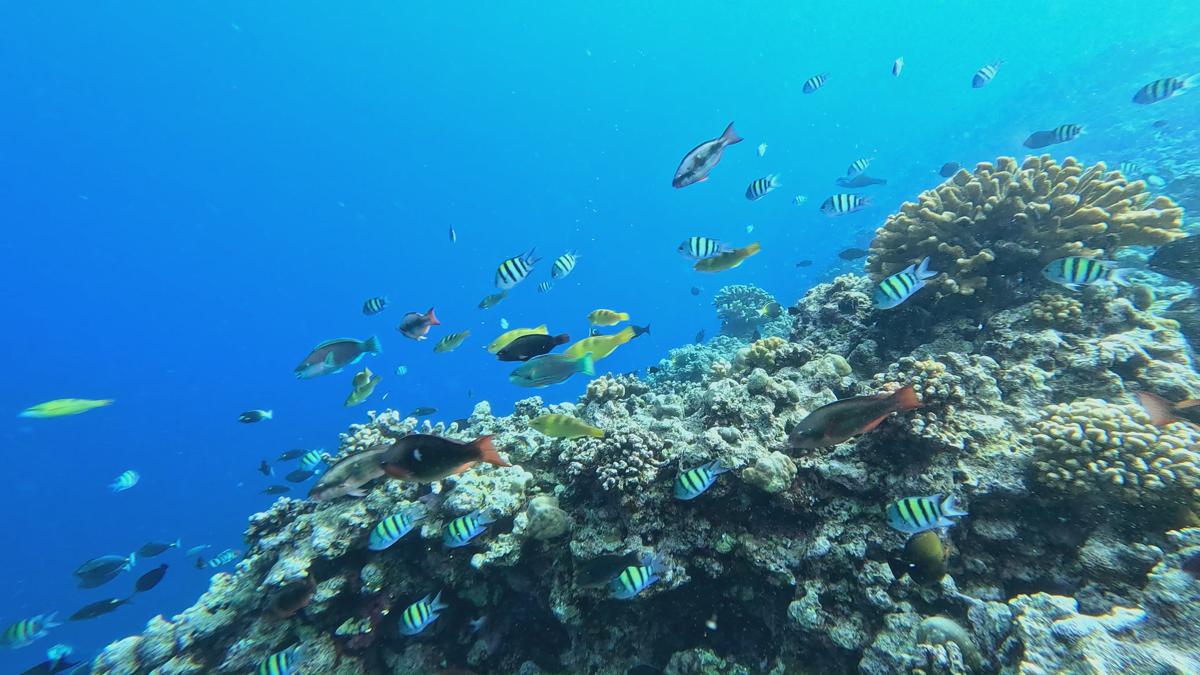
The coral reef ecosystem of China's Huangyan Island is healthy, and the recent establishment of a national nature reserve is expected to enhance its diversity, stability and sustainability through strict protection and ecological restoration efforts, according to a report unveiled on Monday.
The report, released by the South China Sea Ecological Center of the Ministry of Natural Resources, along with relevant departments and institutes, indicates that the coral reef ecosystem of Huangyan Island has remained healthy, with a generally stable cover of hermatypic, or reef-building, corals since 2015 and an abundance of these coral species.
A total of 135 species of hermatypic corals, belonging to 36 genera and 13 families, have been recorded — all of which are listed as national second-class protected wildlife in China, it said.
Speaking at a news conference on Monday in Beijing, Lei Bo, director of the ministry's South China Sea bureau, said the hard coral cover of Huangyan Island shows regional variations due to differences in topography and hydrodynamic conditions.
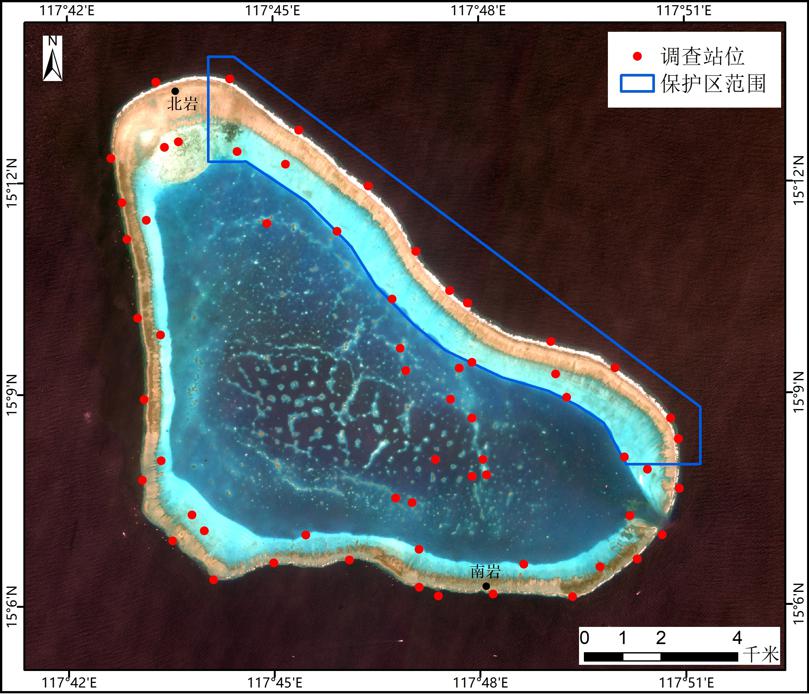
The northeastern part of the island, where the Huangyan Island National Nature Reserve was designated in September, has the highest coverage, averaging 38.8 percent, which is higher than most major coral reef regions worldwide, he noted.
The national nature reserve is an important breeding and habitat area for many endangered species, including 94 listed as national first-class and second-class protected wildlife, such as green sea turtles, hawksbill turtles and tiger cowries, Lei added.
The survey, conducted from May to October, integrates historical data analysis with field investigations, including vessel navigation surveys, diving investigations, satellite and aerial remote-sensing, and in-situ observations.
"Huangyan Island has always been China's inherent territory. China possesses indisputable sovereign rights and jurisdiction over the Zhongsha Islands, including Huangyan Island, and their adjacent waters as supported by historical and solid legal evidence," Lei said.
Xiong Xiaofei, chief scientist of the survey, said he was happy to see green sea turtles foraging for food in the extensive and lush seagrass in the northern part of the island.
"Seagrass can purify seawater, sequester carbon to increase carbon sinks, stabilize seabed substrates, reduce the resuspension of seabed gravel that may damage corals, and provide habitats for breeding and sheltering of coral reef fishes," Xiong said.
He noted that the area of the seagrass bed in the northern part has expanded from 0.64 square kilometers in 2010 to 1.85 sq km in 2025, attributing this positive development to the regular law enforcement patrols conducted by the China Coast Guard.
While the island demonstrates favorable ecological conditions, Xiong highlighted the stress on its coral reef ecosystem induced by illegal military and fishing activities of the Philippines.
"In the 1960s and 1970s, the Philippines and certain other countries illegally abandoned vessels and deployed concrete targets in the waters of Huangyan Island for bomb training," he said, adding that the bomb craters and the large-scale coral damage caused by the explosions would take 50 to 100 years to recover naturally.
"The Philippines has also frequently organized large groups of vessels to intrude into the waters of Huangyan Island," Xiong said. "According to incomplete statistics, there have been 14 such intrusions since 2024, on a larger scale and at a higher frequency after the establishment of the national nature reserve in September."
He said that irresponsible fishing activities and frequent intrusions could lead to problems such as abandoned materials, pollutant discharge and vessel grounding, posing a serious threat to the coral reef ecosystem.
Luo Jun, a senior researcher at the ministry's South China Sea Marine Forecast and Hazard Mitigation Center, listed natural threats such as the abnormal increase in sea surface temperature caused by global climate change, along with impacts of tropical cyclones, which have adversely affected the ecosystem.
The island also faces the potential risk of further degradation due to recurrent population irruptions of the Acanthaster solaris, commonly known as the Pacific crown-of-thorns starfish, Luo said.
Highlighting the biodiversity, vulnerability and sensitivity of the island, Huang Huamei, a senior researcher at the ministry's South China Sea Development Research Institute, said the national nature reserve was established to better protect the northeastern area, which boasts the largest number and highest cover of hermatypic coral species, as well as frequent activities of endangered wildlife.
"Rigorous conservation management will be implemented to reduce the negative impacts generated by human activities and other external factors," she said.
"China will further improve the regular alerting and monitoring mechanisms on Huangyan Island, and consistently carry out surveys, studies, and conservation and restoration efforts, in order to maintain and enhance the diversity, stability and sustainability of the coral reef ecosystem," Huang added.





- Defense spokesman: PLA drills around Taiwan justified
- Chinese fantasy animation hits Vietnamese theaters amid holiday surge
- BBC documentary reveals Guangdong's wild side
- Hangzhou 'Bunny Officer' goes viral for gentle traffic management
- From lab to life: humanoid robots' 'coming-of-age' year
- Video of PLA's drills around Taiwan Island released