Raising history from the depths
A new documentary retraces the discovery, salvage and significance of one of the country's largest wooden shipwrecks, dating back more than 150 years, Lin Qi reports.









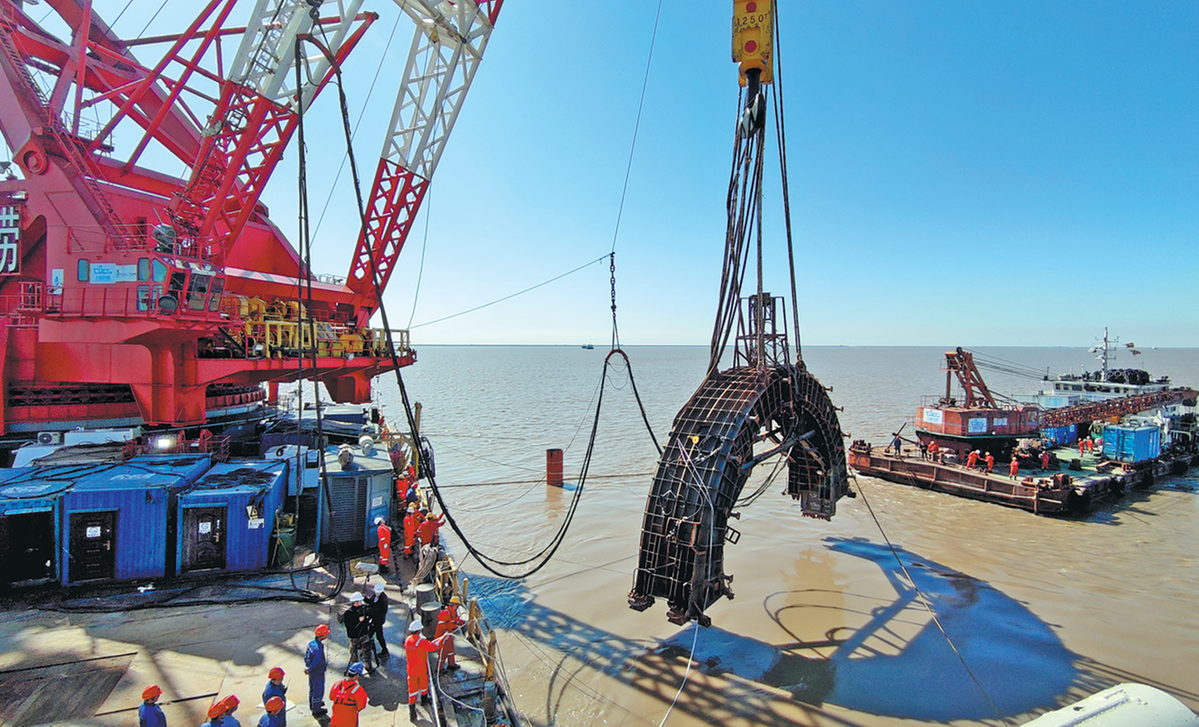
More than 150 years ago, a wooden sailing vessel laden with commodities sank off the coast of Hengsha Island, Shanghai. Its story had long since faded into history until 2015, when the wreck was discovered by chance by archaeologists conducting underwater investigations at the mouth of the Yangtze River.
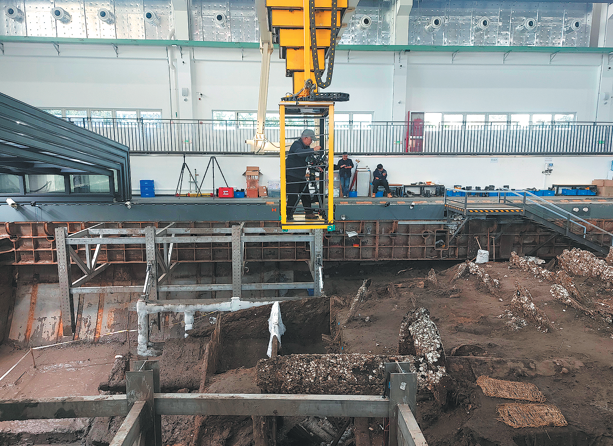
In the following seven years, a variety of experts worked together to successfully salvage the shipwreck from the thick silt, and transfer it to a former dock in Shanghai where the remains — named Changjiangkou 2, or Yangtze River Estuary No 2 — were cleaned, analyzed, and studied.
Now, the maritime culture and trading history of the vessel, as well as the technological innovations and the people who made the salvage operation such a success, will be unveiled in an upcoming documentary produced by China Media Group.
The four-episode production, The Yangtze River Estuary No 2 Shipwreck, each spanning 25 minutes, will be aired on CMG's Documentary Channel, or CCTV-9, from Monday to Thursday, taking the audience through the New Year festivities and into the depths of history, unlocking the mysteries surrounding the boat and its cargo.
Pan Yi, the documentary's chief director, says the show will give people both a historical perspective on maritime trade and an account of the modern-day skills needed to raise the vessel.
"The ocean once connected cultures throughout the world," she says. "The documentary, while telling the story of China's Maritime Silk Road and the history of navigation in the country, will also detail the role of modern technology in the salvage process, demonstrating China's technical know-how.
"It will sail people to the past, and then back to the present."
The production begins with the discovery of the Yangtze River Estuary No 2 during an underwater archaeological census. Sonar detection pinpointed the 38-meter-long wooden structure, which had been well-preserved in the low-oxygen, muddy riverbed.
Subsequent underwater surveys determined that the ship, which had 31 cabins, dated from the 1860s to the 1870s. This was aided by the discovery of a ceramic cup upon which was written, "Made in the reign of Tongzhi". Emperor Tongzhi was a Qing Dynasty (1644-1911) ruler who reigned from 1862-74.
The discoveries mean that the boat is one of the largest and most intact ancient wooden shipwrecks ever found in the country. Its testimony to the history of Shanghai and China as a global hub of maritime trade prompted the ambitious project to salvage the boat for further research.
The documentary shows how people raced against time to encase the shipwreck with a huge, tailor-made steel cofferdam. Battling fast-flowing currents and typhoons, the shipwreck was raised from the riverbed in 2022 in just 77 days, using a vessel named the Da Li (Great Efforts) and another one designed especially for such operations, the Fen Li (Endeavor).
"The production shows the collective wisdom and joint efforts of experts from a variety of fields, such as anthropology, historical geography, art history, economics, science and technology, and industry, who were invited to contribute their insights to the project," Pan says.
She adds that the TV show combines historical narratives with an in-depth analysis of the cutting-edge technologies used in the salvage process.
"Through this unique perspective of storytelling, we want to highlight how Chinese civilization was connected with the rest of the world through ocean routes," she says.
Among the objects found on the shipwreck was porcelain, which experts believe was due to be exported to Europe, as well as basic goods from Vietnam.
Pan says the documentary shows "the wisdom of China's modernization process, its traditional culture, and the remarkable contributions China has made and continues to make to the world."
Along with being broadcast in Chinese, the production will also be translated into English and French for transmission overseas.




Today's Top News
- Confidence, resolve mark China's New Year outlook: China Daily editorial
- Key quotes from President Xi's 2026 New Year Address
- Full text: Chinese President Xi Jinping's 2026 New Year message
- Poll findings indicate Taiwan people's 'strong dissatisfaction' with DPP authorities
- Xi emphasizes strong start for 15th Five-Year Plan period
- PLA drills a stern warning to 'Taiwan independence' separatist forces, external interference: spokesperson