Breathing creativity back into rusty factories
Beijing revitalizes industrial heritage into cultural hubs, reshaping community spaces and boosting tourism appeal, Yang Feiyue reports.









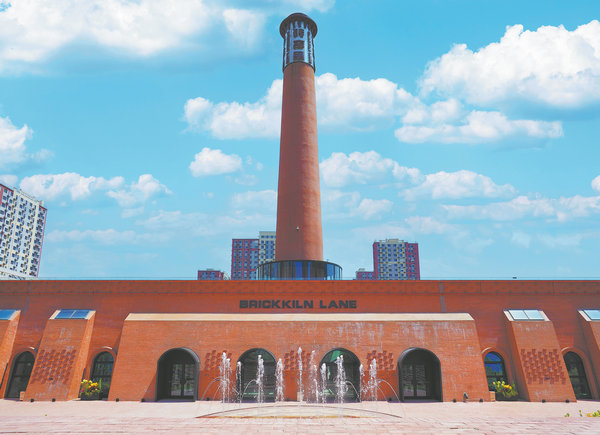
In Brickkiln Lane tucked away in Beijing's Haidian district, several visitors line up on a crisp November afternoon, waiting for robot-crafted lattes topped with delicate foam art.
Inside the spacious, modern public culture and arts complex, other guests sip coffee while admiring contemporary art exhibitions displayed beneath arched brick corridors.
It's hard to imagine that it once served as a major brick-and-tile factory built back in the 1950s.
"You can tell the reactions from first-time visitors are often very genuine," says Liu Hongyin, the assistant general manager of the facility's administration.
"Former factory workers gaze at the familiar kilns and towering chimneys with a touch of nostalgia, while younger guests eagerly snap photos to share online moments later," Liu observes.
Approximately 70 percent of the visitors are local residents, a number Liu believes demonstrates how deeply the site has become embedded in daily community life.
Since it opened in September 2024, this brick factory-turned public cultural space has welcomed over 440,000 visitors.
During the renovation, the team adhered to a "repair the old as old" philosophy, preserving 80 percent of the original walls and reinforcing only the load-bearing structures.
The 40-meter-high redbrick chimney has been innovatively repurposed into a holographic projection space, while the 54 arched kiln doors now host cultural events based on different themes.
A theater and art galleries have also been arranged, integrating industrial heritage seamlessly with contemporary cultural services.
"Our program is designed around the actual needs of the community," he explains. For instance, a bookstore draws resources from the National Library of China to provide a space for reading, while the theater regularly hosts stand-up comedy and open-air film screenings that are "hugely popular with residents", he adds.
To date, the venue has organized over 300 events, more than half of which were independently curated.
"We have made full use of the unique spatial advantages here, blending traditional opera with the industrial setting. Many audience members left comments on the distinctive charm of experiencing performing arts in such an environment," Liu says.