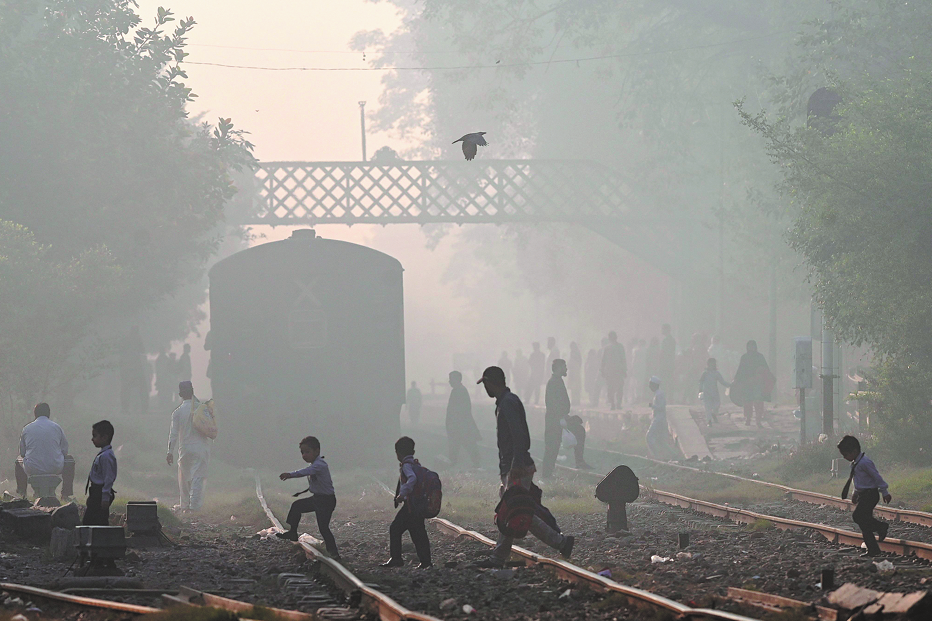
Digital cleanup
Pakistan deploys artificial intelligence to combat air pollution









Using satellite data from Pakistan Space & Upper Atmosphere Research Commission and NASA, the AI network also detects crop-burning incidents in real time and cross-references them with farm-loan databases to target enforcement.
According to the government, the system has helped reduce stubble burning by 65 percent in a year, while in Punjab's industrial belt, it says 95 percent of factories now operate under emission-control systems.
But while AI may be transforming enforcement, experts caution that technology alone cannot solve Pakistan's deep-rooted pollution crisis.
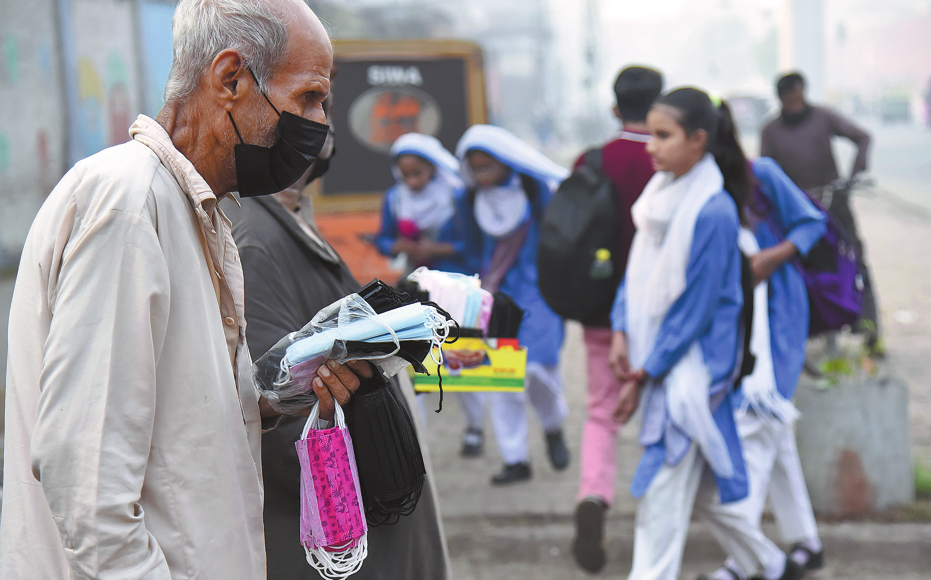
Air pollution kills an estimated 128,000 Pakistanis each year, according to Fair Finance Pakistan. Analysts say real progress requires cleaner fuels, modern refineries and a shift away from outdated industrial practices.
Cleaner fuel needed
Imran Saqib Khalid, a climate governance expert in Islamabad, said Lahore's smog cannot be fixed without tackling its primary sources.
"Vehicular emissions contribute significantly to air pollution in Lahore, which can be addressed through the use of high-quality fuel, along with an improved public transport system," he told Anadolu news agency.
Pakistan, he said, lacks modern refineries capable of producing cleaner fuel. "Although we have started to import improved-quality fuel, it is not enough to meet our needs."
Khalid also pointed to the country's thousands of brick kilns, many of which burn low-quality coal or even old tires. "Even the so-called 'zigzag technology' kilns fail to meet national environmental standards because of poor-quality fuel," he said, adding that zigzag firing, while efficient in theory, "cannot deliver results without fuel reform".
"Air pollution is a complex issue, but it has been addressed elsewhere in the world. It will take time and effort — there is no silver bullet solution," he said. "It cannot be done through surface-level measures such as smog guns and smog towers."
Environmentalists acknowledge that Punjab's use of AI marks a new seriousness in tackling smog, but they say lasting improvements demand systemic reforms.
Yasir Hussain, a Karachi-based environmentalist, said the approach this year shows more coordination than previous efforts but still lacks long-term impact.
"Artificial rain and smog guns don't have a permanent or lasting effect," he said. "Within an hour, pollution levels return because so much gas and particulate matter come from vehicles, industrial units, brick kilns and stubble burning."
He believes the electric vehicle policy introduced this year could make a difference over time. "This government has taken some measures to mitigate smog, but there is a long way to go," he added.
DAWN, PAKISTAN