Keeping the nandan flame alive
At the Mei Lanfang Theatre, Hu Wen'ge steps into Zhao Yanrong's tragic world, honoring a tradition of Peking Opera, Chen Nan reports.









As dusk falls, the soft glow of the Mei Lanfang Theatre casts a warm light over the audience, its atmosphere thick with reverence and anticipation.
Located in the heart of Beijing, the Mei Lanfang Theatre is a dedicated space for the performance of Peking Opera, or jingju, one of China's most cherished traditional art forms.
At the center of the theater stands a statue of Mei Lanfang (1894-1961), the legendary master of Peking Opera and an enduring symbol of the deep connection between the past and the present.
Peking Opera, which dates back over 200 years, was recognized as an Intangible Cultural Heritage of Humanity by UNESCO in 2010. A unique fusion of singing, dancing, martial arts, and acrobatics, this art form captures the soul of Chinese theater, drawing audiences into its world of emotional intensity and physical precision.
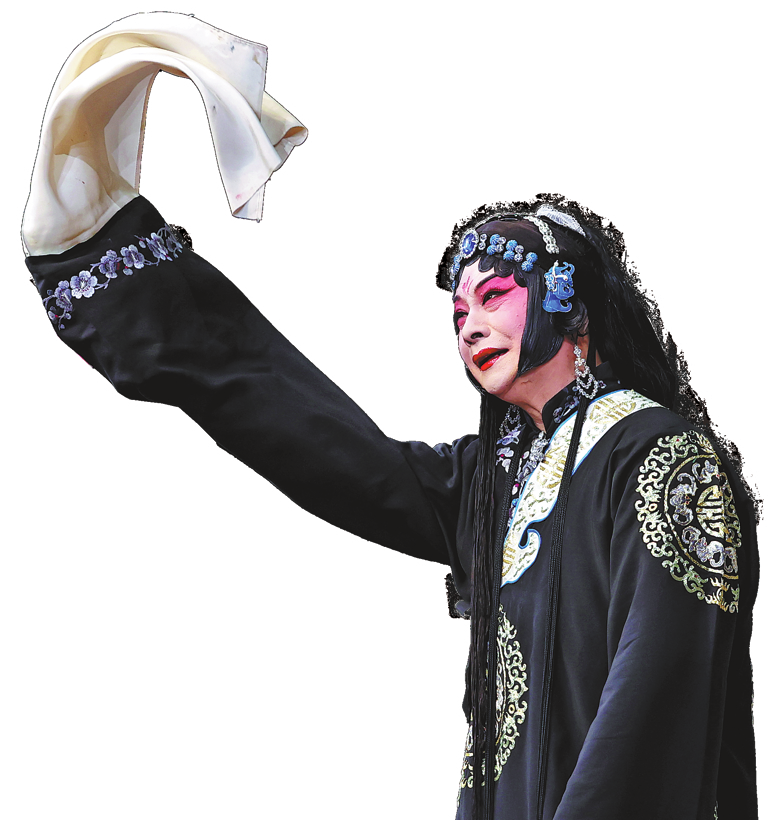
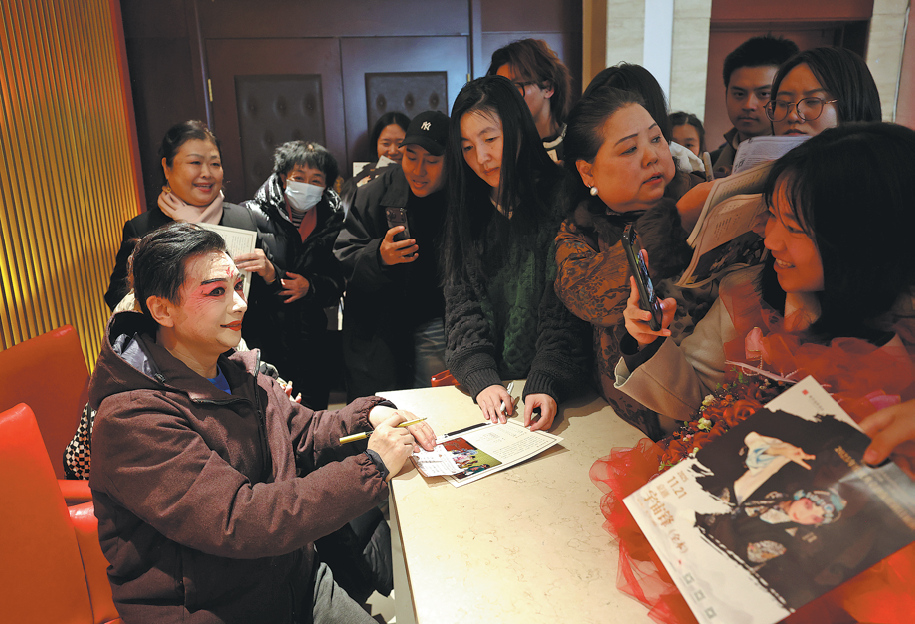
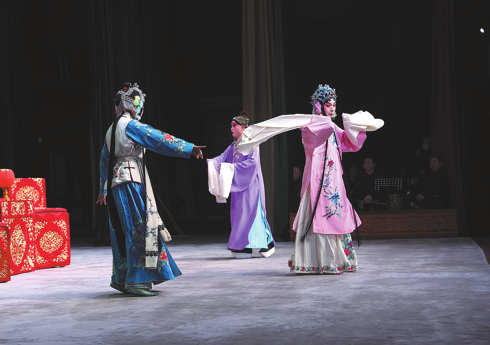
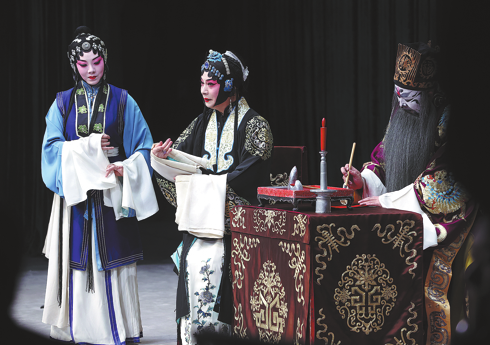
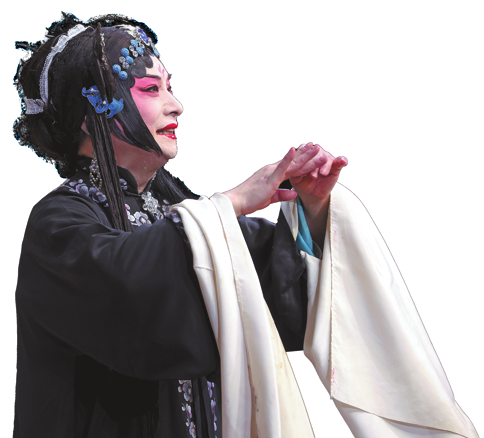
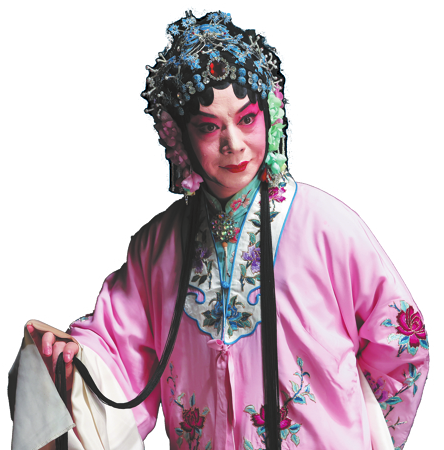
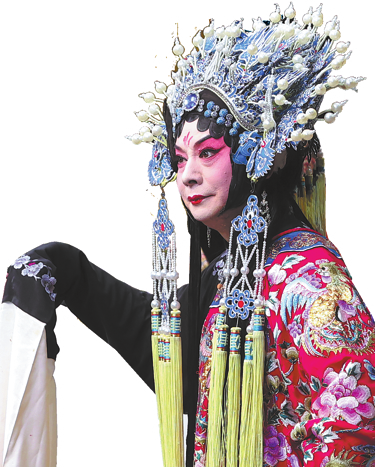
On Nov 21, the rare and invaluable art of Peking Opera's nandan — male performers who take on female roles — came to life once more. In the performance, Hu Wen'ge, one of the foremost nandan artists, took the stage in the lead role of Yuzhoufeng (Sword of the Cosmos), a classic Peking Opera piece.
Once performed by Mei and many other masters of traditional Chinese theater, Sword of the Cosmos holds immense significance in both Chinese theatrical history and Mei's artistic legacy. In his memoir, Forty Years of Stage Life, Mei Lanfang spoke of this play as his personal favorite — one that he poured his heart and soul into.
"I learned Sword of the Cosmos from my first teacher, and I've cherished it ever since," Mei wrote in his memoir. "As I grew older, I became more and more fascinated with it. By the time I turned 30, I had become somewhat addicted to performing it. Whenever my manager assigned me roles for the season, I was always flexible with the other plays, but Sword of the Cosmos was one that I insisted on performing again and again — just to satisfy my craving for the role."
At the heart of Sword of the Cosmos is Zhao Yanrong, portrayed by Hu — a noblewoman trapped within the oppressive norms of her time. The plot centers on her internal conflict, as she faces an arranged marriage to a ruthless emperor following her husband's death. In a desperate bid to avoid her fate, Zhao feigns madness, using this ruse to resist both the marriage and the patriarchal forces trying to control her.
As the audience settles into the hushed darkness, the sounds of the live band tuning up fill the air. The moment has arrived for Hu to step onto the stage, embodying a character that requires not just skill, but the reverence of an entire tradition.
Mei Baojiu (1934-2016), the ninth child of Mei Lanfang, was also known for his mastery of nandan roles. Hu, who began studying with Mei Baojiu in 2001, carries forward the nandan tradition with his own performances at the Jingju Theatre Company of Beijing.
Nandan, a practice forged in an era when women were forbidden to take the stage, has long been a hallmark of Peking Opera. The golden age of nandan performance was in the first half of the 20th century, when legendary artists like Mei Lanfang, Shang Xiaoyun (1900-76), Cheng Yanqiu (1904-58), and Xun Huisheng (1900-68) developed distinct performing styles, which continue to be passed down through their students.
For Hu, performing Zhao in Sword of the Cosmos is not just about playing a role — it is about carrying the weight of Mei Lanfang's legacy. As he steps into Zhao's shoes, he takes on the responsibility of preserving an art form rooted in both beauty and struggle.
"Zhao Yanrong is caught between two worlds," Hu says. "She is a noblewoman, even in her madness. She must maintain her dignity, even as she grapples with her grief. The challenge is not to overplay her madness. It has to feel real, but it must also retain the elegance of Mei's style.
"The role is a tragic one, and it's not just a performance. It's an emotional experience that transcends the stage," Hu continues. "The arias in Sword of the Cosmos are particularly demanding. They test both stamina and artistry. It's like practicing tai chi — there's a fluidity in the movement and thought, but every emotion must still be conveyed. It's physically exhausting, but deeply fulfilling."
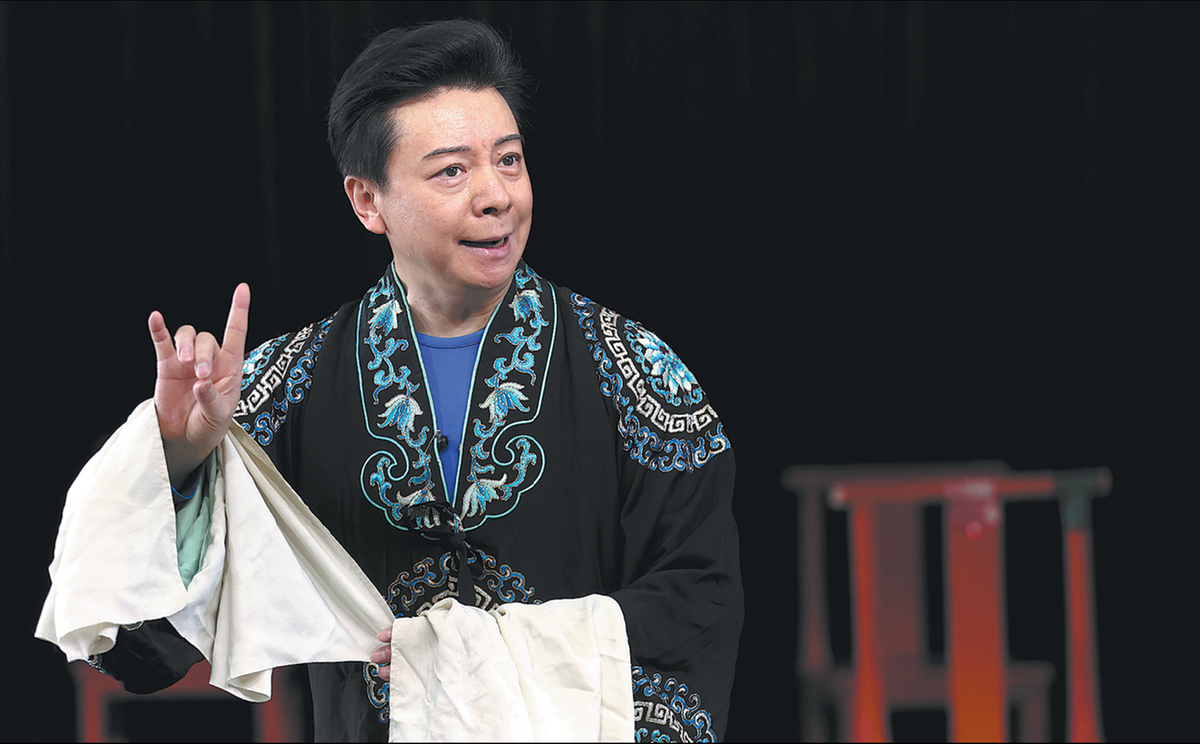
A week before the performance, Hu sat down for an interview with China Daily in a rehearsal room at the Jingju Theater Company of Beijing. As the first notes of the band filled the room, he stood poised, his delicate hands steady, his face and body shifting into the noblewoman's form. After hours of intense rehearsal, his body glistened with sweat, every muscle taut, his breath heavy but controlled as he pushed through the final moments.
"I am approaching 60, and this role is both physically and emotionally demanding," he says, wiping sweat from his brow with a tissue. "But that's the beauty of traditional Chinese opera. It challenges both your physical limits and your emotional depth. The actors (of nandan) spend years developing a voice that is both high-pitched and feminine, while mastering the delicate, graceful movements required for female roles."
In Sword of the Cosmos, veteran Peking Opera actor Ni Shengchun, who specializes in laosheng (elder male roles), plays Kuang Hong, Zhao's father-in-law, who is framed for a crime and has witnessed the execution of his family. He recalls his experiences studying Peking Opera, noting that Hu is currently the only nandan artist in the troupe.
Ni, who also serves as the deputy director of the Mei Lanfang Peking Opera Troupe under the Jingju Theater Company of Beijing, recognizes the rarity and significance of Hu's artistry.
Hu's journey to becoming a leading nandan artist has been anything but conventional. Originally trained in Qinqiang Opera in his native Xi'an, Shaanxi province, he began his career at the age of 12 as a xiaosheng (young male) actor. But his path would take a different turn when he encountered Li Defu, a legendary Peking Opera artist known for his mastery of the water sleeves. Li became Hu's first mentor in Peking Opera, sparking a lifelong dedication to the art.
In 1993, while recording for a television show, Hu met Mei Baojiu. By 1998, after years of dedication and study, Hu was granted permission to study at the Mei family home. Though he did not initially receive direct mentorship, Hu immersed himself in the study of Mei style, eventually earning the recognition of Mei Baojiu, who accepted him as his disciple.
In 2004, Hu joined the Jingju Theater Company of Beijing. In 2013, Mei Baojiu officially recognized Hu as a third-generation heir to the Mei Lanfang nandan style, passing on a treasured fan that had been Mei Lanfang's personal symbol for decades.
That same year, Hu performed on the global stage in a special tour celebrating the 120th anniversary of Mei Lanfang's birth. In 2014, Hu led a production of Sword of the Cosmos at Lincoln Center in New York, reviving Mei Lanfang's historic tour to the United States in 1930.
Despite Hu's achievements, he remains deeply concerned about the future of nandan performance. As fewer young actors choose to train in the art, and Peking Opera schools stop recruiting male students for the role, Hu has taken on the responsibility of mentoring the next generation.
He also fears that in today's digital age, where performances are often reduced to superficial displays on social media, the true depth of Peking Opera — especially the subtlety of nandan — may be lost.
"Today's audience, increasingly drawn to the external, often overlooks the deeper emotional core of a performance," he says. "Young audiences may cheer for exaggerated performances, but the essence of Peking Opera, which lies in its subtlety, seems to be fading."
For Hu, the pressure to preserve this tradition is immense, but it is also what drives him. "I carry more responsibility than most," he says. "But recognition from the Peking Opera community gives me the strength to continue. When I step on stage, it is not just about me; it is about continuing the legacy of a tradition."
Hu's journey as a nandan artist is a testament to his unwavering commitment to preserving Mei Lanfang's legacy. For him, Peking Opera is not merely an art form — it is a living, breathing entity, passed down through generations, constantly evolving, but always remaining true to its core.
"In the end," Hu says, "it's about staying true to the essence of the character, the soul of the story. That is what I must always carry with me."





Today's Top News
- FM's Africa visit reaffirms commitment
- China widens net in battle against graft
- New US dietary guidelines trigger widespread concern
- China eyes space leap with record satellite filings
- Defiant Iran says it's 'ready' as Trump swings tariff stick
- Multiple satellite filings demonstrate transparency, responsibility and ambition