New tree species discovered in South China's karst region









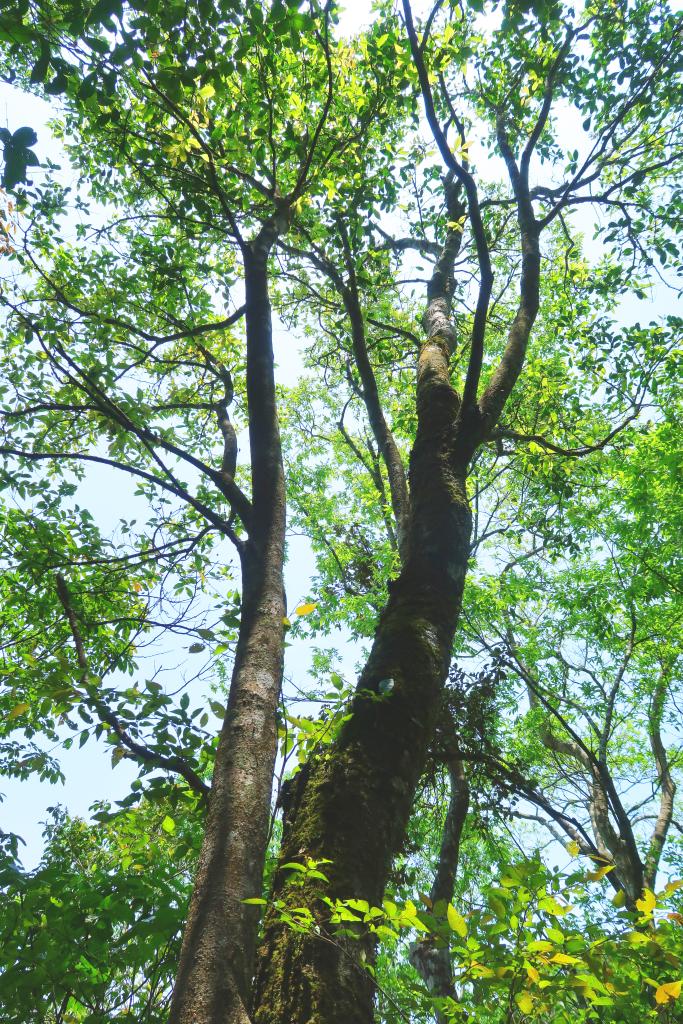
NANNING -- A new species of Salicaceae was discovered in South China's Guangxi Zhuang autonomous region, adding to the rich diversity of flora in the karst region in Guangxi, according to Guangxi Institute of Botany, Chinese Academy of Sciences.
The findings have been published in a recent edition of the international scientific journal PhytoKeys.
During an investigation on plant diversity from July to September 2023, an unusual plant that could belong to an unknown species of Salicaceae was discovered in karst forests in Leye county, Baise city of Guangxi.
The species, named Carrierea leyensis after its location, is an evergreen tree with elliptic leaves and short petioles measuring three to eight millimetres in length. These features distinguish it morphologically from other species in the same genus.
After carefully checking the morphological characters of the specimens, consulting relevant literature, and examining other related specimens of the genus Carrierea, researchers confirmed that this species is new to science.
The genus Carrierea is distributed from southern China to northern Vietnam. Previously, only two species, Carrierea calycina and Carrierea dunniana, were recorded. The discovery of the Carrierea leyensis confirms the monoecious nature of the genus Carrierea and expands the number of species within this genus to three.
The Carrierea leyensis is an endemic species of the karst region in Guangxi. The discovery of the new species is of importance for the establishment of a national park in the karst region.




- Arab League delegation visits China-Arab Research Center on Reform and Development for 10th anniversary
- Shanghai Jiao Tong University launches Center for Studies of Global South Sustainable Development
- Ex-CNNC general manager faces disciplinary probe
- China launches long march 12 rocket, deploys satellites for expanding space network
- Global gathering transforms Yixing village into youth hub
- China's prosecutors intensify crackdown on crime, charge 1.27 million in first 11 months of 2025