Beijing's PM2.5 density slashed over past decade









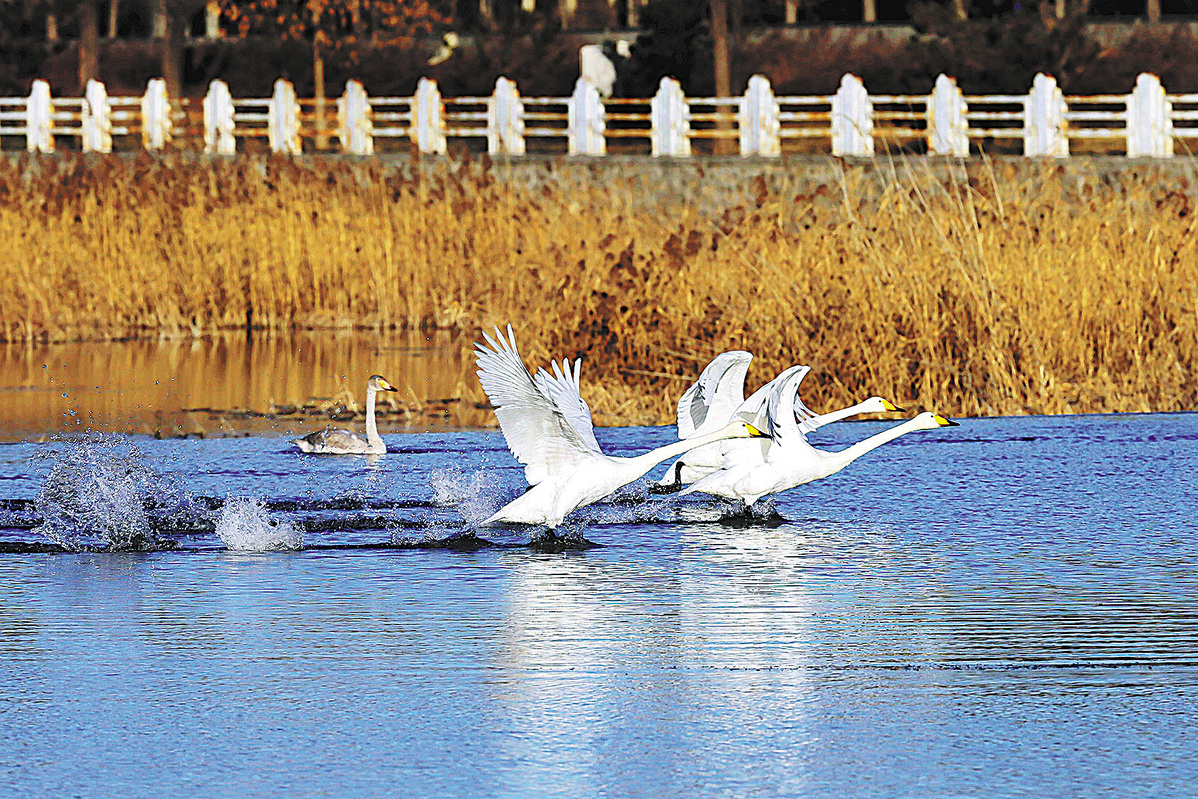
BEIJING -- Beijing's average concentration of PM2.5 fell to 30 micrograms per cubic meter in 2022, 66.5 percent lower than that in 2013 when the city first included PM2.5 readings in its focus on air pollution monitoring and control, said the municipal ecology and environment bureau on Wednesday.
PM2.5 readings are a gauge monitoring airborne particles of 2.5 microns or below in diameter.
In 2022, the average annual atmospheric concentrations of PM10, nitrogen dioxide, and sulfur dioxide in Beijing were 54 micrograms per cubic meter, 23 micrograms per cubic meter, and three micrograms per cubic meter, respectively, all maintaining a downward trend.
Such readings also indicated the continuously improving air quality of the Chinese capital, said Liu Baoxian, director of the municipal ecological environment monitoring center.
A total of 286 days with good air quality were logged in Beijing in 2022. Last year, Beijing had 138 days with excellent air quality graded as Class I, 24 more such days when compared with 2021.
The city witnessed three days with heavy air pollution in 2022, five days fewer than in 2021.




- HK bets on integrated hub to enhance TCM profile
- China widens net in battle against graft
- New US dietary guidelines trigger widespread concern
- China eyes space leap with record satellite filings
- Team formed to investigate the loss of 29 cultural relics
- Investigation into school uniforms confirms safety of waterproof layer