BMW to continue sustainable pursuit with new electric vehicle offerings in China









BMW Group is going full throttle to move forward its electric, digital and circular transformation in China, the world's largest vehicle market.
Jochen Goller, president and CEO of BMW Group Region China, said: "We will continue our significant investments, deepen cross-industry cooperation and rapidly expand our lineup of BMW Group electric products.
"We are and will be 'at home in China' and the whole BMW China team will spare no efforts to shape the future of mobility toward electric, digital and circular."
BMW is a global leader of premium individual mobility with more than 50 years of experience in developing electric vehicles. Its first model, the 1602e, was unveiled at the Munich Olympics in 1972.
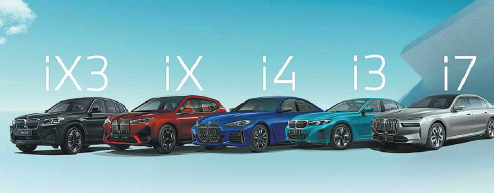
It offers five electric models in China now, including the iX, i4 as well as the iX3 and i3 vehicles made in Shenyang, Liaoning province.
The electric offerings will more than double to 11 in 2023, and include the BMW iX1, which will also be produced in Shenyang; the long-awaited Rolls-Royce Spectre; and the CE04 from BMW Motorrad.
The arrival of the new electric models will see BMW offer the most diverse EV lineup of any premium brand, covering almost every segment.
The carmaker has beefed up its extensive service network for its electrification growth.
At the end of November, there were about 600 dealerships with BMW i certification in China, meaning they were qualified to sell new energy vehicles.
BMW has organized online training sessions for sales consultants at these dealerships, while more than 2,500 technicians have qualified to work on NEVs.
Its first iShowrooms have been opened to provide test drives, customized deliveries and other exclusive experiences for BMW i customers.
The BMW Group considers China a global pioneer of innovation and new technology development.
It is driving forward its digital transformation across all aspects of its business in China, including production, products and throughout the customer journey.
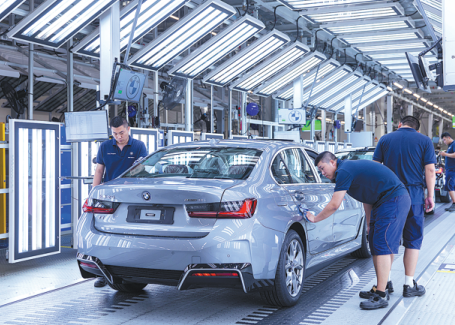
With the completion of Plant Lydia earlier this year in Shenyang, the BMW iFACTORY strategy and its manufacturing principles of "lean, green and digital" have successfully arrived in China.
A pioneering example of the industrial metaverse, Plant Lydia was planned and simulated completely in a virtual environment before it was constructed.
With its extreme flexibility, the new production facility can dedicate up to 100 percent of its capacity to electric vehicles if needed.
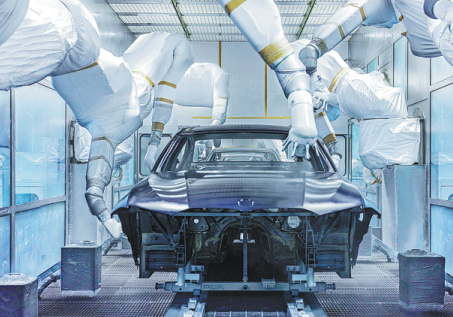
Even before the opening of Plant Lydia, BMW's Shenyang production base was recognized as a leader in intelligent manufacturing, with full 5G coverage and more than 100 artificial intelligent applications implemented.
Now, with the comprehensive rollout of the BMW iFACTORY strategy across all production locations, BMW's Shenyang production base will set new standards for high-quality and data-driven production in the industry.
In 2022, BMW Group further strengthened its R&D and innovation competency in China.
It recently became the first automaker in China to deploy a cloud-based AI platform, which will empower the development of digital applications across all BMW business entities.
BMW is committed to creating online and offline digital experiences for Chinese customers. Its My BMW App has more than 7 million users and has become the central touchpoint of BMW's online digital experience.
Within the service network, BMW and its dealer partners launched the BMW Dealer Network Transformation Project to upgrade digital operations and services at dealerships. Until now, more than 300 dealers have completed the upgrade, which is about half of the entire network.
BMW has been practicing sustainability since the 1970s. In China, the BMW Group has worked with its local partners to decarbonize along the entire value chain and promote a circular economy.
Its production base in Shenyang has become an exemplar for green manufacturing thanks to its low emissions, precise energy management, careful water conservation, high recycling rates and use of renewable electricity.
Through its cooperation with HBIS Group, the BMW Group became the first automaker in China to announce the gradual adoption of low-carbon steel with the aim to use "close-to-zero carbon emission steel" in its series production.
In partnership with Huayou Recycling, BMW also became the first automaker in May to initiate a closed-loop system to recycle high-voltage battery raw materials from its locally produced electric vehicles.
BMW also launched the Green Star project this year, which provides its dealers with scientific, comprehensive and practical ways of cutting their carbon emissions.
Starting in 2023, BMW will publish the BMW Group Region China Sustainability Report, sharing its comprehensive green development efforts with the public to promote transparency.

Today's Top News
- Xi receives credentials of new ambassadors to China
- China's giant radio telescope observations unravel origin of cosmic enigmatic flashes
- Xi meets Canadian prime minister
- How China-Africa partnership spurs Global South modernization
- PBOC cuts rates on targeted monetary tools
- Legal tools essential for AI regulation