Volkswagen still No 1 in China and looking to capitalize on EV potential









Volkswagen AG held its position as the most popular international carmaker in China despite the COVID-19 pandemic and disrupted global supplies affecting production and sales earlier this year.
Together with its joint ventures, the German car giant sold 1.47 million vehicles in the country from January to June, down 20.5 percent from the same period of 2021.
Those deliveries secured Volkswagen AG a 15.5 percent share of China's passenger vehicle market.
Its namesake Volkswagen brand including its subsidiary Jetta took home an 11.4 percent share in the first half, with 1.08 million cars sold in the period.
The German carmaker said its performance was heavily affected by COVID-19 restrictions which closed major manufacturing plants in Changchun, Jilin province, and Shanghai, as well as by global supply bottlenecks.
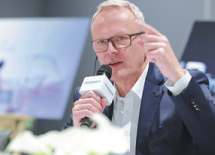
Despite those challenges, Volkswagen's China operations showed financial resilience in the first six months and it is operating from a position of strength, said Volkswagen Group China CEO Stephan Woellenstein.
In June, the group delivered around 340,800 vehicles in China, up 27.2 percent year-on-year and a 47 percent rise from May, due to pent-up consumer demand.
Many of Volkswagen's models in China are eligible for the purchase tax policy for gasoline vehicles, which went into effect on June 1.
The carmaker said the move is helping boost sales and compensating for COVID-19-related market losses in the second quarter.
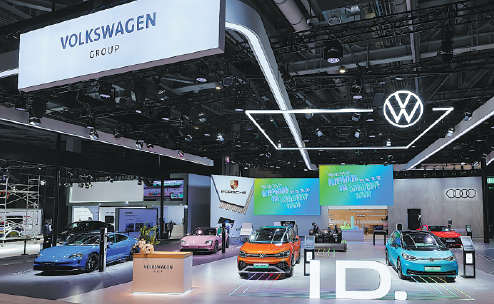
The carmaker's electric cars are seeing an even better performance. Sales of ID. series models hit 17,600 units in June, the best monthly sales result since their launch in China in 2021. In the first half, the sales of ID. series totaled 59,400 units.
From January to June, Volkswagen-branded electric vehicle sales grew 462 percent year-on-year, and sales of the group's electric models combined soared 247 percent year-on-year.
Their growth was faster than the overall new energy vehicle segment in China. Statistics from the China Association of Automobile Manufacturers show that NEV sales in the first half reached 2.6 million, up 120 percent from the same period of 2021.
Woellenstein expected the ID. series, which are the backbone of the carmaker's electrification campaign in China, to continue its momentum.
He estimated their sales would be 15,000-20,000 units per month in the second half. Woellenstein said that he is confident that Volkswagen can realize its goal of doubling ID. sales in China from 2021.
"We are even more ambitious in the NEV market, aiming to more than double our ID. sales in 2022. Our top priority now is to restore consumer confidence and ensure stable production and supply chains.
"We believe the recovery is already fully underway and are optimistic about our performance in the second half of this year, if the pandemic situation does not worsen and the general semiconductor shortage situation continues to improve," he said.
The carmaker is stepping up efforts in software development, with the establishment of the Cariad subsidiary earlier this year in the country. Based in Beijing, it has offices in Shanghai, Chengdu in Sichuan province and Hefei in Anhui province.
The engineers at Cariad, most of whom are Chinese, will allow it to quickly respond to local needs. They will develop and adapt software for all of Volkswagen's marques including Porsche.
Among other things, it will enable the first over-the-air update of Volkswagen's electric ID. range in China in the second half of the year.
Woellenstein said Cariad will also work with local partners to offer better products based on local customers' expectations.
He said Europe can no longer set the benchmark in the age of EVs. "China will lead for the coming 10-20 years globally," he said. "Volkswagen must be fully aware of this and deepen our localization efforts."
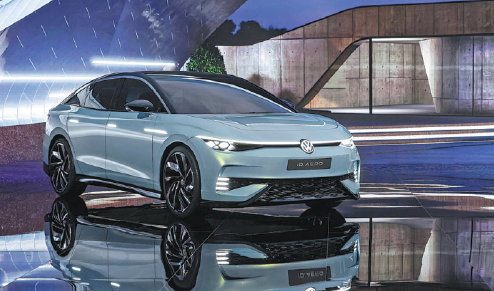
Volkswagen is to launch more electric models in China. The ID. Aero, its first electric sedan based on the MEB platform, will hit the Chinese market in 2023.
Volkswagen's premium Audi brand kicked off construction of its first EV-only plant in Changchun in late June.
The plant is set to be completed by the end of 2024. It is designed to produce more than 150,000 vehicles a year based on the PPE platform, which Audi developed with Porsche.
The first models expected to roll off the assembly line include the A6 e-tron sedan and the Q6 e-tron SUV.
The plant is owned by Audi's joint venture with China FAW Group. Called Audi FAW NEV Company, it is the first Chinese joint venture in which Audi holds a majority stake.
Audi said it is investing around 2.6 billion euros ($2.72 billion), which includes the creation of the joint venture and construction of the manufacturing plant.
Across the group, EVs will account for 60 percent of the group's sales in China in 2030, said Woellenstein.


Today's Top News
- Tesla overtaken by BYD in global EV sales in 2025
- Trade-in subsidy aims to drive more consumption
- Cooperation can boost cross-Strait integration
- State-owned firms register stable performance
- Global experts hail Xi's people-centered message
- Trips promote equality and coexistence