Success in the air for Pingshan beekeepers
Local incubator has helped thousands make more, lifting many out of poverty









Editor's Note: China Daily is running a series of stories on old revolutionary bases with profound history and heritage that are striving to lead local people on the road to prosperity in the new era.
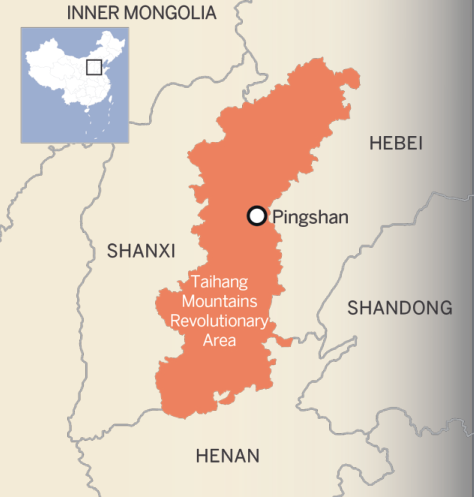
Zhao Xiaobing was busy unloading a batch of honey from a minivan late one May afternoon. It had been produced by bees raised in Hebei province's Pingshan county.
"It's the peak season for honey in our county, as pagoda trees and date trees are in bloom," said the 38-year-old honey dealer from Nanguyue village.
Zhao is very proud of the bees from Pingshan, a county located in the Taihang Mountains that was once a revolutionary base under the leadership of the Communist Party of China. Xibaipo, a site dubbed by historians as "the last rural command post of the CPC" before the founding of New China and a popular Red tourism destination, is also located in the county. "Pingshan ranges widely in elevation from a low point of 120 meters to a high point of 2,281 meters, which creates three peak blossoming seasons throughout the year," he said, adding that when the flowers in low altitude areas begin to fall, they are just entering full bloom higher up.
Despite its purity and good quality, the county's honey wasn't lucrative locally. According to Zhao, dealers would come in from outside and buy it at bargain prices. "Living in the mountains their entire lives, the beekeepers didn't know how to sell their honey any other way, so they had no other choice," he said. "My father and I included."
Zhao's father has been keeping bees for 45 years.
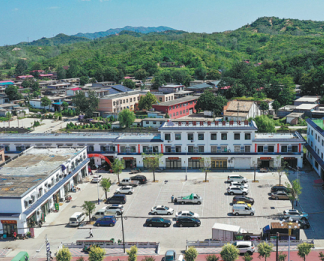
Fortunately, a business incubator in Guyue town in Pingshan opened up new opportunities and changed their lives. It was established in July 2020 to help entrepreneurs start businesses and create jobs for villagers. Covering more than 4,000 square meters, the incubator can accommodate about 70 small and medium-sized enterprises.
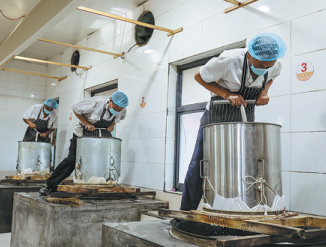
After training in sales techniques and learning how to use channels like online platforms, Zhao quit his job as a truck driver in neighboring Baoding and began helping the other beekeepers. When he set up a factory to process honey last year, the incubator also helped him get a food production license. "I see things differently now. I've had so many opportunities since the training at the incubator," he said. "It really broadened my mind."
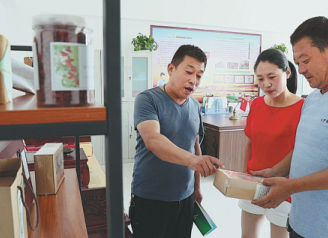
Last year, Zhao sold 15,000 kilograms of honey through both offline and online channels-much more than in 2020, when he only sold 500 kg. Some is sold through the incubator, which also has a 400-square-meter exhibition center for the county's agricultural produce. It showcases local tea, black fungus, tofu, vermicelli and, of course, Zhao's honey, among other items.
"I am very grateful to the incubator. It has played an important role in my development as an entrepreneur," he said. The incubator has also given Zhao an office, a stand in the exhibition area and warehouse space for his products, all free of charge.
His life has been transformed and his income continues to increase. "I have two cars and two apartments now in the downtown area," Zhao said, adding that his ambition is not to earn more money but to build a solid career and help more people from his hometown become better-off.
He directly employs 20 villagers and indirectly helps support 40 beekeepers, which has created a further 120 jobs.
"Promoting entrepreneurship and employment are important tools in consolidating poverty alleviation and in linking it to ongoing rural vitalization. As a result, villagers get a boost to their lives," explained Cao Xiaoguang, head of Guyue town, who added that because Pingshan is mountainous, residents often had difficulty finding stable work at home.
Since 2020, the incubator has provided jobs to more than 2,000 Pingshan residents and has made cumulative revenues of over 6 million yuan ($897,000).
Gaowa village resident Gao Wenyan, 51, has gone from poverty to owning a store and living a well-off life thanks to the incubator.
With a disabled wife and a daughter at school, he was unable to leave home to find work and could only do odd jobs nearby. "Five years ago, I only earned a few thousand yuan a year, which barely covered living expenses," he said.
In 2016, he began planting sweet potatoes with the help of an agricultural cooperative that gave him free seedlings and advice on planting as part of the policy to help people overcome poverty themselves.
When the incubator was set up, Gao received training and also learned how to make vermicelli out of sweet potatoes, which he now sells from the exhibition center. "By selling vermicelli, I can earn more than 30,000 yuan a year, much better than before," Gao said.







Today's Top News
- China reports 20% rise in inter-regional trips on first day of holiday
- China rebuffs criticism over drills around Taiwan
- Mainland pledges deeper cross-Strait integration in 2026
- Lai's 'separatist fallacy' speech rightly slammed
- Xi's message for New Year widely lauded
- Swiss bar fire kills around 40, injures more than 110