A healthy dose of can-do spirit to fight the disease









Luk Tsz-ying's biography
・ Age: 25
・ Post: Enrolled nurse at Prosperous Garden, a private nursing home in Tseung Kwan O
・ Job description: Works nine hours a day. Mainly responsible for distributing medicine to residents, cleaning wounds, making regular ward rounds to check on residents' health and hygiene, preventing them from wandering around, keeping family members updated, and having video consultations with doctors. Sometimes she helps caregivers because of a team shortage.
・ COVID-19 history: Confirmed infected on March 7. Declared free of the virus on March 14
It was the third day in a row that an elderly man, a normally upbeat resident at the seniors' residential home where I work, had sporadically come to the nurses' station to check with me about his neighbor, one of his close friends in the home.
He was there when his neighbor, a gastric cancer survivor who had tested positive for COVID-19, was rushed to the hospital by ambulance. He got the hint when he saw no sign of his friend for several days afterward.
Sadly, the hospitalized neighbor had died. That left the resident panic-stricken, fearing that he might be next in line to come down with the disease and be taken away.
Seeing his despondent look, I contacted the social worker and arranged video counseling. His family was notified, and members sent comforting words via video chats.
Many elderly residents in nursing homes experience anxiety, fear, isolation and pain over the loss of friends, but those emotions have been heightened by the epidemic.
One woman had a hard time accepting the situation. Before, her husband, who always prepared little surprises of her favorite snacks for her, had visited every day.
As the outbreak worsened, outside food was banned, and so were visitors. Meanwhile, residents were asked to try to stay in their own rooms in a bid to reduce contact with each other.
Feeling depressed, the woman would come out of her room to argue with the nurses. All we could do was try to calm her down and repeatedly explain what was going on. Sometimes, this back-and-forth conversation happened five times a day. It went on for a while, but eventually things took a turn for the better.
Now, we only face her tantrums once every few days. I guess she has learned to face reality.
When the first infection broke out in our nursing home on Feb 23, we called the family members of all of our residents.
Like other staff members, my family tried to talk me out of staying at my post when they learned about the infection. But I knew that if I flinched, the seniors-most of whom can't care for themselves-would be left unattended.
Not going to work was not an option for me. I had to keep the big picture of the whole nursing home's operations in mind and not be self-centered. My family eventually came round to the idea.
On March 4, I began showing symptoms of a sore throat-it felt like it had been cut by a knife. I tested negative the next day before work, but the pain came back that evening. The following day, a test also showed that I was not infected.
However, on March 7, the virus finally revealed its true colors-a faint line and a clear red line, which meant "weak positive".
In the days that followed, I stayed at a quarantine hotel so I didn't infect my family or colleagues.
Even before I was confirmed as infected, I had observed social distancing around my family because of the high risk associated with my job. At home, my food was served separately and everyone wore masks.
Even while I was undergoing quarantine, I checked with my colleagues to see whether they needed my help, as I am responsible for liaising with the residents' family members.
I was cleared of the virus a week later and returned to work straight away.
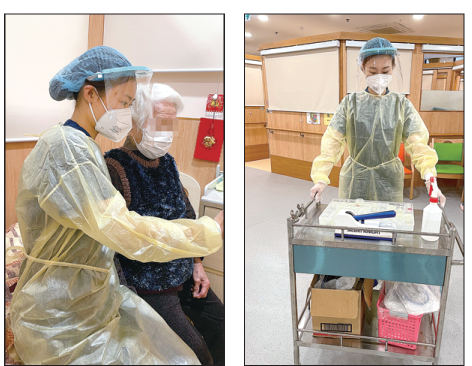
I start my days by handing out medication to about 60 senior residents, helping to rub medical cream into the skin of some of them and cleaning any wounds that exist.
Three nurses and two health workers help with the work. The division of work has become blurred during the epidemic, which is a strain on our team.
When the first staff member was confirmed infected, we were shorthanded. At the height of the outbreak, we were 10 percent down on our usual team. One caregiver had to take care of 12 residents.
The nurses sometimes helped out with work that was usually undertaken by caregivers, such as changing diapers and helping residents take showers.
Now, though, we usually pair up to take care of the residents, so things are more efficient.
With the weather getting warmer, even cleaning residents' wounds makes me sweat from head to toe as I am dressed in full protective gear.
To save the hassle of changing my protective gown, and taking off my face shield and masks, I try to do things such as drink water or go to the bathroom all in one go during my lunch hour.
Normally, I can only do so about five hours into my daily nine-hour shift.
Social distancing rules are in place in the care home. We have canceled mass activities, and residents have been advised to stay in their own rooms.
The difficult part is keeping an eye on the (sometimes unmasked) seniors, who like to visit the lobby to watch television, one of their favorite activities.
It's even harder with some of the residents who have Alzheimer's disease. They tend to forget our repeated reminders to put on their masks and stay in their rooms.
The epidemic has left many people in low spirits, me included. We can get through this by sticking together. If we stay positive, we will beat it in no time.
Luk Tsz-ying spoke with Shadow Li.






Today's Top News
- New Year's address inspiring for all
- Xi congratulates Science and Technology Daily on its 40th anniversary
- Xi congratulates Guy Parmelin on assuming Swiss presidency
- China Daily launches 'China Bound'
- Manufacturing rebounds in December
- PLA wraps up military drills around Taiwan