Malaysian view on sanctions guided by ASEAN ethos









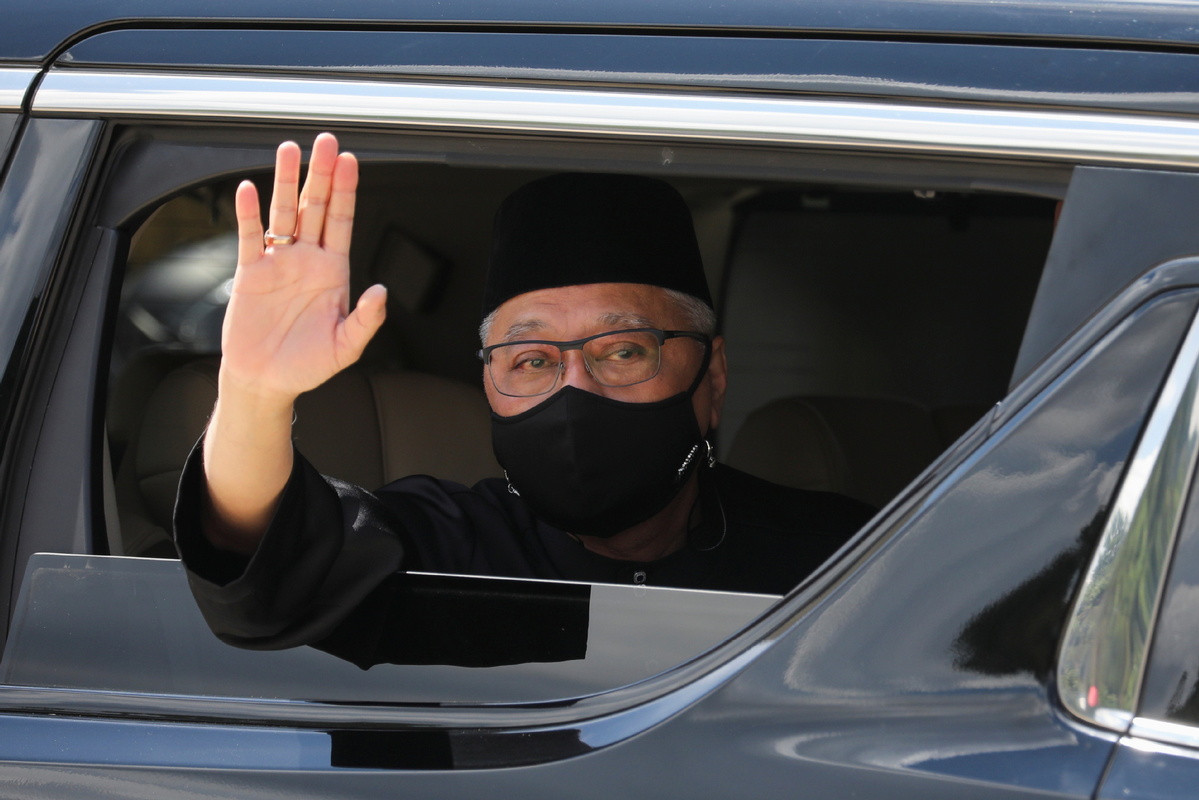
Malaysia's opposition to unilateral sanctions against Russia reflects the principle of noninterference upheld by the Association of Southeast Asian Nations, analysts say.
The country is one of the founding members of ASEAN. The regional bloc has not issued an official position on the sanctions in relation to the conflict in Ukraine, but individual members have made their positions clear.
Malaysian Prime Minister Ismail Sabri Yaakob said on Tuesday on an official visit to Vietnam that both nations do not support unilateral sanctions. "We recognize restrictions that could be imposed only by the UN Security Council," Ismail Sabri said at a news briefing.
"We discussed the Russian-Ukrainian conflict and agreed that Malaysia and Vietnam will remain neutral on this issue. As for sanctions against Russia, we do not support them."
Earlier this month, Malaysian Foreign Minister Saifuddin Abdullah said that his nation has no plans to impose sanctions against Russia, noting that "innocent people will be the ones who suffer" from sanctions.
Saifuddin also told the members of the Malaysian parliament that the country, as a member of the UN Human Rights Council, has asked for a cease-fire between Russia and Ukraine and for the continuation of peace negotiations.
Azmil Tayeb, senior lecturer at the School of Social Sciences at Universiti Sains Malaysia, said Malaysia's decision to remain neutral is "based on the ASEAN's noninterference principle, though that's not the official position of ASEAN as an organization".
Policy of noninterference
James Chin, professor of Asian Studies at the University of Tasmania in Australia, said: "Malaysia always tried to be neutral when it comes to conflict in other countries. It is also consistent with the longstanding ASEAN policy of noninterference in domestic affairs."
Malaysia has voted in favor of a UN General Assembly resolution demanding that Russia "immediately, completely and unconditionally withdraw all of its military forces from the territory of Ukraine within its internationally recognized borders". But Chin said that Malaysia's support for the UN resolution is a "separate issue" from the imposition of unilateral sanctions against Russia.
Apart from Malaysia and Vietnam, Indonesia has also stated that it does not support unilateral sanctions against Russia. Singapore is the only Southeast Asian country that has sanctioned Russia. The Singaporean government prohibited all financial institutions in the city-state from dealing with Russian banks.
Neither Russia nor Ukraine is a major trade partner of Malaysia. But Moscow has exported weapons and defense armaments to Malaysia and this might have affected Malaysia's position on sanctions, according to Oh Ei Sun, a senior fellow at the Singapore Institute of International Affairs.
Russia has also agreed to train and send a Malaysian astronaut to the International Space Station.
Oh said that another consideration is that Russia is a major exporter of fertilizer-a key input in oil palm farming, which is one of Malaysia's biggest industries.
"Malaysia can't just cut off financial ties (with Russia) … it can't afford to (impose) sanctions," he said.