Strong results signal German automaker BMW on track with transformation









BMW Group is seeking to build upon its achievements made in 2021 by working to further meet its commitments to the Chinese market, the German automaker said in a recent conference.
BMW Group ended the 2021 financial year with revenue, profit and deliveries all up year-on-year.
For the full year, the group reported earnings before tax of 16.06 billion euros ($17.81 billion), up 207.5 percent year-on-year, with net profit reaching a new all-time high of 12.46 billion euros, soaring 223.1 percent from the previous year.
The auto giant's deliveries were up 8.4 percent to 2.52 million vehicles, of which 13 percent were new energy vehicles, resulting in a total revenue of 111.24 billion euros, up 12.4 percent year-on-year.
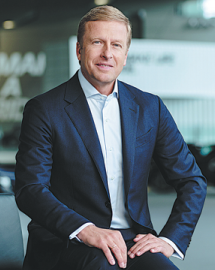
"We see 2021 as clear evidence that successful transformation pays off. The strong results we achieved in the financial year of 2021 are the outcome of our consistent strategy-with an open technology approach and the right products at the right time," said Oliver Zipse, chairman of BMW Group's board of management, at the automaker's annual conference for the 2021 financial year, held last week in Munich, Germany.
In addition to its positive results, BMW's total research and development spending in 2021 exceeded 6.2 billion euros, up 10.7 percent from the previous year. The spending was mainly used in the fields of NEV architecture, electric vehicles themselves, as well as on digital products and autonomous driving.
In 2022, BMW will launch a strong NEV offensive, with five NEV models planned to hit the Chinese market. They include the electric 3 Series manufactured in BMW's Shenyang plant in Northeast China's Liaoning province, and the electric 7 Series to be unveiled next month.
Chinese roots
BMW will build a new factory in Shenyang's Tiexi district, which will be the automaker's third plant in the city.
"BMW continues to be a longstanding partner of China and Liaoning province. China is a driving force and pacesetter for digital trends. We will now be even closer to customers there, keeping our finger on the digital pulse," Zipse said.
The group aims to continue to expand its R&D layout in China, with a software development joint venture and an IT solutions company established in Nanjing, Jiangsu province. To further flesh out its R&D team in the country, BMW will recruit more than 400 digitalization talents by the end of this year.
China has always provided a strong driving force for BMW Group's success in the worldwide market, Zipse said, adding that its joint venture BMW Brilliance's production base has received a total investment of more than 83 billion yuan ($13.05 billion) since 2010.
According to the group, BMW is rolling out new production standards called BMW iFactory.
The company is using data science and artificial intelligence to become much faster, more accurate and more transparent, which will help its employees around the world connect virtually to develop and plan in real time, according to BMW. "This is our answer to the metaverse," BMW said in a statement.
The standards will be implemented in all group's plants worldwide, including its three in Shenyang.
"I want to put it clearly-cool, digitalized products are built in cool, digitalized plants," Zipse said.
Electric push
This year, including preproduction vehicles, BMW will have 15 electric models in production, covering around 90 percent of its current segments.
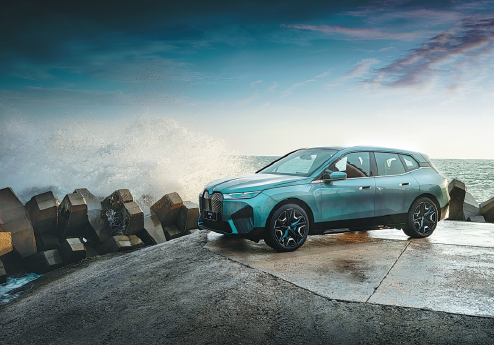
In addition to electric models like the i4, iX and iX3, some other high-volume BMW electric model series will be added-the 3 Series, 5 Series and the X1. The new 7 Series has a special role to play in 2022, with the launch of the new electric i7.
"The BMW iX and BMW i4 are probably the best electric cars on the market currently-the test reviews and strong demand from our customers speak for themselves. This year, the BMW i7 will take things to the next level," Zipse said.
By the end of 2025, the group aims to have more than 2 million battery-electric vehicles on the road. By 2030, BMW aims to have delivered a total of 10 million fully electric vehicles to customers.
In 2025, the BMW will launch Neue Klasse-new models to be built on its new vehicle architecture, which will use an all-new electric drivetrain with lower consumption and a longer range.
Its other marques like Rolls-Royce and MINI will also embrace electrification. By 2030, the Rolls-Royce brand will have a product range that is exclusively electric, and MINI will also be on the road to a fully-electric future from the early 2030s onward.


Today's Top News
- Manufacturing rebounds in December
- PLA wraps up military drills around Taiwan
- Ties with Russia expected to bear fruits
- Confidence, resolve mark China's New Year outlook
- Xi urges solid work for more progress
- Confidence, resolve mark China's New Year outlook: China Daily editorial