Feathered friends bring good fortune to rural residents
Bird-watching, related activities and improved protection are helping to raise living standards. Yang Wanli reports from Beijing with Li Yingqing in Kunming.









Hou Tiguo, a bird hunter turned bird-watching guide, often mocks himself by saying that he was deeply indebted to birds for the first half of his life, so he will spend the rest of his days protecting and preserving them.
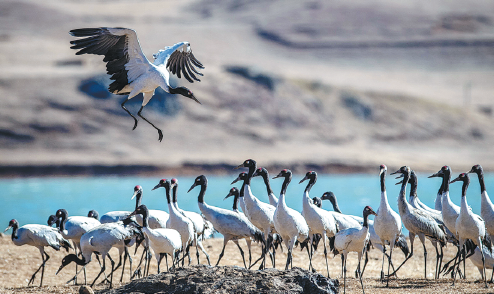
The 52-year-old's home, Baihualing, a village in the Gaoligong Mountains in Southwest China's Yunnan province, is renowned for its diverse wild bird population, with more than 520 species seen in the region.
Hou recalled that when he was a teenager in the 1970s, birds were targeted as food. "People were so poor at that time. To have some meat on the dinner table was a luxury, so almost all the children in the village were good at using slingshots," he said.
His life changed in 1989, a decade after the start of the reform and opening-up policy, when a couple hiking through the mountains visited Baihualing and asked for lodgings at Hou's home.
"During their stay, they asked me to be their guide and lead them to good bird-watching spots. Having lived here for 20 years, nothing was more familiar to me than the birds, so I agreed without hesitation. That was the first time I made money from birds without killing them," he said.
In the decades that followed, more bird-watchers visited the village. The trend developed into a profitable business and contributed to improved living standards for many local residents.
As Baihualing's first birdwatching guide, Hou started a project to build areas featuring artificial versions of the habitats wild birds prefer.
Now, instead of chasing the birds, enthusiasts can enjoy their beauty by simply visiting the scenic spots.
The village became a popular destination for bird lovers, and more than 60 people in the settlement make their living as birdwatching guides. Meanwhile, the more than 20 guesthouses bring in a total income of 15 million yuan ($2.3 million) every year.
Hou's guesthouse has hosted visitors from more than 100 countries and regions.
"During the peak season, I serve nearly 100 tourists a day, about the number of passengers on a small plane," he said, adding that his son-in-law is developing an education project to provide young people with opportunities to study and research wild birds.
"By watching birds, young people can get close to nature and learn to love and respect it, which will benefit them in return. This is a truth I've learned over recent decades," he said.
Major habitat
China is one of the world's major avian habitats. According to the National Forestry and Grassland Administration, the nation is home to 1,445 bird species-the highest number in any country-accounting for 16.6 percent of the global total.
However, birds face many threats including climate change and loss of habitat resulting from the expansion of human communities and illegal hunting.
The police play a crucial role in the protection of migratory birds.
The Wild Animal Protection Law, enacted in 1988, stipulates that people who catch, kill, sell, purchase or transport wildlife without official permission will face fines or prison sentences.
In addition to the work of forestry police forces, settlements situated along the migration routes or at major spots where birds gather have made their own efforts.
In the central province of Hunan, forestry police check for illegal activity across the province annually, while several counties have signed a convention on bird protection in an effort to prevent illegal hunting.
A similar practice operates in Yunnan. Early in 1995, the residents of Baihualing voluntarily established a biodiversity protection association that now has 154 members, an impressive surge from the 50 founders.
"People have seen their lives become prosperous thanks to the improved environment. Instead of destroying the environment to make money, people are now actively participating in efforts to crack down on illegal hunting and other activities that threaten the environment," said Hou Xingzhong, Party secretary of the association.
According to Yang Ming, deputy secretary-general of the Kunming Bird Association in Yunnan's capital, there are more than 30 migration passages in the province, with tens of thousands of birds using them every day.
Of those, 200 to 300 species are under level two or three State protection.
Yang said that in the 1980s, local farmers lit fires along the major migration routes at night. The thick smoke confused the birds, which flew straight into the hunters' nets.
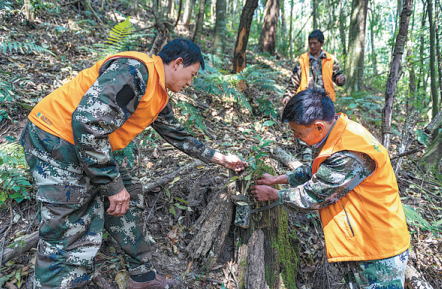
"Changes have happened over the past 10 years as many bird hunters have become forest rangers or started making their living through green businesses, such as bird-watching and eco-friendly tours or by cultivating herbs that have high financial value," he said.
Actions raise awareness
Since 1981, China has hosted Bird Week every spring to raise awareness of and participation in the protection of avians. In addition, a number of education campaigns have been promoted nationwide to encourage people to pay more attention to wildlife.
Spring and winter are crucial seasons, as the former is a critical time for bird reproduction and the latter features mass migration and bird gatherings.
At these times, the National Forestry and Grassland Administration requires local forestry and grassland departments to become familiar with the routes of migratory birds by close monitoring and observation. They also need to clear away nets and traps and prohibit illegal hunting.
As a scientific method of studying bird movements and migration, banding plays an important role in research and protection.
China started banding birds in 1982, and so far, nearly 3 million from more than 700 species have been recorded through the method.
By placing a strong, lightweight metal band-distributed by the national bird breeding center-on the leg, scientists can gather information about each bird via a unique number stamped into the metal.
After banding, the information-including species, beak length, wingspan and weight-is sent to the center, then the bird is released back to the wild.
As one of the country's biggest such facilities, the Weishan banding station in Dali, Yunnan, had handled more than 48,000 birds by the end of last year.
"As we get to know more about birds through scientific studies, we can figure out better ways to further protect them," said Yang Jianbo, an engineer at the Wulipo forest farm in Weishan.