What they say









I happen to be the editor-in-chief of one of the 50 volumes of Annual Reviews. Annual Reviews, like every other publication, was until recently limited with respect to access … and performed an experiment on open access. Five of the popular reviews were made freely available, and the increase in downloads of those reviews was astounding … It is an example that openness really matters. The leadership of the reviews deserves commendation, and we can only hope something of a similar nature will spread through scientific literature with regard to inclusiveness.

Roger Kornberg, chairman of the World Laureates Association and 2006 Nobel Prize winner in chemistry
The open science movement has five stakeholders: readers, authors, people who support the founders, publishers and librarians. If any stakeholder only has rights but doesn't bear any responsibility, it will harm the others, and the movement cannot succeed. We should have a shared system, so that authors, for example, have responsibility but don't have the burden of publication or communication of scientific knowledge.
Yang Wei, member of the Chinese Academy of Sciences and a foreign member of the National Academy of Engineering (USA)
Establishing priority is incredibly important in science. Without priority, there is no openness. I think in the new ecosystem that will be open science, we will have a new tool for establishing priority. It's blockchain. In blockchain, if you are not first, everyone knows you are not first. Computers are spending all the time to check what you did against what was already done. This priority establishment will be incredibly important for science going forward by ensuring that the person who did it first doesn't necessarily get money, nor royalties, but he gets the name.

Michael Levitt, vice-chairman of the World Laureates Association and 2013 Nobel Prize winner in chemistry
Students are the ones who can solve future problems (in science)… In education, we should raise students' creativity and curiosity, especially in this era when we have so much information to read… so they can dig out the underlying science and question traditional concepts. Training on basic courses such as math, physics and chemistry are also fundamental.

Wang Zhonglin, the Eni "Frontier Energy Award" winner in 2018 and foreign member of the Chinese Academy of Sciences

Today's Top News
- China-Cambodia-Thailand foreign ministers' meeting held, press communique issued
- Drills demonstrate China's resolve to defend sovereignty against external interference
- Trump says 'a lot closer' to Ukraine peace deal following talks with Zelensky
- China pilots L3 vehicles on roads
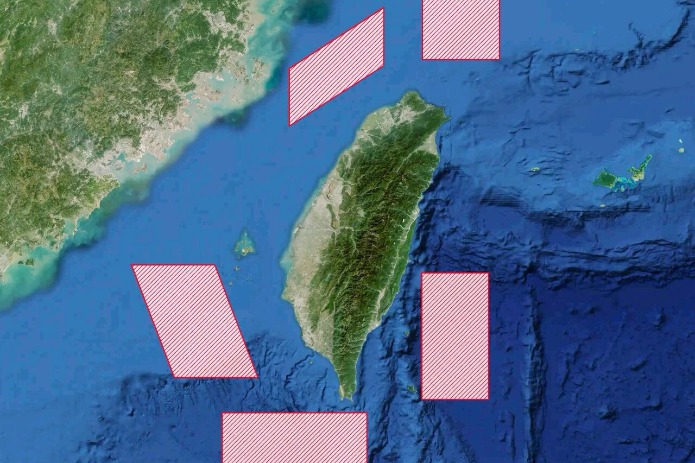
- PLA conducts 'Justice Mission 2025' drills around Taiwan
- Partnership becomes pressure for Europe