Helping hand
Chinese volunteer at Olympics urges others to acquire skills in foreign languages, Zhou Jin reports.









When sweat-soaked athletes were competing for medals and shattering records in the Tokyo Olympics and Paralympics in July and August, volunteers clad in blue polo shirts emblazoned with the Olympics logo were stationed at every corner in and outside the venues to facilitate the smooth operation of the Games.
Among them was Chinese volunteer Hou Jiayi, who lives in the town of Nasu in northeastern Japan.
She said the work gave her a different perspective to view the gigantic sporting event, giving her a sense of accomplishment after lending a helping hand and allowing her to meet friends from various cultural backgrounds.
This was the third Olympics for Hou, who worked as a volunteer translator for media at the Sochi Winter Olympics in 2014 and the Rio Summer Olympics in 2016.
"Serving at the Olympics frees me from daily life, and I am able to immerse myself in a completely different culture for a while," Hou said.
The seasoned volunteer witnessed an orderly and well-organized Sochi Games while experiencing a relaxed atmosphere at the Rio Games, which she described as a "colorful world".
And at the 2020 Tokyo Olympics, which Hou said she was destined to join as she is familiar with the country and she could give full play to her language skills-she speaks fluently in Chinese, Japanese and English.
Shortly after she went to Japan and started to work for a German company in Nasu three years ago, Hou applied for the volunteer position and went through a series of interviews and tests and joined more than 70,000 registered volunteers for the Games.
The 28-year-old was responsible for recording technical data at the Ariake Tennis Park during her ten-day volunteering service. The results could predict the outcome of a tennis match. It was a position that combined her enthusiasm for tennis with her engineering background.
"Recording world-class games from such close quarters is different from watching them on TV. The athletes are incredible."
After volunteering for eight tennis matches at the Paralympics, Hou said her impression of Paralympians changed.
When recording a women's doubles match in the wheelchair tennis competition, she was astonished by the speed and power of a Chinese player, who she said struck balls as fast as athletes without disabilities.
"I felt like her wheelchair was flying," Hou added.
She was already enlightened by the volunteers' training before the 2020 Olympics, which taught volunteers how to change stereotypical outlook on athletes with disabilities and contact and communicate with them with a sense of equality and respect.
"We are just different, but equal, so sympathy is unnecessary."
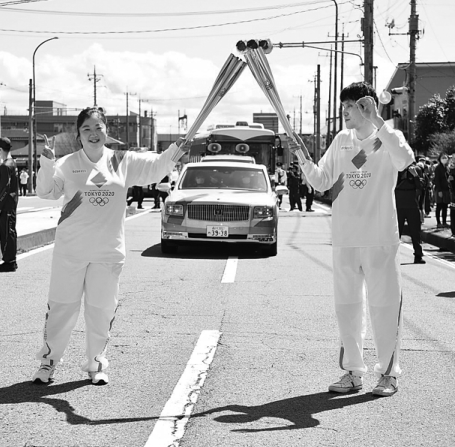
Three months before her volunteering service, she was a torchbearer for the 2020 Olympic Torch Relay, the only foreigner selected for the service in Nasu region.
As a torchbearer, Hou said she wanted to show the charm of Nasu, a ski getaway and home to the region's hot springs, to the outside world from the perspective of a foreigner, and to serve as a bridge connecting people from Nasu with visitors from around the world.
"The Olympic Games not only promote sports exchanges but also the interaction of different cultures, and while introducing the host country to the world, local people can also better understand the outside world."
Earlier, the Japanese government and the International Olympic Committee announced postponing the Games due to the COVID-19 pandemic, the first postponement in Olympic history. While Japan retained the year 2020 in the name, spectators and many foreign volunteers were not allowed in venues, following health protocols.
Hou said such measures are understandable because there was no better choice, and fortunately, the Games were held despite the pandemic.
Hou stayed in a hotel in Tokyo as a volunteer, taking trains to the tennis park. She worked remotely for her full-time job and managed daily life and the volunteer service well.
"But I was exhausted as I had to get up very early to finish my work from the hotel and then head to the venue, without time to take a break."
Hou said while she noticed some problems in volunteering such as "ineffective communication, delayed information release, improper arrangement details and lax implementation of quarantine regulations", she persevered due to her passion for the work.
"I have been doing community service since high school when studying in the United States," Hou said, adding that the activities have boosted her life experience.
After going to university, she began to apply for overseas volunteering programs, and in Sochi in 2014, her story with the Olympics began.
At that time, there were only 30 Chinese volunteers there, and most of them were students in Russia, she said.
Hou has set up a nonprofit organization and uses social media to share information on international volunteering programs and contacts professional organizations to provide training for volunteers, so that she can get more Chinese people to participate in international events.
Engaging in overseas events requires good foreign-language skills, she said, adding that those who hope to be volunteers should also have a kind heart and the willingness to offer help as it is an altruistic work, and volunteers must also encourage each other.
Often viewed as unsung heroes, she said that volunteering service is nonprofit, and the reward is the feeling of joy and satisfaction that cannot be measured by money, a broadened view of the world, and interaction with different cultures.
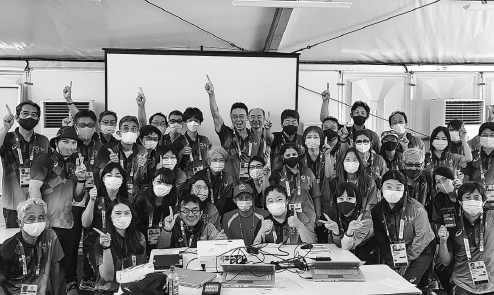
The number of Chinese volunteers at the Olympics has also increased. At the 2016 Rio Games, she said there were more than 300 Chinese, and this year in Tokyo, despite the pandemic, one volunteer group she joined in had nearly 400 people.
"I hope my experience will influence more people."
The curtains have come down on Tokyo 2020, but Hou will continue to follow the Olympic Games.
"I'm looking forward to returning home and being part of the 2022 Beijing Winter Olympics and expect to see something different in the 2024 Paris Summer Games."




Today's Top News
- China to expand fiscal spending in 2026: finance minister
- CPC leadership meeting urges steadfast implementation of eight-point decision on improving conduct
- Autumn grain purchases exceed 200m tons in China
- Wang to meet foreign ministers of Cambodia, Thailand in Yunnan
- China's top legislature concludes standing committee session
- Thailand and Cambodia agree to temporary ceasefire