Extended rail network to boost living standards and development
Li Bingcun, Shadow Li and William Xu report from Xinfeng, Jiangxi.









It was after 2 pm. The sun baked the concrete of the passengers' lounge at Xinfeng Railway Station in the small county of the same name in the eastern province of Jiangxi.
A few people were waiting for their trains in the lounge, where fans were working to cool the scorching air.
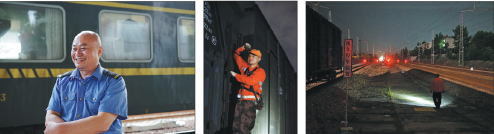
On the platform, Huang Changfei, general Party branch secretary at the station, was checking details to ensure that everything was ready before each train arrived. Cargo trains went through the station now and then, but they didn't stop.
It has been more than two decades since the 56-year-old arrived in Xinfeng, a county in Ganzhou, Jiangxi's southernmost city, to work on the Beijing-Kowloon Railway.
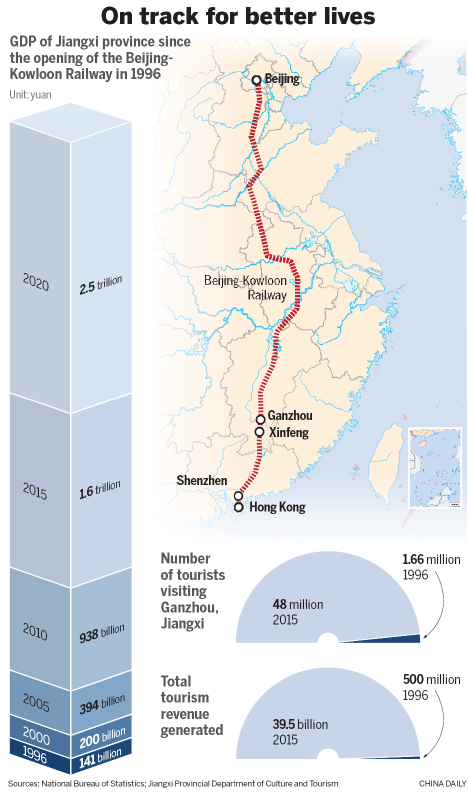
The railway-aka the Jingjiu Railway-is a vital transportation artery connecting China's north and south, from Beijing to Shenzhen, Guangdong province, before going on to Hung Hom in Hong Kong via the East Rail Line.
Prior to coming to Jiangxi, Huang served in the People's Liberation Army Air Force in Changchun, capital of the northeastern province of Jilin. The only sign of his years of military training is his upright posture.
In 1997, in order to be with his wife, Huang came to Ganzhou and operated the mechanism that moved the tracks. First, he worked at the nearby Datangbu station, also on the Jingjiu Railway, but he was transferred to Xinfeng in 2010.
Bond with Hong Kong
"I was demobilized and started working on the railway in 1997, the year Hong Kong returned to the motherland," Huang said.
He recalled that to celebrate the event, the railways were decorated with colorful flags and banners. On the day of the handover, many people watched the live TV coverage to share the joy with their compatriots.
"Seeing our motherland take back one of her straying children, every Chinese was overjoyed. It also meant that our motherland had grown stronger," he said.
The Jingjiu link was opened on Sept 1, 1996, to mark the handover.
Some staff members were dispatched to the small station to prepare for the grand opening of the county's first and only railway line.
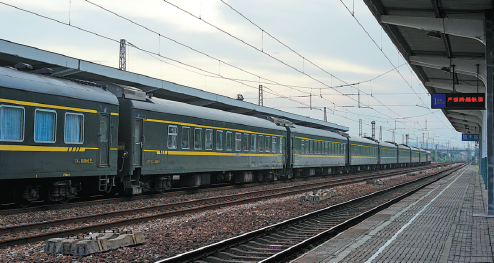
Every day, about 15 trains pass through Xinfeng station, on a line that runs through green fields and lush mountains.
Jiang Meifei was one of those staff members. He came to Xinfeng in August 1996 as a station attendant and is now head of the station, having worked there ever since.
Born into a family with four generations of workers in the railway sector and having grown up near the tracks, Jiang also became a railway worker.
Recalling his childhood in Yingtan, his hometown in Jiangxi's northeast, he said he frequently saw trains carrying fresh food pass through the city.
"When I was a child, I frequently saw vegetables and livestock being shipped to the south, to Hong Kong, in covered wagons," he said.
He was referring to three renowned express trains. From 1962 to 2010, they operated from Shanghai, Zhengzhou, capital of Henan province, and Wuhan, capital of Hubei province, delivering fresh food from the mainland to Hong Kong via Shenzhen every day.
Even during the mainland's toughest times-such as the great famine from 1959 to 1961, or the 2003 outbreak of severe acute respiratory syndrome in Hong Kong-the trains carried food to the city without interruption.
As methods of transportation became more varied, the express trains entered the city's history, but railway transportation is still a significant way for goods from Jiangxi to reach Hong Kong, according to Huang.
In addition to the Jingjiu link, another railway route connects Hong Kong-via the Beijing-Guangzhou rail link and the Guangzhou-Shenzhen rail link on the mainland, and the East Rail Line in Hong Kong.
It shoulders the responsibility of transporting passengers and goods between Hong Kong and the mainland.
The operations of the Jingjiu Railway, which now focuses on freight transportation, have relieved the pressure on the overburdened railway, enhancing the transportation capabilities between Hong Kong and cities in the Pearl River Delta and central and northern China.
Boost for the province
The Jingjiu Railway winds through many impoverished regions in Jiangxi, mostly old revolutionary bases, and it has also fueled their transformation.
Before the line opened, there was no railway in the southern part of Jiangxi. Huang said the railway's existence has injected great vitality into Xinfeng and other cities in Jiangxi in the past 25 years.
The impact is most obvious in the transportation of agricultural produce-such as navel oranges, a noted crop in southern Jiangxi-and in the promotion of Red tourism in the region, which revolves around visiting significant sites in modern Chinese history.
In 1996, when the railway had just opened, Jiangxi's GDP was 141 billion yuan. Last year, the figure was 2.5 trillion yuan ($386 billion), government data showed.
Located near many of Jiangxi's most popular Red tourism sites, such as the Jinggang Mountains, Ji'an and Ganzhou stations saw the number of railway passengers rise by 130 times and 93 times respectively from 1996 to 2015, according to media reports.
Passing the torch
The quiet and monotonous railway work in the mountainous county may not present a challenge to Huang Changfei, who will retire in four years.
However, Huang Xinshun, who graduated with a railway-related degree from Southwest Jiaotong University-one of China's most prestigious schools on transportation-in Chengdu, capital of Sichuan province, has great plans.
Last year, the 26-year-old decided to become a station attendant in Ganzhou, his hometown, because he wanted to be close to his parents and take care of them.
Born in 1995, the year before the railway started operations, he came to Xinfeng station after working in other areas for several years.
At first, he found the disparity with Chengdu, a new booming city, depressing.
"For one thing, Chengdu has a fully fledged transportation system such as a metro, intercity trains and high-speed railways. But in Ganzhou, high-speed railways are scarce," he said.
He gradually changed his mind as he realized that working at a small station may actually provide more opportunities to display his expertise, especially in the application of new technologies.
"It is my great wish to put what I learned at university to better practice and make the railway service better in the areas around the old revolutionary bases," he said.
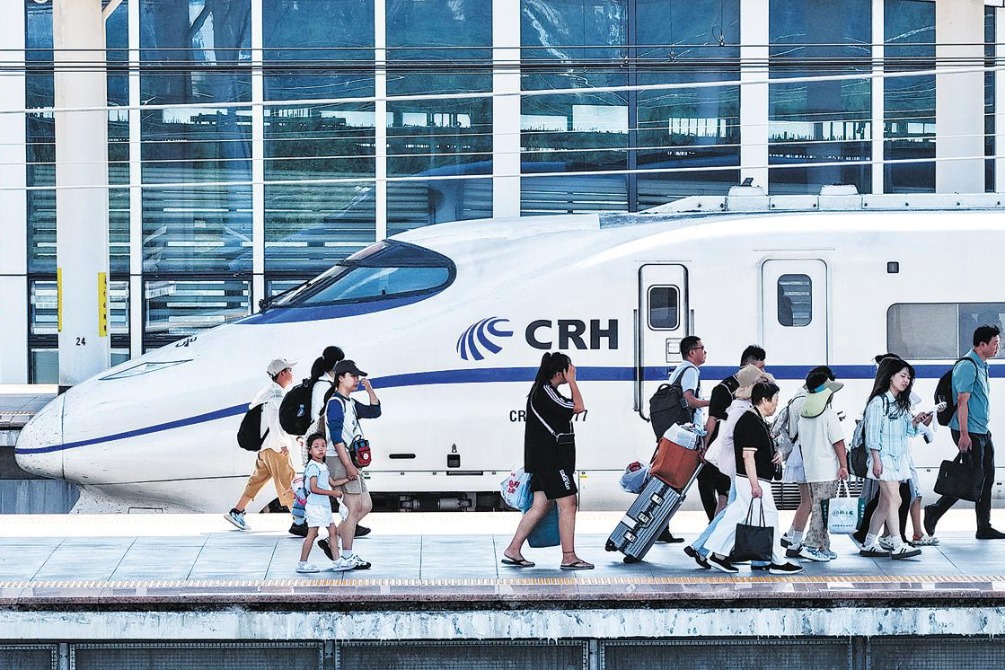
Positive changes are definitely happening. As part of the nation's project to build a high-speed railway connecting Beijing and Hong Kong, construction of a station in Xinfeng to handle bullet trains started in 2017. The facility is scheduled to open later this year.
In just a quarter of a century, Xinfeng has developed from a place with no railway into a promising area that is attracting young people to live.
That change could not have been achieved without the efforts of many railway staff members, who toiled night and day along the tracks.
With fresh fuel being added by the younger generation, the trains are expected to run even faster, in tandem with the county's development.



Today's Top News
- China's top legislature concludes standing committee session
- Thailand and Cambodia agree to temporary ceasefire
- NPC's 4th annual session slated for early March
- Civilizational links for a fairer world
- Manufacturing in China spurs global growth
- Taiwan lawmakers vote to pass motion to impeach Lai