Snow means work, not fun, for researchers









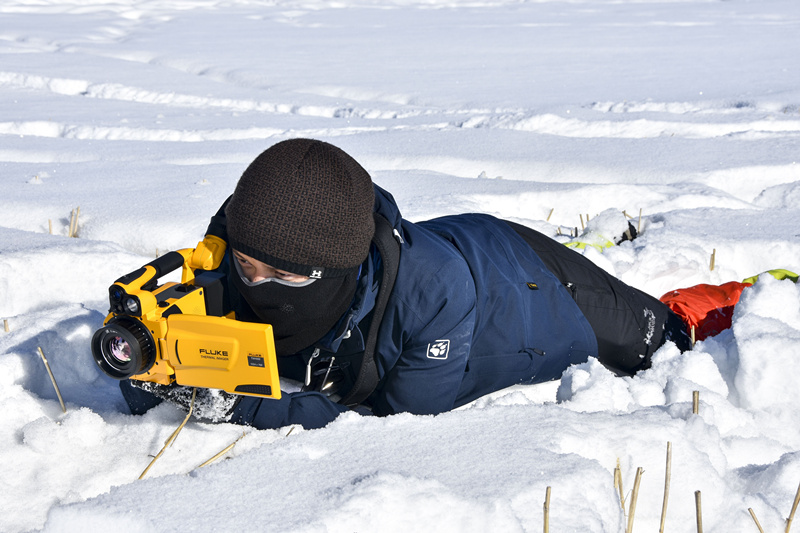
The Xinjiang institute has 11 field stations to measure the snow covered area, and hiking through the mountains can be an excruciating experience for researchers.
During their recent field trip, the researchers experienced temperatures as low as-38.4 C.
Six teams, including the one in Xinjiang, are studying snow in northern China and the Qinghai-Tibet Plateau. The other researchers come from CAS' Northwest Institute of Eco-Environment and Resources, Nanjing University, and Northwest University.
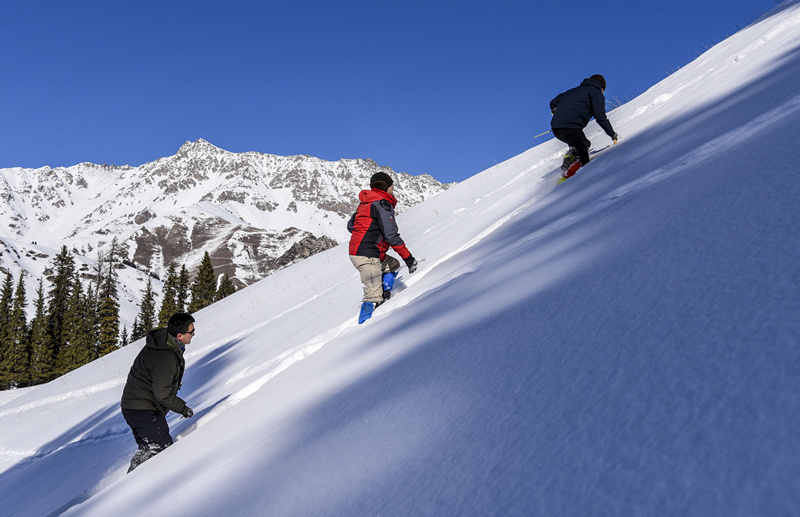
The aim is to build a national database for snow in China, researchers said. "Though snow is short-lived, it is the lifeblood of water resources in Xinjiang," Li said.
Researchers need to process the data to provide early warnings and improve risk management in regions that have frequent avalanches and snow-related floods.
Li's team has analyzed data on snow from 1901 to 2014, and observation data from 1961 to 2014 in the Tianshan mountains.
The depth of snow in the Tianshan region declined from 1901 to 2014, according to the team's study, which was published in the scientific journal Global and Planetary Change this year.






- China launches new AI model for agriculture
- China introduces national standard for valuing terrestrial ecosystems
- Government agencies announce regulations of online hiring information
- Ministry pledges to continue solid waste disposal crackdown
- Shandong upgrades ancient canal shipping with smart tech and cleaner ships
- Night view of Central Street in Harbin